Moving Tips – Reduce, Reuse, Recycle!

Moving House, Apartment or Office

According to the Central Statistics Office, in 2022, 265,098 people moved home in Ireland, with 29% of movers changing counties and 5% of residents moving to a new property, Dublin city and suburbs was the area with the highest proportion of movers (30%) within or to the area.

Moving home is widely considered one of life’s most stressful experiences. It often appears alongside events like job changes and major life transitions in surveys about stress. There’s a lot to juggle at once — packing, paperwork, deadlines, costs, and the emotional side of leaving a familiar place — so it’s no surprise many people feel overwhelmed.  

They surveyed 2000 people who had moved home over a three year period revealed 61% of those surveyed placed the ordeal at the top of their stress list, so it’s true, moving is stressful. Source: E. ON.

Legal & General conducted a seperate survey related to the motivation and pressure of moving. They report; almost half of respondents (47%) experienced increased stress levels because of moving.  41% of adults experienced anxiety, sleep deprivation (31%) and arguments with their partner (25%). One key stress-inducing factor was time, with 46% of home buyers having to wait between three and five months to complete their move.

Stress Points

Some of that stress might be caused by the fact that removal firms unusually work out the cost for your move by the volume of items that you have to transport to your new location.

Reducing your volume prior to the move should save you money and creates an opportunity to de-clutter through reuse or recycling. In fact, it creates a wonderful opportunity to list and remove items that are broken or unneeded. It’s an excellent motivator to share unwanted items with others or recycle items no longer required.

It’s a good idea to start with storage areas such as the spare rooms, the attic, basement, garage or store in the weeks before your move, as removal teams will want to do a pre-move checklist of your belongings. This helps determine how much stuff needs to be moved and gives an idea of wants involved in moving!

What to Recycle

People are still surprised by the number of objects that can be recycled. Recycling goes way beyond the glass, plastic, paper, and tins that your waste company collects. Commonly recycled items include furniture, clothing, electrical goods, batteries, bulbs, or old toys. home-office equipment, metal cabinets or lockers.  These can all be recycled prior to moving.

2019 moving a cooker
Moving / Recycling Electrical Equipment

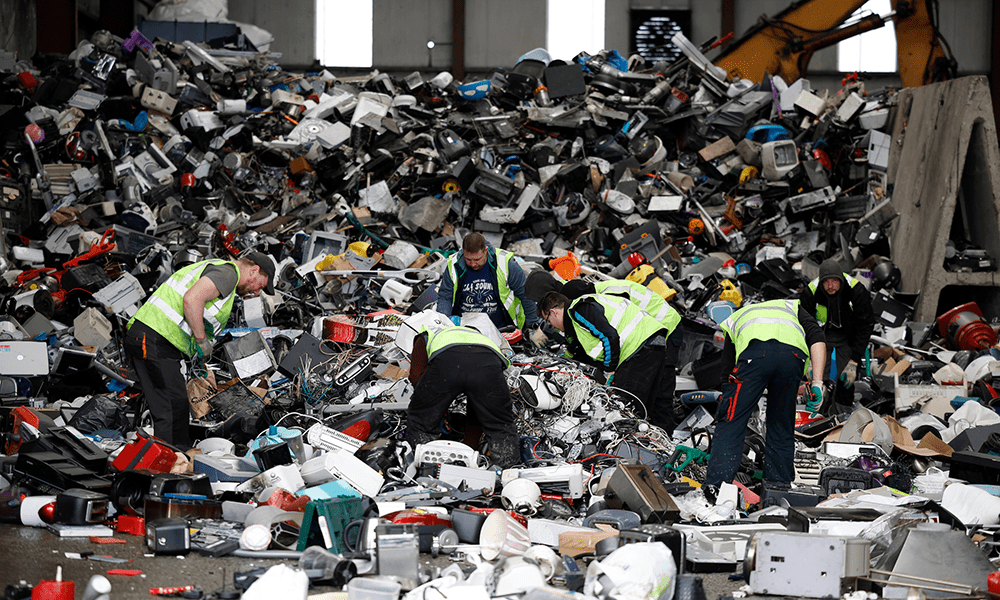
Recycled appliances like phones, kettles, cables, dryers, computers, servers or washing machines can be repurposed or their components can be removed and converted into new products.

Recycling allows home movers to clear out old items and reduce the cost of the removal, protect our environment and conserve natural resources. Remember this logic can be applied to moving from any location including an office, warehouse, doctor’s surgery or shop.

10 Moving Tip

Old Storage Heater for Recycling
  1. In the weeks and days leading up to your move, use up perishables including food and cleaning products and recycle plastic containers before your moving date.
  2. All electronics and electrical equipment (e.g. computers, toasters, heaters or kettles) contain some precious metallic elements like gold, silver, copper, and aluminium that can be reused. Recycling these items saves valuable new resources.
  3. Petrol, paint, and oils should be disposed of before moving home. Many removal companies will not move your petrol lawnmower if it is not emptied of all petrol and oil and paint are heavy and will cost you money to move.
  4. Fuel such as coal or oil should be included in the lease, house sale or used well in advance of moving.
  5. Kids’ toys, clothes or bikes can be offered to charity shops, social enterprises, family shelters or housing projects. If damaged they are recycled at civic amenity recycling centres. Some recycling centres accept a range of items manufactured from plastics, metals, and wood.
  6. Following your move, you have lots of packing boxes. The boxes may be supplied by moving company so they can be given back. If not the boxes are most likely to be made from recyclable materials, so they should be able to be added to your paper recycling bin. If you have a large number that will not fit, they can be taken to your nearest civic amenity site.
  7. Take pictures of wire connections on electronic equipment such as computers, printer and wireless router as it will help you set them up at your new home.
  8. Label boxes by room and number them to ensure you have them all on arrival at your house.
  9. Make sure you have lots of help at hand to pack and lift boxes and equipment.
  10. Finally, there may be items that you wish to dispose of but it may not be easy to find a recycler! Here are 10 community-based organizations that can help to reduce your belongings before you move.

About Recycle IT

Recycle IT is an award-winning, not-for-profit, social enterprise established in 2003 to create employment and promote environmental awareness through recycling and reuse. We work in partnership with WEEE Ireland and are authorized by your local authority to provide electrical, electronic and pure metal recycling collections across Dublin since 2007. Recycle IT are fully compliant with WEEE Recycling Requirements and permit details are available here.

For more information about Recycle IT please click here.

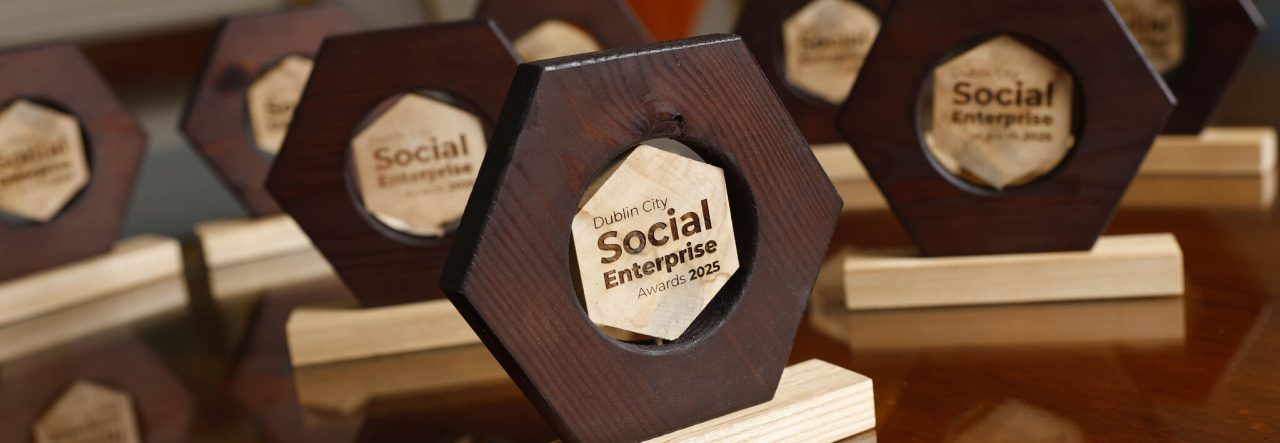
Sustainable Business Impact Award Winner 2025


Cleaning Up E-Waste

Process that transforms Hazardous Plastic

For many years, electrical and electronic waste (also known as e-waste) has been building up across Europe and around the world.

A lot of this waste includes plastics that contain chemicals such as flame retardants. While these chemicals are important for fire safety, they have made plastics very difficult to recycle. Because of this, much of this plastic has been treated as hazardous waste and sent for disposal instead of reuse.

PLAST2bCLEANED machinery

© PLAST2bCLEANED

A new project – PLAST2bCLEANED

This helpful project has developed a new recycling method that safely removes these harmful chemicals from plastic. This makes it possible to recover clean, high-quality plastic, as well as valuable materials like bromine and antimony trioxide. This supports Europe’s goal of creating a circular, closed-loop recycling system.

Instead of shredding plastic into lower-quality material, the process uses heat and special solvents to fully dissolve the plastic. The harmful additives are then separated out, leaving behind clean plastic that can be reused again and again in manufacturing.

Based in the Netherlands, the PLAST2bCLEANED project shows real progress in reducing environmental damage and lowering Europe’s reliance on imported raw materials, especially antimony*, which is considered a critical resource.

* Antimony is a metalloid, which means it has properties of both metals and non-metals. Antimony is utilized in various applications, including:

  • Alloys: It is commonly added to lead and tin alloys to improve their properties, making them suitable for use in batteries, solders, and bullets.
  • Flame Retardants: Antimony trioxide is a key component in flame retardants used in textiles and plastics including plastics use in electrical products.
  • Semiconductors: It is used as a dopant in semiconductor devices, enhancing their electrical properties.

New EU Regulation

A new era of EU regulation is changing how products are made and recycled. New rules now require manufacturers to use more recycled materials, including valuable substances like bromine and antimony.

Digital Product Passports will also track how clean and recyclable materials are over a product’s lifetime. At the same time, the EU wants to recycle more of its own critical raw materials to reduce reliance on imports.

Technologies like PLAST2bCLEANED will play a key role in supporting a circular economy.

Digital Product Passport

Read more at: Ecodesign for Sustainable Products Regulation (ESPR), and Critical Raw Materials Act

Original post shared by Directorate-General for Environment: Visit here.

About Recylce IT

Recycle IT is an award-winning, not-for-profit, social enterprise established in 2003 to create employment and promote environmental awareness through recycling and reuse. We work in partnership with WEEE Ireland and are authorized by your local authority to provide electrical, electronic and pure metal recycling collections across Dublin since 2007. Recycle IT are fully compliant with WEEE Recycling Requirements and permit details are available here.

For more information about Recycle IT please click here.

Sustainable Business Impact Award Winner 2025

Electronic Trends and More 2026

Tech Trends

According to eMarketer, the Europe’s business landscape is set to remain heavily technology-driven over the next four years as organizations invest to stay competitive and address growing operational challenges in an increasingly uncertain market environment.

Photo by Tom Swinnen on Pexels.com

Overall ICT spending across Europe is projected to exceed $1.4 trillion by 2026, reflecting a compound annual growth rate (CAGR) of 5.4% from 2021 to 2026.

A Financial Times report for 2026 shows sector trends for Small Domestic Appliances (SDA) will grow, IT & Office will see modest gains, Major Domestic Appliances remain stable, and Telecom and Consumer Electronics experience slight declines.

Banking and professional services will continue to be a large spending sectors while business in general plans to investment in telecom services and IT hardware.

Photo by Curtis Adams on Pexels.com

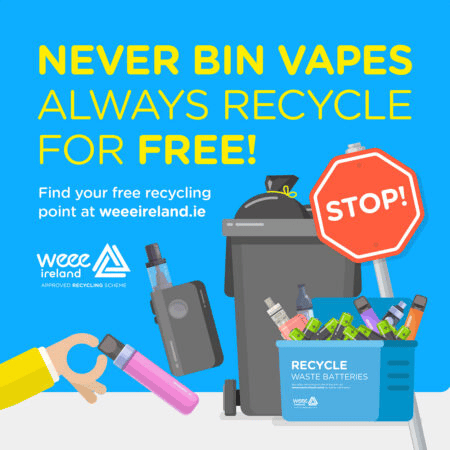
Battery and vape waste is one of the fastest-growing sectors. But it hold major risks. With lithium-ion battery-related fires on the rise, proper waste segregation at home and in the work place isn’t just good practice, it can save lives by reducing chances of fires in waste vehicles and at recycling facilities.

What this means for IT Equipment Recycling:

This projected surge in ICT spending signals a significant increase in the purchase and deployment of new hardware, infrastructure, and digital systems. As organisations upgrade to newer technologies, several key recycling implications emerge:

Higher Volume of Retired Equipment: More investment means more frequent refresh cycles, resulting in increased disposal of legacy devices—including servers, PCs, networking gear, and mobile devices.

Growing Demand for Secure & Compliant Disposal: With stricter European regulations (such as GDPR, WEEE, and sustainability directives), companies will require certified recycling partners to ensure responsible handling and secure data destruction.

Sustainability as a Business Priority: ESG and circular economy commitments will push companies to reuse, refurbish, and recycle more IT equipment instead of landfilling.

Rise of the Secondary Market: Quality refurbished IT equipment will gain value, extending device lifecycles and reducing environmental impact.

Opportunity for ITAD Providers: IT Asset Disposition and recycling businesses will see stronger demand for services like collection, certified recycling, remarketing, and reporting.

Old Computers

Bottom line

As Europe’s tech and appliance spending accelerates, the recycling of IT equipment becomes not just a regulatory necessity but a strategic business function—supporting sustainability goals, cost optimization, data security, safety, and environmental responsibility.

Businesses need clear direction and confidence that their electronic waste is being managed safely and responsibly at every stage of the process. By partnering with a fully permitted, experienced provider like Recycle IT, organisations gain peace of mind—knowing compliance is met, risks are reduced, and materials are handled, treated, and disposed of to the highest standards.

Server Racking for Dismantling and Removal

About Recylce IT

Recycle IT is an award-winning, not-for-profit, social enterprise established in 2003 to create employment and promote environmental awareness through recycling and reuse. We work in partnership with WEEE Ireland and are authorized by your local authority to provide electrical, electronic and pure metal recycling collections across Dublin since 2007. Recycle IT are fully compliant with WEEE Recycling Requirements and permit details are available here.

For more information about Recycle IT please click here.

Sustainable Business Impact Award Winner 2025

Reuse and Recycling Tips – Refreshed for 2026

Small Steps

Small everyday choices can make a big difference to our environment. By reusing items, reducing waste, and recycling wherever possible, we can save resources, cut pollution, and protect our planet for future generations. These simple tips show easy ways everyone—at home, at school, and at work—can reduce waste and live more sustainably. Start with one change and build from there—every action counts.

Small Steps Matter

Reuse and Recycling Tips

  1. Use both sides of paper when writing or drawing.
  2. Give partially used printed paper to children or local schools for drawing.
  3. Bring food to school or work in reusable containers.
  4. Rent or hire schoolbooks and supplies instead of buying new.
  5. Hire gardening tools that are only used occasionally.
  6. Make a bird feeder by reusing a medium-sized plastic bottle.
  7. Choose low-energy light bulbs at home and in the office.
  8. Give unwanted clothes a second life by donating or reusing them.
  9. Reuse and repair items such as shoes and clothing whenever possible.
  10. Pass on seasonal children’s costumes as your children grow.
  11. Choose bar soap instead of liquid soap in plastic bottles.
  12. Buy long-lasting, durable products such as reusable razors and refillable pens.
  13. Use rechargeable batteries for household appliances.
  14. Avoid unnecessary purchases for one-off occasions (e.g. Christmas or Easter).
  15. Give experience-based gifts such as show tickets, sports events, or concerts.
  16. Choose eco-friendly products by reading and understanding labels.
  17. Buy products with minimal or no packaging.
  18. Purchase regularly used household products in bulk.
  19. Reuse shopping bags when shopping.
  20. Use refillable products such as pasta, rice, coffee, and loose-leaf tea.
  21. Drink tap water from reusable bottles.
  22. Donate old books, toys, and games to charities, libraries, or schools.
  23. Reuse glass jars for storage or household purposes.
  24. Compost food scraps and garden waste.
  25. Repair small appliances instead of replacing them.
  26. Buy second-hand furniture, bikes, and electronics.
  27. Swap items with friends, neighbors, or community groups.
  28. Use cloth napkins and towels instead of disposable paper products.
  29. Repurpose old clothing into cleaning cloths or craft materials.
  30. Choose digital bills, tickets, and receipts whenever possible.
  31. Reuse envelopes, folders, and packaging materials.
  32. Return printer cartridges and electronics to recycling collection points.
  33. Choose products made from recycled materials.
  34. Use reusable coffee cups for takeaway drinks.
  35. Freeze leftovers to reduce food waste.
  36. Share rarely used items such as ladders or power tools.
  37. Turn old towels and blankets into pet bedding.
  38. Use beeswax wraps instead of plastic wrap or foil.
  39. Mend or upcycle old furniture instead of replacing it.
  40. Collect rainwater for garden use.

Get Started

As a start, actively look for reuse opportunities close to you, such as charity shops (see below), repair cafés, community swap events, libraries, and refill stores. Local schools, community centres, and online neighborhoods groups often accept donations or share items. Engaging locally reduces waste, supports your community, and helps valuable materials stay in use.

About Recycle IT

Recycle IT an award-winning community recycler wishes to build on Ireland’s recycling success story and helped increase the 10 kg of waste electronic and electrical equipment recycled per person, per year. We are inviting resident associations and community groups including tidy towns to speak with us about arranging a FREE collection in your area over the coming months.

Our recycling service is provided FREE to resident associations and communities in South Dublin, Dublin City and Dún Laoghaire-Rathdown with surrounding areas in Meath, Wicklow and Kildare also serviced so please give us a call to learn more and arrange a residents collection for your area.

Please call us on 01 4578321 or email info@recycleit.ie.

Oxfam – Click to Learn More

Resident’s Electrical Recycling Collections – Free in 2026

Open for 2026 Enquiries and Bookings.

As we welcome 2026, Recycle IT is inviting residents’ associations, tidy towns groups, and community committees to take the lead in making your estate greener. We encourage associations to organise an early-year electrical and pure metal recycling collection, bringing together householders, families, friends, and neighbours to take part.

By working together as a community, we can significantly increase our electrical recycling rate per person. In 2023, this figure stood at just 9.51 kg per person — roughly the weight of nine electric kettles. Surely, as organised and engaged communities, we can do better than that!

Let your residents’ association be the catalyst for positive change in the New Year. Book a collection early, boost participation across your estate, and help set a higher recycling standard for 2026 and beyond.

With one in eight people in Ireland still dumping small electrical items in household bins we want to help you safely recycle any old, unwanted or unused electrical stuff from around the house. This includes kettles, cookers, TVs, washing machines, games consoles, batteries, phones, computers, metals, and electronic toys; the list really is endless.

Recycle IT work in partnership with Residents Groups across Dublin. Our teams can collect all types of household and small office waste electrical, electronic and pure metal equipment from residents. The collection is door to door, free and our teams collect weekly Monday to Friday.

Presenting Your Recycling for Collection

Once local residents know a collection is scheduled people can easily assemble old electrical, electronic and metal equipment and have it out and ready and out for collection by 9am on collection day. If people need help please do lend a hand to get their items out for colleciton or let our team know in advance?

Items for collection can be placed at the front of your home within reach of the pavement (e.g., in your drive) but not on the pavement so as to block access.

Your electrical waste should not be placed in refuse sacks or covered. Please ensure electrical and metal waste items are easily accessible. If items are hidden behind a locked gate or a parked car, we may not be able to see or collect your items. Our teams will accept electrical and metal waste at no cost once used in your home or small office.

You can click here for a list of items collected (PDF Files for electrical and metal items)

In the case of unforeseen circumstances such as poor weather conditions, vehicle breakdowns, roadworks or other incidents, we may be delayed, but we will do our best to keep groups updated and we will work to catch up throughout the day.

On request, we can enter homes at the ground floor level only. Residents should remain at a safe distance from our team. It is preferable if items for recycling are outside.

Working Together

Our authorised WEEE collections are offered in association with Residents’ Associations. Each group helps by providing details on the number of homes in the area, names of roads, and promotion of the event to householders through social media, email, leaflets newsletter etc. Recycle IT can provide further information on request.

Please note: Today our resident collections are provided free of charge to Residents’ Associations in South Dublin, Dublin City and Dún Laoghaire-Rathdown.

About Recycle IT

Recycle IT an award-winning community recycler wishes to build on Ireland’s recycling success story and help increase the 10.9 KG of waste electrical and electronic equipment collected yearly per inhabitant in Ireland. (recorded in 2017)

We are inviting resident associations and community groups including tidy towns to speak with us about arranging a FREE collection in your area over the coming months.

Our team will accept old household electrical items, and office electrical items alongside your garden power tools and pure metal equipment. We can also accept commercial appliances but do call in advance.

Recycle IT as a social enterprise works in partnership with WEEE Ireland. Recycle IT is supported by Pobal, South Dublin County Council and authorized by the National Waste Collection Permit Office. Recycle IT are an active member of Community Resources Network Ireland (CRNI).

To learn more about recycling electrical equipment please call Recycle IT at 01 4578321, email us or visit www.recycleit.ie

Recycle IT Truck