
Be Careful with “Free Recycling Day” Flyers
At certain times of the year, you might receive a flyer advertising free recycling days for old, broken, or unused items. These events may offer to collect household or office items such as clothes, metal, electrical goods, or garden tools.
It sounds like a great idea — a chance to reduce waste, recycle, and clear clutter from your home or workplace. But have you ever stopped to think that some of these collectors might be unregulated or even illegal?
For example, a flyer promoting a “Free Jumble Recycling Day” might offer to take items like car batteries, laptops, TVs, or wardrobes — things that usually can’t go in a regular recycling bin and often require a licensed collection or drop-off at a recycling centre.
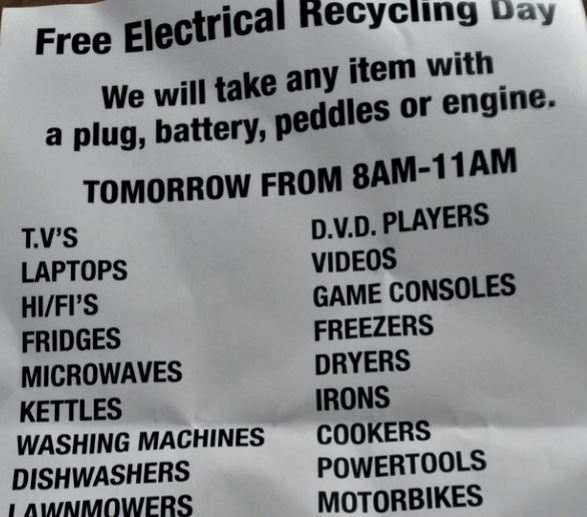
These flyers are usually bogus, should be ignored and handing items over can lead to illegal dumping of your stuff and penalties if the material is identified as belonging to you!
Bogus Recycling – a reality
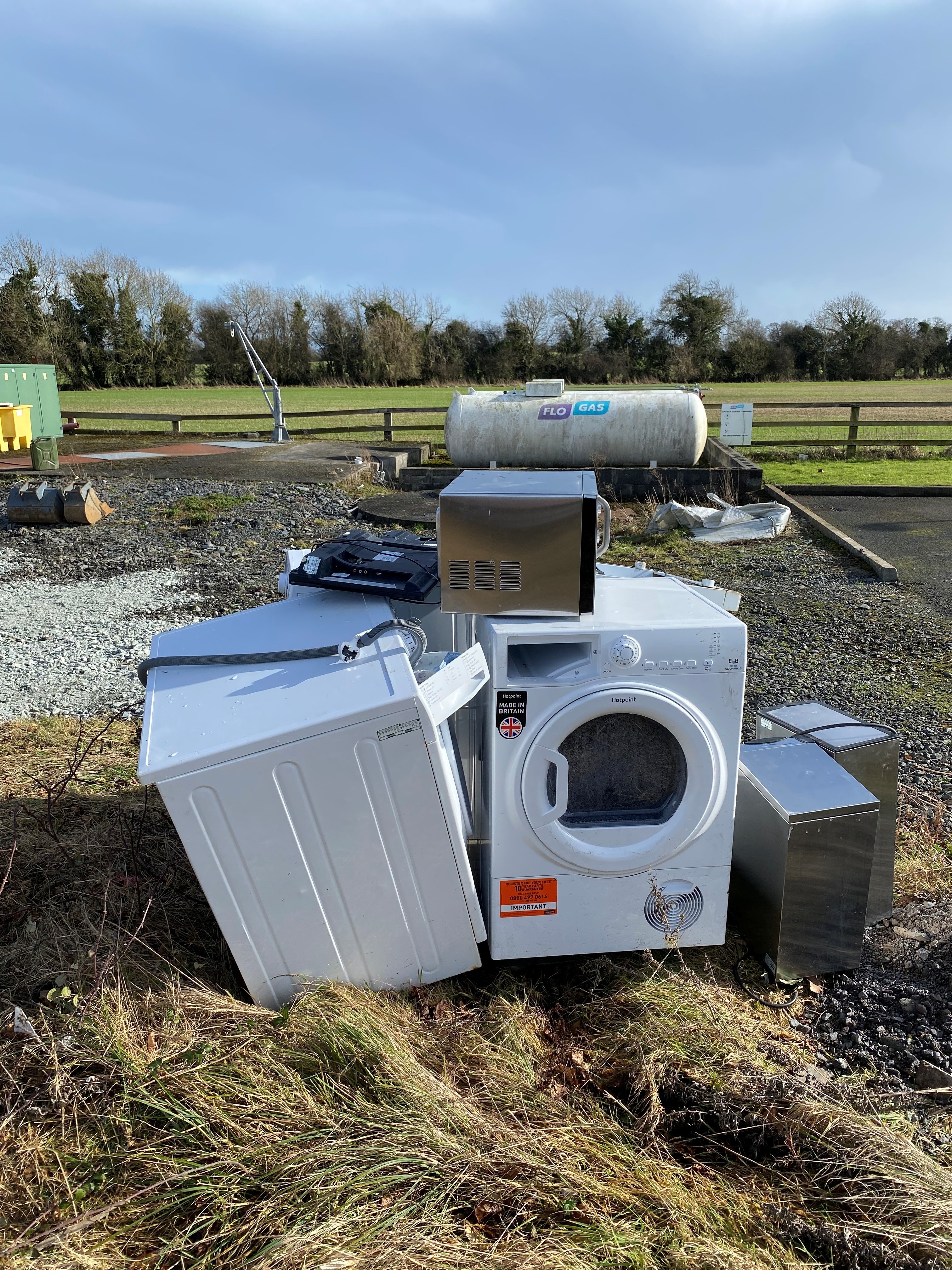
Think about it, when you take the time to carry your old TV or radio down the stairs, you might actually be handing it over to someone who simply loads it up onto a truck for delivery to a developing country or alternatively takes a few parts out and leaves the remainder on an Irish county road in the dark of night.
Is handing these items to a no-named collector in a non-authorized or unlicensed waste collection van the right choice?
Unofficial Collectors
Depending on market prices collectors can generate an income by sending products to other countries or simply by dumping the items. This is particularly true for recycling computers, tablets, TV monitors, printers and other electronic items. Recycling electrical and electronic items officially costs more in Europe but the collector can get paid for exporting them to buyers in developing countries who will remove the metals for resale but won’t pay to protect their staff or their communities from the toxic emissions and waste.
As the price of metal increases washing machines, tumble dryers and dishwashers are becoming increasingly attractive items for unofficial recyclers. These items are stripped locally and unprofitable waste is disposed of in hedgerows and fields making our communities untidy, dismal and possibly toxic places to live.
Costs of Illegal Dumping
More than 60,000 instances of illegal dumping have cost Dublin City Council more than €5.2 million to remove since 2019, according to figures published in the Irish Times,15 Sept 2024. In South Dublin the cost was estimated at €127,000 per month for 2023. This spending on clean up and similar amounts from other county councils areas could be saved and reinvested in local communities if illegal collection and dumping could be stopped.
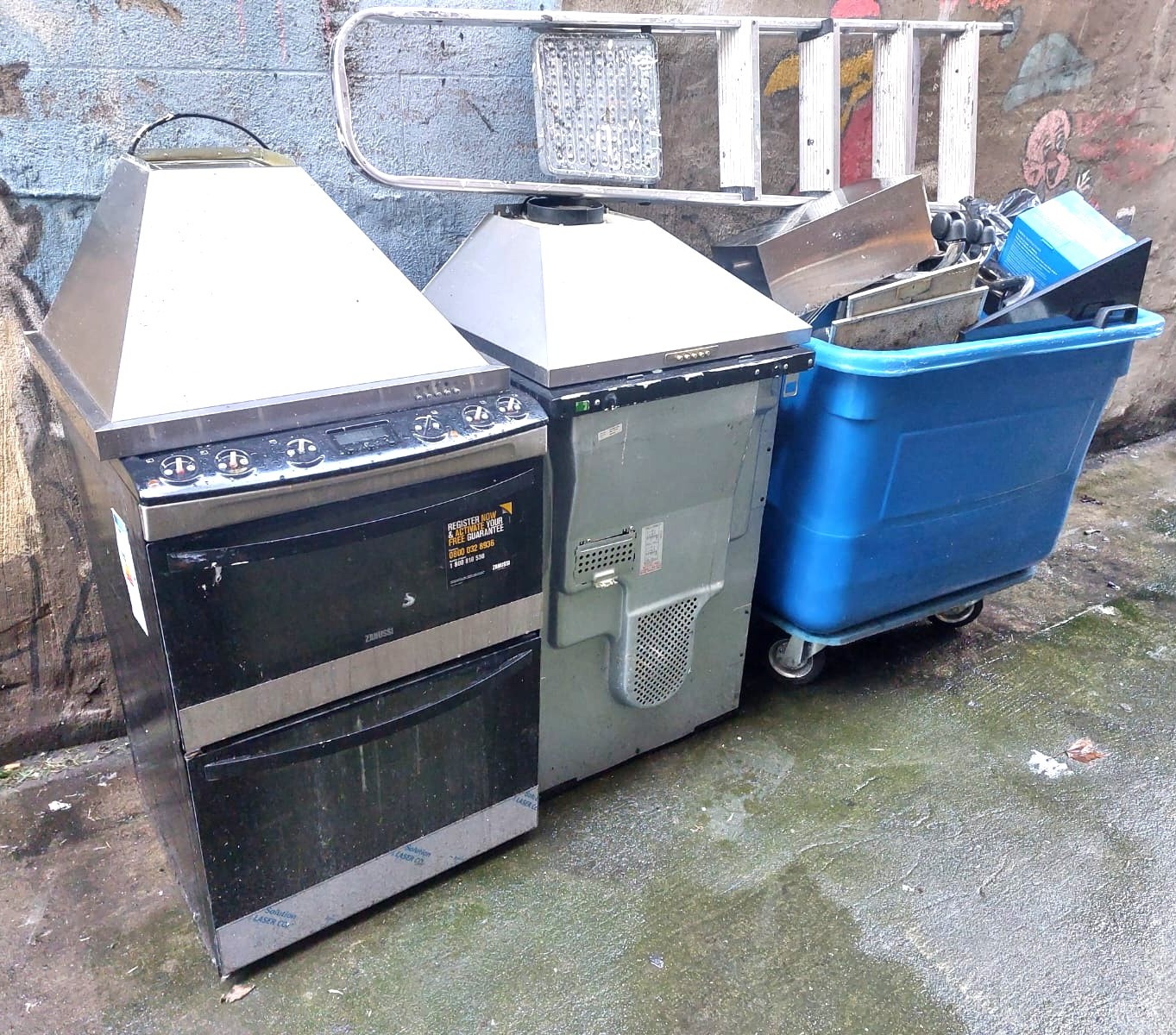
The disposal of rubbish in any area of land in Ireland without licensed approval and permission is illegal. It is punishable by fines from €150 up to €10 million upon conviction and 10 years imprisonment. In order to know more about a bogus collection, we have compiled the list below.
14 tips on spotting a Bogus Recycling Collection?
- The leaflet presenting the collections service is of low quality.
- The collector does not provide a waste facility address on leaflets
- The waste facility license number is not visible on the leaflet.
- There is no landline telephone listed on printed materials.
- The phone is never answered when called.
- An email address is omitted from the flyer or poster.
- The collector has no website or social media presence.
- Collection vehicles don’t have a waste collection permit number on display. (required by law)
- Collections are made outside of traditional business hours.
- Collection representatives don’t have any formal identification.
- Only certain waste items are collected i.e. the most valuable.
- A bogus charity may be named on the collection flyers or posters.
- No help or support is offered to move or lift heavy electrical items from homes or businesses.
- No personal service or advice is offered on recycling different products.
It’s complicated!
It’s not easy to determine whether a recycler is exporting or illegally dumping your once loved stuff including electrical or electronic waste like hairdryers or phones. You can’t just go by what they say! Some will use environmental or charitable causes that sound good, but they are still unofficial. If you have a gut feeling it’s not right, follow that feeling and don’t leave the items out for collection.
Ask yourself the question – Who’s Paying?
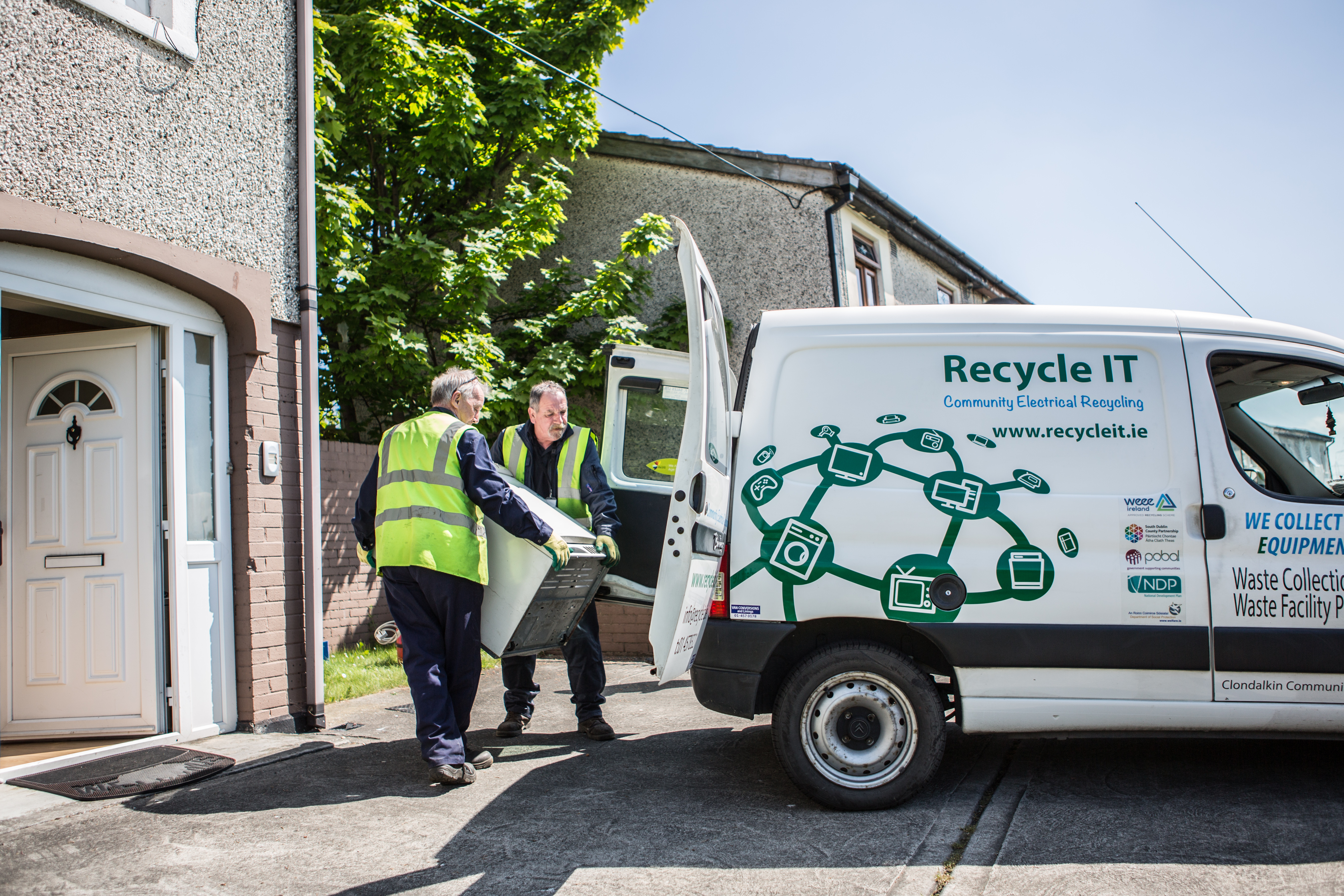
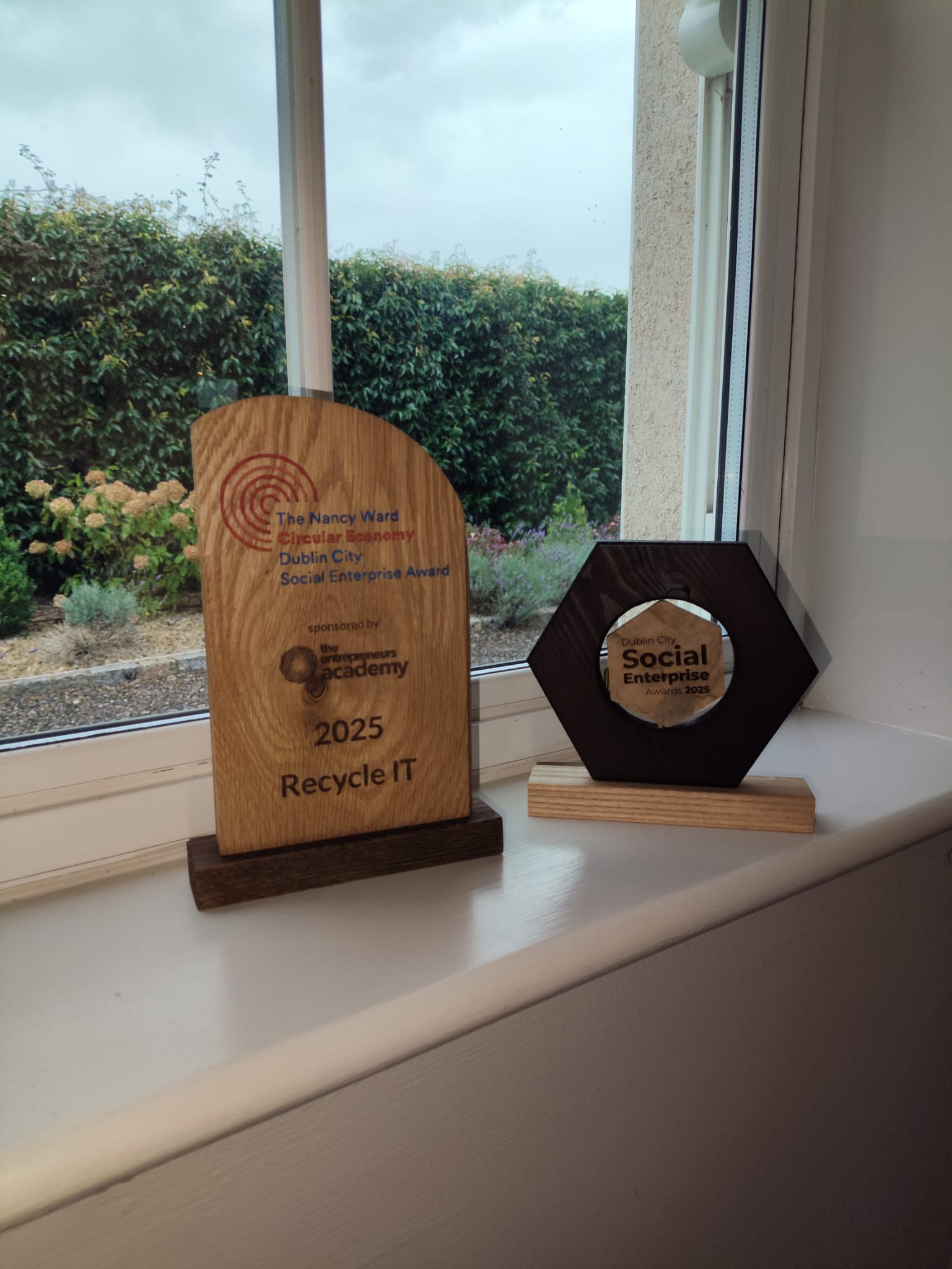
One way to determine an official collector versus an unofficial collector is to figure out who is paying the recycling cost. If it’s free for you to recycle, then who is paying? A manufacturer? The State? Local Authority? If you are not paying, and there is no clear sponsor paying the costs for collection and recycling, please question the validity of the collector. For example, Recycle IT is a social enterprise that received some funds and also generates an income from responsible recycling.
County Councils across Dublin at different times have warned residents to ignore these types of collections promoted by paper recycling flyers that have been put through letterboxes. They generally have no waste permit or collection permit numbers noted.
It’s worth noting, that it is an offence for any person to hand over their waste for disposal to an unauthorised waste collector. Fines of up to €5,000 may be imposed on individuals upon conviction in the District Court.
You must always ensure that any company or person you engage to collect your waste possesses a valid Waste Collection Permit. Any reputable waste collector is obliged to display the waste collection permit number on all vehicles, flyers and receipts.
You can check if the waste collector is authorised on the National Waste Collection Permit Office website; http://www.nwcpo.ie/permitsearch.aspx and enter details in an advanced search.
About Recycle IT
Recycle IT is the only Community Electronic Recycling Social Enterprise in Dublin providing a neighbourhood collection service for all types of waste electrical and electronic equipment (WEEE). In 2021 Recycle IT offered collection services to thousands of homes, community groups and businesses across Dublin and surrounding areas collecting a range of WEEE including monitors, computers, cookers, and TV equipment.
Recycle IT services are provided in partnership with WEEE Ireland. Recycle IT is supported by the Department of Rural and Community Development. Pobal, South Dublin County Council and authorised by the National Waste Collection Permit Office and the local authorities across Dublin, Kildare and Wicklow.
Visit our website for further details or call 01 4578321.
 Recycle IT