Easy Guide to Climate Change

Global Change

Scientists across the world generally agree global warming if not curtailed will have a devastating effect on our planet. Climate change already occurring in most countries across the world even if we can’t see or feel the impacts just yet!

Human activities over the last century or more have helped increased carbon-dioxide emissions in driving up temperatures. Extreme weather and melting polar ice now appear to be some of the known effects.
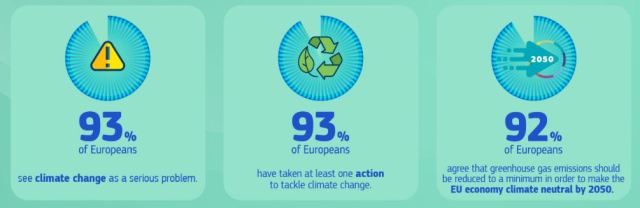
Climate Change
What People in the EU think about Climate Change

Did You Know?

Did you know the earth has an average temperature of 15 degrees celsius? The temperature has been higher and lower over long periods of history and there are natural changes but scientist agree the temperature is rising and rising beyond the normal average and at a faster pace.

The global climate is the interconnected system of the sun, earth and oceans, wind, rain and snow, forests, deserts and savannas. This interconnection includes everything we as people do and decide to do. (have a think about that).
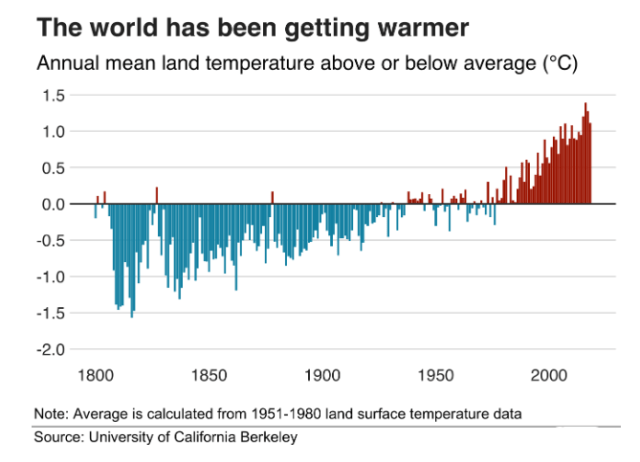
2020 tempsnip
Temperature Graph

Facts – Temperature and Heat

Global warming is the slow increase in the average temperature of the earth’s atmosphere due to an increased amount of energy (heat) striking the earth from the sun. This energy (heat is being trapped in the atmosphere and not radiated back out into space.

The earth’s atmosphere has always acted like a good greenhouse to capture the sun’s heat. Without this natural and beneficial atmospheric greenhouse, the earth would be very cold. Global warming, however, is the equivalent of the suns heat getting trapped on the earth (over time) and not escaping into space. This extra heat causes all types of changes, some we know about and some we are yet to find out about! So to recap, too much heat getting trapped in our atmosphere or inside the greenhouse known as earth. Due to this, the temperature of the earth is going up faster than at any other time in history.

1_greenhouse_effect_rev_5-22-19
NASA – The Greenhouse Effect

The 3 most common positions taken on global warming: (what the experts say).

(1) global warming is not occurring, therefore, climate change is not happening. 

(2) global warming and climate change are natural, cyclic events unrelated to human activity.

(3) global warming and related climate change is happening because of human activity.

Who to Follow

We follow the scientists who say; the current warming of the earth can be traced to the end of the 18th or beginning of the 19th century when coal first came into common use. This warming trend increased with our use of fossil fuels like petrol, diesel and gas as well as the introduction of millions of products made from oil like plastics. Who do you follow?

Just to say we at Recycle IT are not experts, but we are learning and you can learn more at NASA who offer on online knowledge-base. Met Éireann also provide information. You will find a link below.


Learn More

Met Éireann’s helps in measuring our past and current climate, and have a role in helping to predict Ireland’s future climate. They have access to data from the mid-nineteenth century onwards and can see a rise has occurred in the average global temperature and believe the rate of change in recent times cannot be explained by natural causes alone. You can learn lots more from Met Éireann here including access to videos explaining climate change.
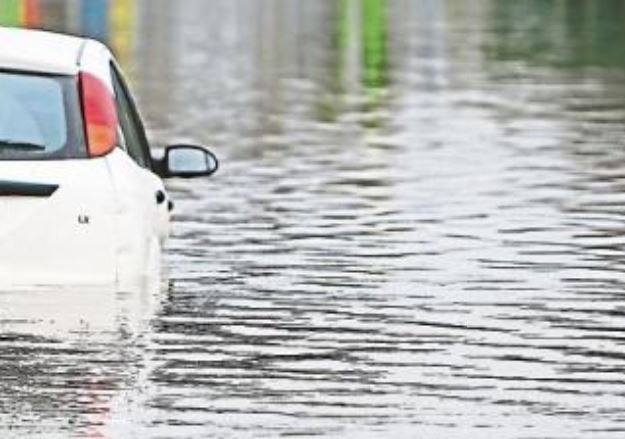
1 2020 Shannon Flooding Offaly Express
Offaly Express Newspaper – River Shannon Flooding – 

Some Simple Steps to Help –

Reducing waste, recycling and composting are effective ways to decrease the generation of greenhouse gases, such as carbon dioxide and methane. They achieve benefits by

  • helping save energy in the processing of materials for industrial and consumer use.
  • reducing the flow of materials — especially food and other organic wastes — into landfills where anaerobic decomposition produces methane.

Recycling of metals can be an excellent way for homes and offices to conserve energy, e,g. using recycled aluminium scraps to make and remake aluminium cans takes 95% less energy than making aluminium cans from mined ore. Steel is another example, it takes 75% less energy to make recycled steel than steel made from raw iron ore. As a starting point, we suggest recycling all types of used metal, large, small, round, square, it matters little what it was used for, just gather it together and recycle! You will find a metal recycling list here.

Other steps include;

  • Use less heating and air conditioning.
  • Replace light bulbs with LED or CFL bulbs.
  • Drive less and drive smart including car sharing.
  • Use public transport.
  • Use less hot water.
  • Power off computers, lights, TV’s and game consoles.
  • Plants some trees.
  • Spread the word.

April 22nd is Earth Day – learn more at www.earthday.org

Posted by Recycle IT

Recycle IT, is an award-winning social enterprise offering electrical, electronic and metal recycling services through drop off and collection. Services are provided in partnership with WEEE Ireland and South Dublin County Council.

Recycle IT are supported by Pobal and Dormant Accounts and authorised by the National Waste Collection Permit Office and the local authorities across Dublin, Kildare and Wicklow.

For more information on Recycle IT please call 01 4578321, email info@recycleit.ie or visit our website www.recycleit.ie
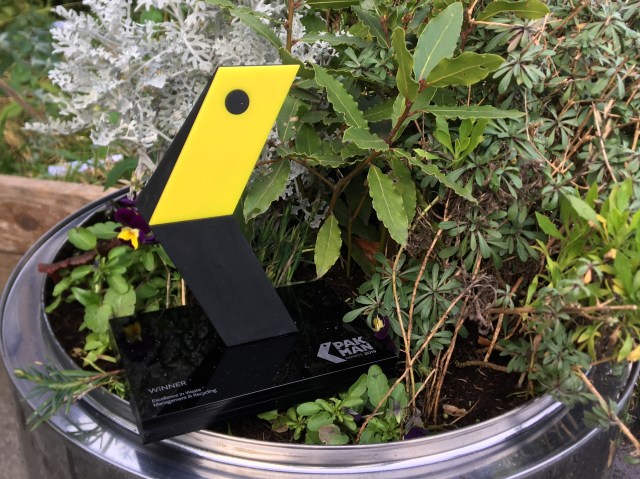
IMG_0453 (2)
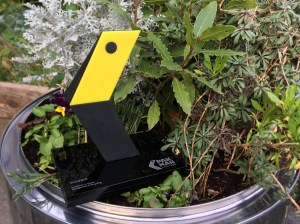
Recycle IT – Repak Award Winner 2019 – WEEE Champion


Social Enterprise – Buying for Community Impact

Business like any Other! 

A social enterprise is an enterprise, which operates like a business but also pays attention to reducing community concerns and challenges in areas like training, employment, housing, care, education, environmental pollution, recycling and more. Actions and impacts are achieved through business operations. Recycle IT is a social enterprise based in Dublin.

You will agree most rational consumers make a purchase decision based on the exchange of value, usually money. Most of the traditional buying decisions are based on product or service quality, value, performance or benefits so a social enterprise has to match this expectation. It”s just not good enough to be a not for profit social enterprise and trade on that!!

Trading Through Social Enterprise

Conscious Consumers 

Becoming a social consumer is about making socially responsible choices when spending your hard-earned income. Thinking about how best to spend your earnings can be an easy way of taking responsibility for your choices and purchase decisions.

In our estimation, the number of socially conscious consumers in Ireland taking responsibility is on the rise. As more social enterprises offer great and in-demand products and services consumers are happy to use their spending power on those products and services. When you decide to buy from a social enterprise, your spending is reused to support a range of social endeavours.

A large portion of social enterprises in Ireland work with individuals or are located in socially and economically disadvantaged communities. Their goals can include creating training and employment opportunities for disadvantaged groups such as early school leavers, people with differing abilities, ethnic groups, ex-offenders and others. 

Making the Difference

When you buy from a social enterprise you actually invest in people, not profit. You can really help make changes to the lives of others by improving communities around you. Your decision to purchase can help support people in learning new skills, building confidence, working in teams and earning an income for delivering products and/or service in communities all over Ireland.

Change is Good

Lots of social enterprises offer innovation around their products and service offering meaning that you will get great quality and reliability;  whether that’s FairTrade coffee, hand-stitched clothes, second-hand furniture or easy mattress recycling.

Buying social doesn’t have to mean skimping on quality. Do your research on local social enterprises, check reviews to see what others say and call to learn more. If you like what you see or hear,  why not give them a try.

Customer Journey

Feeling Connected

It can be hard to know where your money ends up when you buy from larger organisations. Sometimes you need to check if companies are connected to operations in other countries and if your money could end supporting an unethical or environmentally hazardous activity, employing child labour or polluting rivers and lakes. When you buy from a local social enterprise, their business practices are generally transparent and guided by local rules and regulation. You should feel better knowing your money is being used for positive impacts.

Experience

Over the last few years Recycle IT has seen a greater number of organisational and personal consumers consider our social enterprise as an option and solution for their electrical, electronic and metal recycling needs. There is no reason why this experience can be shared by other social enterprises once consumers are aware, have a need and are willing to spend! 

European Picture

The EU has helped complied country reports to provide a comprehensive picture of social enterprises and their eco-systems in France, Italy, Spain, Belgium, Slovakia, Poland and Ireland based on a common definition. A concise EU report sums up key lessons on the recent developments in Europe.

An important finding is that both social economy and social enterprises have shown resilience and job retention during economic crises and beyond

In Closing 

Growth of social enterprise is an emerging trend worldwide. Climate change, human vulnerability, environmental degradation, poverty, homelessness, unemployment, mental health, differing abilities, unethical business practices are some of the factors driving growth.

Team Work

The characteristics of social enterprises demonstrate they are businesses which trade for social purposes including change. They reinvest surplus earning in their primary goals and work to maintain a high ethical standard in the delivery of products and/or services.

We encourage you to find social enterprises close to you and if suitable use their offerings to address your needs, in other words, buy from them if it suits you!

You will find a list of social enterprises (some, not all) operating in Ireland here

About Recycle IT

Recycle IT, is an award-winning social enterprise offering electrical, electronic and metal recycling services through drop off and collection. Services are provided in partnership with WEEE Ireland and South Dublin County Council.

Recycle IT are supported by Pobal and Dormant Accounts and authorised by the National Waste Collection Permit Office and the local authorities across Dublin, Kildare and Wicklow.

For more information on Recycle IT please call 01 4578321, email info@recycleit.ie or visit our website www.recycleit.ie

Van 2020
Van with Recycle IT Logo


Recycle IT – Homegrown Heroes: Vote!

Why we are featuring as Homegrown Heroes

Recycle IT is an award-winning social enterprise and community-based recycling initiative providing recycling services for waste electrical, electronic equipment (WEEE) and metal in Dublin and surrounding counties

IMG. 001 Website
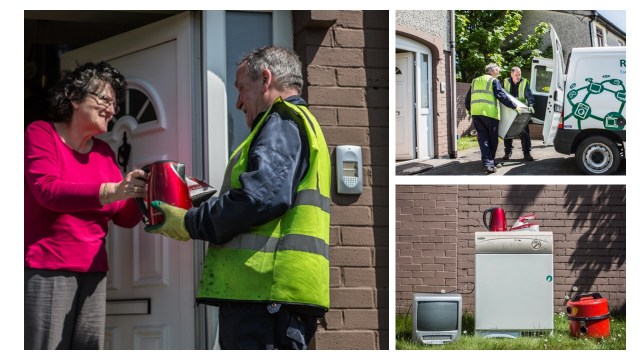
Householder Recycling Collection

The organisation was established as Clondalkin Community Recycling Initiative in 2002 to offer training and employment opportunities and reduce environmental harm created by the dumping of old appliances on brown and greenfield sites in Dublin.  As we developed over the years Recycle IT endeavour to be innovation, impactful, improve people’s lives and address societal and environmental challenges.

Recycle IT is governed by a voluntary board of directors and is committed to the standards outlined in the Governance Code Principles in IrelandRecycle IT have recently applied to the Charities Regulator to determine our suitability as a charity. We have recently extended our recycling permits across the Leinster region to support increased recycling.

Van 2020
Van with Recycle IT Logo

Not for Profit Social Enterprise

Recycle IT operates with support from South Dublin County Partnership, Pobal, the Dormant Accounts Fund, South Dublin County Council and in partnership with WEEE Ireland. We also generate our own income to support operations.

As the organisation has developed it has offered an increased number of work experience, training and employment opportunities and now operates with over 25 people in full and part-time positions. Colleagues in these positions deliver community recycling services daily. They lift and move items daily for safe recycling and offer assistance with a smile.

Training and Work Experience - Recycle IT
Training and Work Experience – Recycle IT

Over the last 18 months, our team have archived an organisational milestone of safely recycling over 1100 tonnes of waste equipment received from householders, residents groups, schools, college charities, community groups and businesses.

Please Vote:

The staff team have been handpicked by Panadol Ireland as one of their Homegrown Heroes to shine a light on the work he does in his community. The campaign seeks to identify and recognise community heroes across Ireland who make a difference every day, who don’t let pain or discomfort get in the way of their commitment to their cause.

If you would like to support the work of Recycle IT visit the RTE Homegrown Heroes webpage and vote for us as your Homegrown Hero here. 

For more information on Recycle IT visit www.recycleit.ie


Environmental Design for Household Appliances – coming soon!

Appliance Lifecycle

Do you or your parents still use a washing machine, microwave or fridge purchased in the 1980s? A normal enough comment made about these older appliances is “they go forever”  

BBC News did some research and of all the washing machine models still washing the oldest was a Zanussi 918 having run for at least 31 years.  The oldest microwave was a National Panasonic Genius, bought in 1980 and still in service.

How about the fridge or washing machine you had delivered to your new home or apartment 4 or 5 years ago. They seemed to give up in no time. Very different experiences!

They really don’t build them like they used to? No, we don’t think so and the industry admits that the lifespan of white goods has fallen, but so has the price. So how long should a fridge or a freezer last, and is it worth spending a bit more on a better model?

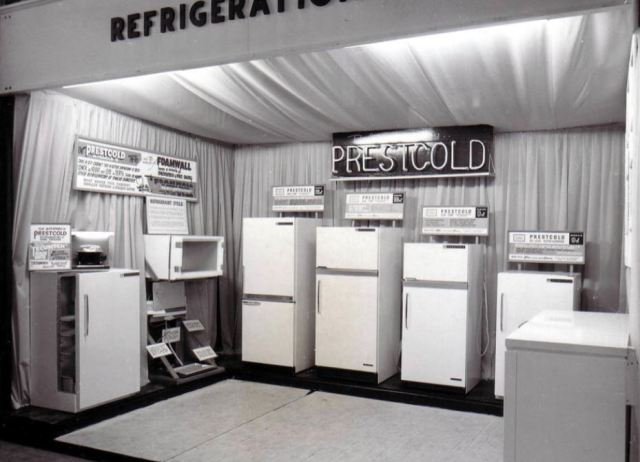
Fridge Display
Refrigeration Display (Prestcold), Electricity Exhibition 1972 – Sourced from “Horowhenua Historical Society Inc.”

Lifespan

The Whitegoods Trade Association says that over the past two decades electrical appliance prices have, in real terms, dropped largely due to consumer and retailer demand for lower-cost appliances. The reduction in prices has had several effects on the appliances themselves and a massive effect on the industry in general.

The average lifespan of appliances has dropped in relation to the prices. Now, over 80% of all washing machines sold cost under €600 while over 40% washing machines cost customers under €400 (approx.)

Cheaper household appliances (cheaper in real terms) really don’t have the same build quality, performance or longevity and therefore the average lifespan has dropped from over ten years to under seven years and it is not unusual for really low-cost appliances to only last a few years.

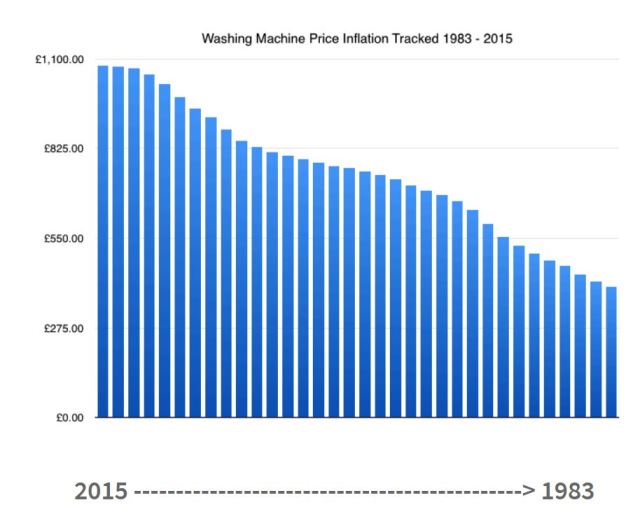
Washing Machine Price Tracker
Washing Machines GBP Price Inflation Tracked – Figures Sourced from Office of National Statistics (ONS)

You can find out more about the prices of washing machines and other appliances here, which explains how much they have been devalued over time.

EcoDesign

There is a world-wide demand for more efficient products to reduce energy and resource consumption. The EU legislation on ecodesign and energy labelling is an effective tool for improving the energy efficiency of products. It helps eliminate under-performing products from the market and a supports competitiveness, innovation and greater environmental performance from new products sold in the European Union.

What Happens Next

In 2016 large household appliances like washing machines and dishwashers accounted for 2.5 million tonnes or 55.6 % of the total waste electrical and electronic equipment collected and recycled in the European Union. (Source Eurostat). Ideally, some of these items could have been repaired or reused prior to recycling!

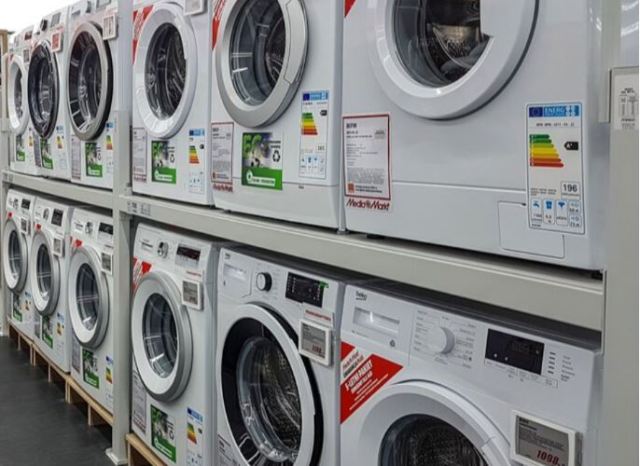
Eco - Washing Machines
Instore Image – Washing Machines

But change is coming, As of 2021, all TVs, monitors, fridges, freezers, washing machines, washer-dryers, dishwashers and lighting products placed on the EU market will have to meet minimum repairability requirements aimed at extending their lifetime. These products will also be made easier to recycle thanks to improved design and, in the case of displays, the removal of halogenated flame retardants.

The new measures are part of the EU’s Ecodesign Directive, which removes the most wasteful products from the market, replacing them with units that do the same job with less energy and resources. The repairability requirements can help deliver even more savings by slashing demand for new products and carbon emissions linked to manufacturing, distributing, using and disposing of products.

How ecodesign benefits consumers

  • Improves product information for consumers.
  • Allows for informed purchase decisions.
  • Allows performance comparisons across products (e.g. drying efficiency).
  • Increases the need for products to be useful during operation.
  • Easier to repair for reuse including the availability of parts.
  • Energy-saving resulting in a reduction of greenhouse gas emissions.
  • Water use savings from efficient washing machines and dishwashers.
  • Noise reduction in products such as dishwashers.
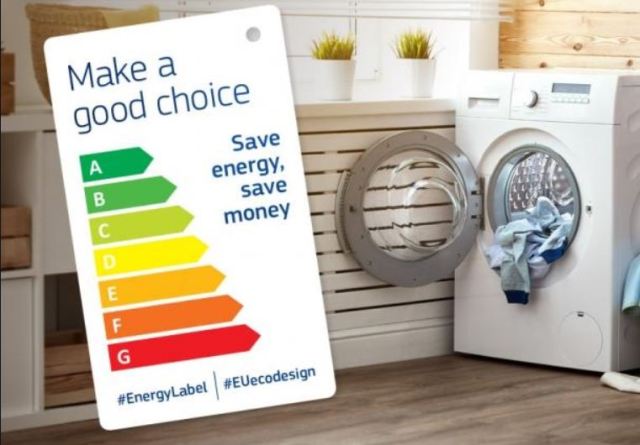
Eco Design
Eco-Label / Eco-Design

In Reality 

The policies should increase the energy efficiency of lighting products, common household appliances and industrial, electrical and electronic equipment. It also requires products to be easily reparability and recyclability in accordance with the EU’s Circular Economy Strategy. This should be good news for consumers and the environment but we will see in 2021 and after as we replace appliances!

About Recycle IT

Recycle IT is an award-winning not for profit social enterprise providing a collection and drop off service for all types of waste electrical and electronic equipment (WEEE). Over a last number of years Recycle IT have offered a drop-off and collection service to tens of thousands of homes, communities, schools, charities, and businesses across Dublin and surrounding areas recycling a range of WEEE which includes thousands of computers, cables, monitors, microwaves and TV’s.

Recycle IT services are provided in partnership with WEEE Ireland. Recycle IT are supported by South Dublin County Council and authorized by the National Waste Collection Permit Office and the local authorities across Dublin, Kildare and Wicklow.

Visit our website for further details about recycling old electrical items or call 01 4578321 to learn more.

IMG_0453 (2)
Recycle IT – Repak Award Winner 2019 – WEEE Champion

Reduce, Reuse, Recycle – 12 Resolutions

Now that you’ve, started walking, got on the treadmill or paid your fees and joined the gym for 2020 why not try a few less energic actions!  At Recycle IT  we have assembled 12 pointers to help you reduce, reuse and recycle during 2020.

It’s never too late to start taking steps to reduce your carbon footprint and become eco-friendly. Make it your goal and here are 12 potential resolutions for cutting down on waste, changing habits and maybe saving some money during the year and after.

1 2020 CAL
New Year Collection Calander


Cut down on energy usage. When you’re not using one of your many electronic devices such as phones, tablets, TV’s and laptops unplug them. This saves electricity and potentially saves money if you do it all the time.  Remember its best to turn your devices off even if you don’t unplug.

Bring your own cup and food containers. Coffee shops are now happy to fill your washable and reusable to-go cup and while your local waiter might take a second look at the to-go container you’ve brought from home to the restaurant: you know, it helps in reducing waste and clutter.

Fashion shopping.  Take action. There are far too many paper bags used and they are hard to recycle. It’s normal to bring bags food shopping so when you go clothes or shoe shopping please take a bag; one which folds into small pouches and can be easily placed in a handbag or jacket pocket – it’s easy!

Old clothes. The EU textile industry generates waste estimated at 16 million tons per year. Much of this waste ends up in landfills or is incinerated. Could you reduce your clothes purchases in 2020? Can you reuse your current wardrobe of clothes or recycle in a safe manner? (research what happens to your older clothes prior to giving them away).

Reduce polystyrene usage. If you are buying something new leave the polystyrene packaging at the store, for safe recycling.  If you need disposable plates for birthdays or picnics opt for something recyclable like paper. You can also ask your favourite takeaways to switch to an environmentally friendly alternative.

Bottled water and soft drinks. Stop buying bottled water and soft drinks in plastic bottles. The immediate result is less single-use plastic on the planet. It also saves you money and reduces the impact on the worlds natural resources. Refill bottles to save!

Refill-Ireland_Final
Visit www.refill.ie 

Tap water and energy. Most of us make tea or coffee at home or in the office; one easy tip is to fill the kettle with the amount of water you need for a cup, rather than filling it each time. If you’re using coffee pods, make sure you recycle them safely. Most suppliers have a recycling scheme.

Leftovers.  After parties, you might have half-finished cans or bottles of cola. Why not use them to clean areas of your home. Cola drinks contain carbonic, citric and phosphoric acids which are often found in household cleaning products. Leave the cola to clean sinks or toilets, soak for an hour with the cola, then use a brush to clean and wash away. If you don’t have any cola, try vinegar, it works as well!

Drive less. Walk, run, cycle or use public transport (bus, Dart, Luas, trains) where and whenever possible. This is good for the environment, it offers exercise and saves money in the long run. Some activities can also be fun when family and friends join in!

Bike to work. Take advantage of the Irish Government initiative offering tax-free bikes for cycling to work.  The Bike to Work scheme allows your employer to help you obtain a brand new bike and safety equipment worth up to €1,000. It saves you money, on the purchase of equipment, replaces your existing mode of travel and helps the environment.

bike-to-work
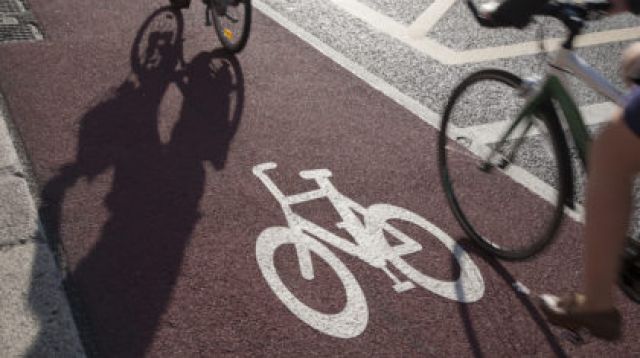
Dublin City Council – Bike to Work Lane

Curtail clutter. As new items replace old or damaged equipment please try to recycle immediately. This reduces clutter and free’s up space in your home or office. Items which are replaced are rarely used again, Old mobile phones, tablets, radio’s, laptops, computers etc sit around for years. If safely recycled, the parts can be reused to create something new. It makes sense!

Furniture reuse. Consider reusing furniture or upcycling to divert furniture from landfill. To reduce your carbon footprint and reduce the costs incurred by buying new furniture try to maximise the reuse, repurpose (and fixing) and recycling of furniture while minimising the quantity of furniture that is disposed of.  If you really need to replace items offer the old stuff to others using programmes such as Freetrade or Age Action.

Start today

It doesn’t take a lot to make your new year more environmentally friendly. You can try some or all of the above New Year resolution or come up with some of your own. If you do please let us know what you’re planning on doing to reduce, reuse and recycle and make your home and your family more eco-friendly in 2019.

About Recycle IT

Recycle IT is an award-winning not for profit social enterprise providing a collection and drop off service for all types of waste electrical and electronic equipment (WEEE). Over a last number of years Recycle IT have offered a drop-off and collection service to tens of thousands of homes, communities, schools, charities, and businesses across Dublin and surrounding areas recycling a range of WEEE which includes thousands of computers, cables, monitors, microwaves and TV’s.

Recycle IT services are provided in partnership with WEEE Ireland. Recycle IT are supported by South Dublin County Council and authorized by the National Waste Collection Permit Office and the local authorities across Dublin, Kildare and Wicklow.

Visit our website for further details about recycling old electrical items or call 01 4578321 to book a collection in the New Year!

IMG_0453 (2)
Recycle IT – Repak Award Winner 2019 – WEEE Champion