The Community Reuse Network Ireland are delighted to announce CRNI’s biennial conference will take place on 27th September 2018 at the Smock Alley Theatre.
With speakers from across retail, authorities and research institutes, this conference will explore from all angles in a highly interactive way how to change habits to make reuse part of our everyday lives at home and in business.
Community Reuse Network Ireland Conference 2018
Two ticket types are available – a full day conference and half day (afternoon session).
Those attending for the full day will hear about current attitudes towards reuse and consumption in general, as well as successful campaigns and tools being used to encourage more sustainable behaviour. Speakers include Eamon Ryan TD, the EPA, Oxfam, Zero Waste Scotland, ReCreate, VOICE, WRAP UK and IKEA. This ticket will also include lunch and access to the afternoon session.
The afternoon-only ticket will give access to an exciting journey mapping workshop exploring cultural probes hosted by Simon O’Rafferty as well as talks and a discussion on Cultivating a Repair culture, involving the Sustainable Consumption Institute Manchester, Hubbub, Rediscovery Centre and University of Limerick.
General admission for the day costs €40.00. If you are a CRNI members entry is free but you must register. Click here for the free and fee registration.
The Community Reuse Network Ireland look forward to seeing you there and you can learn more about the network here
About Recycle IT
Recycle IT is an award-winning not for profit social enterprise and member of CRNI. We provide a collection and drop off service for all types of waste electrical, electronic and metal items. During the last 18 months Recycle IT offered drop off and collection services to 140,000 homes and organisations in Dublin and surrounding areas collecting a range of WEEE which includes thousands of dishwashers, computers, cables, monitors, microwaves, TV’s and metal items.
Our electrical community collection service is provided in partnership with WEEE Ireland. Recycle IT are supported by Pobal, South Dublin County Council and authorized by the National Waste Collection Permit Office and the local authorities across Dublin, Kildare and Wicklow.
To speak with Recycle IT please call 01 4578321 or email us at here
Recycle IT are delighted to be announced for the second year in a row as one of the organisations shortlisted for a Chambers Ireland 2018 Corporate Social Responsibility award.
Our organisation is in good company with over eighty organisations across fourteen award categories shortlisted for an award. Recycle IT has been selected in the small and medium enterprise category for our Residents Electrical Recycling Initiative.
Chambers Ireland
These prestigious Irish Awards celebrate motivated companies which work towards and achieve high standards of corporate social responsibility. The awards recognise and honour the companies and people focused on doing their best.
Corporate Social Responsibility aims to ensure that companies or organisations conduct their business in a way that is ethical. This can mean taking account of their social, economic and environmental impact, and consideration of human rights.
It involves a range of activities including:
Working in partnership with local communities
Socially responsible investment (SRI)
Developing relationships with employees and customers
Environmental protection and sustainability
Across the fourteen categories named in CSR Awards many leading Irish and international organisations have shown that they are at the forefront of CSR through a range of projects and activities both internally and externally to their workplace. Many focus on actions related to four points noted above.
Ireland aims to be recognised as a centre of excellence in CSR
The Government’s vision as set out in the National Plan on CSR “Towards Responsible Business” 2017 – 2020, is that ‘Ireland be recognised as a centre of excellence for responsible and sustainable business practice and this is a goal for those who have entered the awards including Recycle IT.
Towards Responsible Business: Ireland’s National Plan on CSR 2017-2020
Well done!
Recycle IT wish offer congratulations to all who have participated and best of luck to those short-listed. For a full list of shortlisted organisations and more information please visit the Chambers Ireland website
The Awards Ceremony will take place on the evening of Thursday, 20th of September 2018.
About Recycle IT
Recylce IT offer free and cost effective electrical, electronic and metal recycling collections across Dublin and surronding areas. To learn more about Recycle IT, a not for project, social enterprise please visit www.recycleit.ie
Schools, colleges, community groups, residents groups and charities can give Recycle IT a call on 01 4578321 to learn more and book a free colleciton.
Did you know 38% of the mountain of refuse at Panda’s huge Dublin facility is not recyclable and has to be searched by hand, says Caroline O’Doherty from the Irish Examiner!
AFTER a few moments inside one of the country’s largest recycling facilities, confusion sets in! Towering above is an 80-tonne mountain of mixed waste, with a tangle of torn plastic shopping bags and black sacks threading through it.
Des Crinion, Panda Irish Packaging Recycling, managing director, standing among bales of recyclables ready for shipping. Picture: Moya Nolan
Mouldy food, toilet wipes, soggy cotton pads, aerosol cans, broken toys, old socks, worn shoes, ragged jumpers, cat poo, an iron, a lamp, a long, twisted, jagged metal strip, of the type used by carpet-layers, a car’s wing mirror, a burst basketball, and nappies — lots of nappies — cling to just a few square feet of the mountain (a few years ago, a dead labrador was found within the mountain).
The next few feet are much the same. And the next. And soon it’s clear that the whole mountain is riddled with rubbish.
This special report by the Irish Examiner titled “Failure of Irish households to recycle properly is a massive waste of time” is shared by Recycle IT in the hope of encouraging change at homes! You can read more below
But where are the contents of the green bins?
“This is it,” says Irish Packaging Recycling managing director Des Crinion, coiling the trailing cable of the iron as he speaks. “And it drives us doolally, every hour of every day.”
Undoubtedly, the Chinese have their own word for ‘doolally’, but, whatever it is, they were driven there, too.
Waste Baled by Panda
The world’s largest importer of recyclables has had enough of the low-grade, poorly segregated and contaminated materials, which have been coming into its ports. It has shut the gates until further notice, maybe, even, forever.
Ireland is not alone in causing the problem or in suffering the consequences, but the action has put a spotlight on both our addiction to packaging and our less-than-impressive recycling practices.
At the IPR facility in Ballymount, Dublin, the green- bin collection from 300,000 homes provides ample illustration of the problems.
Des begins the tour of the 7,000 sq m depot in the tipping area, where the collection trucks add to a mountain that feeds 300 tonnes of waste into the operation every day.
The arrival of a large flock of seagulls, only briefly interrupting the toing and froing of crows and other scavengers, tells you what you don’t want to know: That despite the constant pleas to householders to only place clean, recyclable packaging in their green bin, the message is falling on apathetic ears.
A half-full tub of hummus tumbles down the mountainside. It might once have been tasty, dipped with the pizza crusts protruding from a torn black sack nearby — a sack it shares with one of those foil-lined bags used for taking away cooked chickens from supermarket deli counters.
The bag is bulky, so it seems likely the chicken carcass is inside. The seagulls look hopeful. Des picks out a filthy, two-litre plastic milk bottle and sighs.
“Here’s a lovely bottle,” he says, for he sees lovely in a different way to most. “Somebody has gone to the bother of washing it and squashing it and putting it in the green bin, and now its covered in bits of somebody else’s food and that will make it difficult to sort.”
He places it back in the pile, almost tenderly, with a look that says he hopes he makes it to the other side. There’s a long way to go.
“A lot of the big stuff is taken out here,” Des says. “The guys will pull out the mattresses, the bicycles, the wheelie bins, the shopping trolleys…..”
They missed the labrador on the day when someone decided it constituted recyclable material.
The Panda Irish Packaging Recycling plant on Ballymount Rd., Dublin. Picture: Moya Nolan
“That got picked up here,” says Liam Dunne, plant manager, as he continues the tour at the first stretch of the 1.3km of conveyor belt that carries the waste through the sorting process.
“Here” is where outsized pieces of cardboard, and other awkwardly sized or shaped objects, are caught. It is also, unfortunately, where they sometimes catch the machines.
Despite the sharp eyes and speedy hands of the pre-sorting crew, the belts can be brought to a halt by a fugitive plastic sheet, textiles, the baling wire that holds briquettes together, or electrical cables that get caught on cogs and jam the machines.
“Paper till-rolls and the transfer rolls that stickers come on are awful,” says Liam. “They’re like ribbon, running up and down every conveyor, and if it ends up in the plant, we have to get in, literally, with bread knives and cut it out.”
Videotapes used to be a big issue, too. Not only are they not recyclable, but, if they broke, the stringy tape would spill out like Spiderman’s web, entangling everything in its reach. Now, they only make an occasional appearance, but mental alarm bells ring just as loudly.
As he speaks, a mop head whizzes by, deftly extracted by a member of staff, followed by a sock, an aerosol can, a bag of garden waste, a sheet of polystyrene, a quarter of a sliced pan, several potatoes, and the ever-present nappies.
Des holds aloft a toilet brush. “It’s like the Generation Game,” he says.
Des Crinion holding a side mirror from a car and an iron, just two of thousands of items that should not be in household recycling bags. Picture: Moya Nolan
And yet they’re not fazed or frustrated. Their main concern is danger.
“Anything that gets hot is a priority — a camping gas-cylinder, a laptop battery. Anything that could cause a fire hazard has to come out of there,” says Liam.
The next phase of the sorting is automated and, to the layperson, highly technical, although Liam says it is just a more sophisticated version of the plant that is used by agri-companies to sort products by size and type.
Currents of air are used to whoosh away paper, card, and plastic film on to separate conveyor belts, while whirling discs which measure size delve closer to sort flat items from three- dimensional objects. Other screens separate the lightweight paper from the larger, fibre or cardboard.
Overhead magnets pull out metal items and an eddy current shakes out the aluminium cans, which are high-value, although they make up just about 1% of the total waste here.
They also pull out Pringles crisp tubes and other interlopers, because, although they’re mainly cardboard, the bottoms are shiny metal.
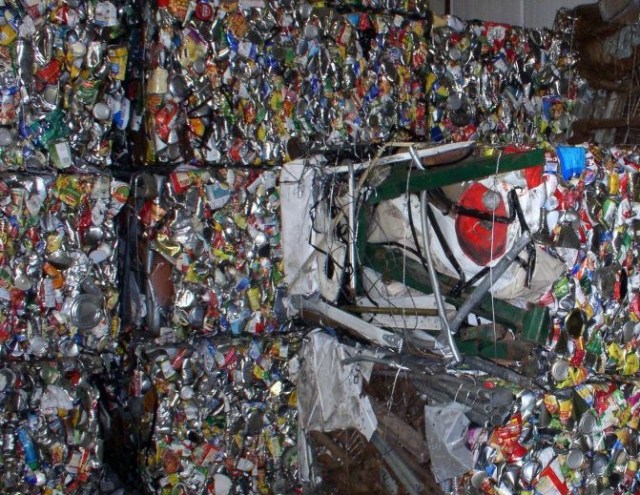
It’s disconcerting to see an otherwise neatly packed, five-feet square bale of compressed aluminium cans ready for dispatch to a new life abroad, with a bright green tube of sour cream and onion strapped in for the ride.
“Composite packaging is a big problem,” says Liam. Blister packs of tablets are a particular bugbear. Plastic on one side, aluminium foil on the other, they might get picked up as metal or as plastic.
Either way, they are not recyclable and they are classified, worldwide, as medical waste, so if a customs officer thousands of miles away spots one during an inspection, the shipment gets turned away as fast as if said waste was someone’s extracted tonsils.
Window envelopes are another example of composites that cause grief. Predominantly paper, but with a plastic film window, they contaminate whichever bale they end up in.
Some of the best-known brands cause some of the biggest headaches. Big-name soft drinks may be popular choices in the supermarket aisle, but they have fewer fans here. Their bottles are often made of PET plastic, which is then enclosed in a wrapper made of LDPE. There’s no better way to confuse machines whose job it is to sort one from the other.
The machines are optical separators, which blast objects on the conveyor belts with light, gauge how it is reflected, and segregate the plastics accordingly. Like one of those electronic fly zappers, it hisses each time it hits the plastic it has been programmed to detect, prompting air nozzles beneath to blast the chosen object and eject it onto a dedicated belt.
A perforator punctures any plastic bottles that are not squashed, so any that contained liquid — there was at least one full water bottle beside the iron at the tipping floor — should have been manually extracted before then.
Broken glass and ‘fines’ — the too-nice name given to the small bits and bobs of debris that get shaken, blown, and tumbled loose from the rest of the waste — get filtered out through yet another, separate chute.
Somehow, despite all the various sorters, screeners, and separators, nappies still elude capture, thumbing their smelly noses at Liam and Des, as they watch them ascending another belt, having cleared yet another hurdle.
A final manual sort may save the day, but, inevitably, some sneak by, even here, and make it into the baler, usually mixed with paper. Sometimes, they’re visible and can be pulled out before loading.
Des removes one at the corner of a bale that had drawn his eye, because a bright-purple sachet of cat food and a red crisp bag also squeezed through into this particular collection.
Liam outlines the consequences.
“If there’s a nappy in the bale, it’s going on a six- to eight-week journey,” he says. “It passes through three different climates. It’s sweating. You can only imagine what it’s like when it gets to China.”
Wet paper and cardboard may seem small, but they mushroom with time and temperature.
Bales of recyclables ready for shipping at Panda Irish plant in Dublin. Picture: Moya Nolan
“The damp paper seeps into the dry and if it’s nice and warm, you get fungus growing in the middle of the bale. Imagine what that’s like to open up,” says Des.
Clearly, some householders have no imaginations.
Nationally, according to Repak, green-bin contamination runs at 30% in urban areas, though it falls to 18% in rural areas.
But it’s not just parents who cause problems for the green-bin system. Adult incontinence pads frequently turn up and nursing homes and other care facilities are regular offenders.
“Those pastel-green and blue disposable gowns — the ones that look like paper and feel like paper?” Liam says. “They’re not paper.”
Areas where flats are rented by students are notorious. Yes, they’re our best and brightest and most well-educated, but Liam gives them a fat fail for waste-separation.
Apartments present another major challenge, because of the shared bin sheds.
“Wherever there’s sharing, there are problems. You get fly-tipping and people who do use the bins, but put the wrong stuff in them and then the whole thing is messed-up.
“You need estate-management companies to be really on the ball — to check that if the black bin is full before collection day, that people have somewhere to put their rubbish other than the green bin.”
The result of this failure to properly recycle at household level is more costly and time-consuming at commercial level than it should be.
The belts here run almost continuously, from 7am to midnight most days, but with frequent overtime required, and it is labour-intensive work.
Even with €3.2m worth of new and more precise optical screens due for installation here, during March and April, Liam doesn’t envisage full automation anytime soon.
“It’s very difficult to see a way out of the human element,” he says. “The optical separator will only see what you teach it to see and you can’t teach it to see everything, because you can’t anticipate what’s coming down the belt. How do you teach it to see a ball of hair from a hoover bag or a half-eaten sandwich?”
Read More
To read more and watch a video, get the full Irish Examiner special report here
Thanks to the Panda for tsharing and the Irish Examiner for writing and publishing.
About Recycle IT
Recycle IT offer recycling opportunities to home and business customers for all types of electronics equipment. With Recycle IT, TV and monitor recycling is available using a free, drop off, free community collectionsor through a cost-effective personal or business collection. We will accept of your old electrical items alongside your old TV’s and monitors.
Recycle IT services are provided in partnership with WEEE Ireland. Recycle IT are supported by Pobal, South Dublin County Council and authorized by the National Waste Collection Permit Office and the local authorities across Dublin, Kildare and Wicklow.
To learn more about recycling electrical equipment please call Recycle IT on 01 4578321, email us or visit www.recycleit.ie
We are officially in the heat of summer, full of slow days at the beach, garden BBQ’s and family holidays. There are so many fun ways to fill long summer days and many of them call for products unique to sunny days including sunscreen, insect spray, garden chairs, paddle pools, airbeds and lots more. Replacing seasonal products, may raise a few questions about what we do with the old stuff? .
Go Green – Summer 2018 – Recycle IT
It worth remembering that less waste means less disposal, less for recycling and reduced stress about get things done at home. Taking the lead wheather at home or at the office BBQ can change habits and encourage family members and co-workers to do the same! This summer why not give it a go and make it a reduce, reuse and recycling summer.
Think Clean – Think Green – Recycle IT
There are lots of ways to reduce waste, save time and spend less money all of which helps our environment so let’s start today. Get started by sharing the 24 tips listed below.
Recycle IT have listed 21 tips to avoid waste and save this Summer!
Steps include
Use a shopping basket instead of a trolley.
Do not buy over packaged products. e.g fruit or meat.
Leave excess packaging at the store or shop – they might get the idea!
Think about whether you need an item before you buy it.
Go paperless – stop printing, e.g. buy an online newspaper subscription.
Print on both side of the page or not at all.
Reject junk mail – place a sign on your post box.
Give away or sell what you don’t need.
Purchase used products from the web, car boot sales or classified ads.
Make the decision to reuse e.g. books, clothes, shoes.
Buy less food – purchase what you need not what you want!
Compost and mulch your garden greens for reuse.
Borrow, lend, rent, and share equipment including toys, and tools.
Maintain and repair instead of replacing.
Buy for a long life or durability.
Be mindful of buying into trends or fads – they are short-lived.
Use long life light bulbs.
Use recyclable, repairable, refillable, re usable, or biodegradable products.
Bring food to school, work or on picnic’s in reusable containers..
Plan travel to help reduce CO2 emissions.
Question the need for new stuff in your home or the office.
Reuse paper and plastic shopping bags for gifting items, grocery or clothes shopping.
Think about your disposal coffee cup usage – change the habit!
Cycle to the shops regularly rather than driving once. (get exercise/save fuel)
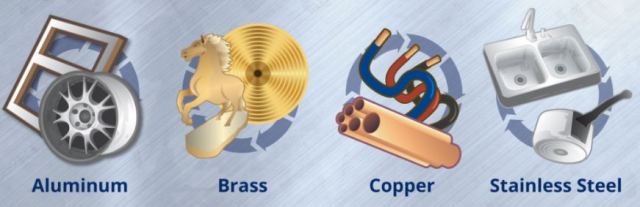
Think Clean – Think Green – Old Metal for Recycling
Five facts about waste in Ireland?
The total amount of waste generated in the state (industrial, commercial, household) at the last full survey was 19.8 Million tonnes which is equivalent to 4.3 tonnes per person
The economic downturn has had a marked influence on municipal waste generation. It has decreased by 17% since it peaked in 2007
Household waste generated per person in Ireland in 2011 amounted to 367kg which is considerably less than the EU average of 438kg
One third of the food we buy ends up in the bin. This can cost the average household up to €1,000 per year
Ireland is among the top performing EU countries in terms of municipal waste recycling
Source: Environmental Protection Agency, Ireland.
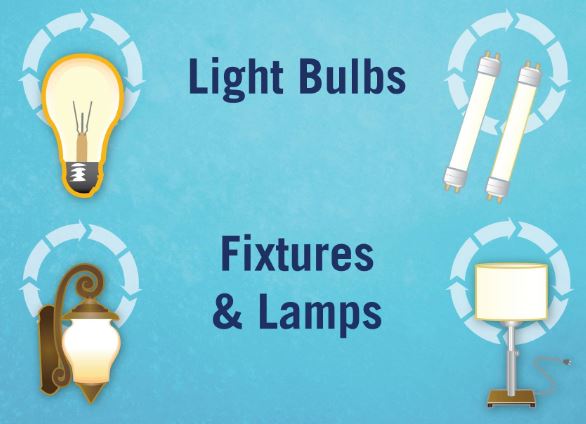
Think Green – Think clean – Old Lights for Recycling
About Recycle IT
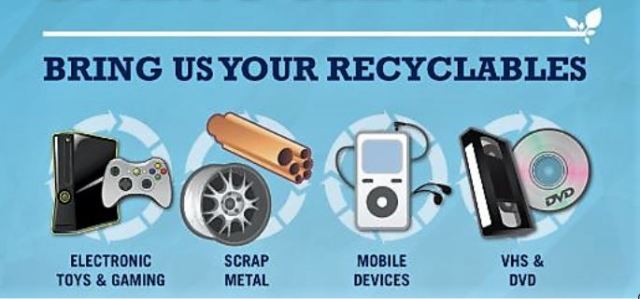
Recycle IT recycle lights and much more! We are an award-winning not for profit social enterprise providing recycling collection and drop off services for all types of waste electrical, electronic equipment (WEEE) and pure metal items.
During 2017 Recycle IT offered drop off and collection services to over 90,000 homes, schools, charities and businesses across Dublin and surrounding areas collecting a range of WEEE which includes thousands of computers, cables, monitors, microwaves and TV’s.
Recycle IT services are provided in partnership with WEEE Ireland. Recycle IT are supported by Pobal, South Dublin County Council and authorized by the National Waste Collection Permit Office and the local authorities across Dublin, Kildare and Wicklow.
2017 Pakman Award Winner – Recycle IT – Community Recycling Project of the Year.
To learn more about recycling electrical equipment please call Recycle IT on 01 4578321 or email us
Life cycle….paint, computers, lights, dishwashers…
Ireland and Dublin, in particular, is home to a number of community reuse and waste prevention initiatives aimed at recovering and reusing valuable resources that have been acquired by customers to serve a need or first life use. When that first life use is served many offices, household or leisure products can be reused and enjoyed by our follow consumers!
Reuse Ideas shared by Recycle IT
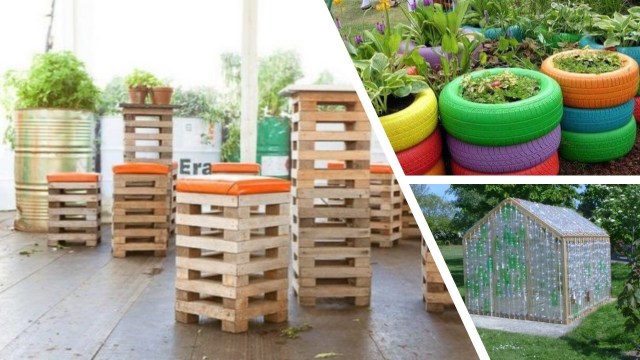
Reuse is the practice of using an item more than once, extending its useful life. Often reuse involves a change of ownership; reuse can also involve “re-purposing,” or giving an item a second life through a function other than its original purpose. When we think about it, reuse is one of the oldest forms of waste management and was practiced by previous generations. I remember as a child collecting and returning empty glass soft drink bottles to the shops in order to claim the deposit. Lots of people engaged in reuse or recycle long before waste became a business and disposal the norm
Disposable product culture
In the 20th century manufacturing, marketing and advertising practices helped drive a disposable product culture. Many products including cars, or electrical and electronic appliances now build-in technical, design and perceived obsolescence. After a year they lose the latest and greatest tag.
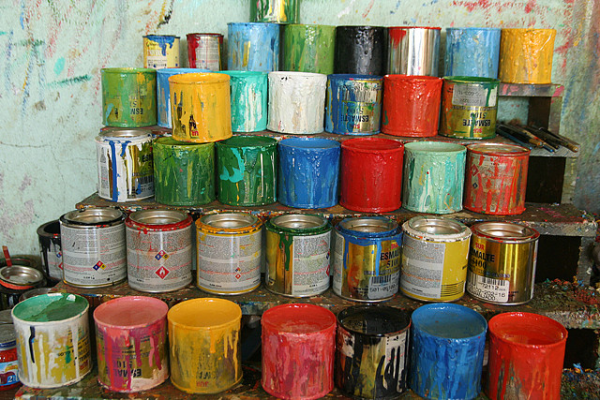
Paint Reuse
Concerns about the environmental, economic and social sustainability of continually manufacturing new stuff, has promoted a resurgence in reuse and re-purposing everyday items. Some citizens and nations have embraced this resurgence while others pay lip service to reuse.
It has to be said, reuse on its own is only one step, but once included as part of the strategy, reuse can play its part in helping keep our world green.
Reuse v Recycling
Reuse does not break items down to their component parts in order to reprocess them into new materials. While recycling reduces the amount of discarded items that are sent to landfills or incinerators, reuse extends the useful life of whole items and creates a local community loop that keeps the items out of the waste stream altogether. Reuse in all its forms needs to be considered with clothes and fabric a fine example of a successful income-generating reuse model which supports charitable projects across the world.
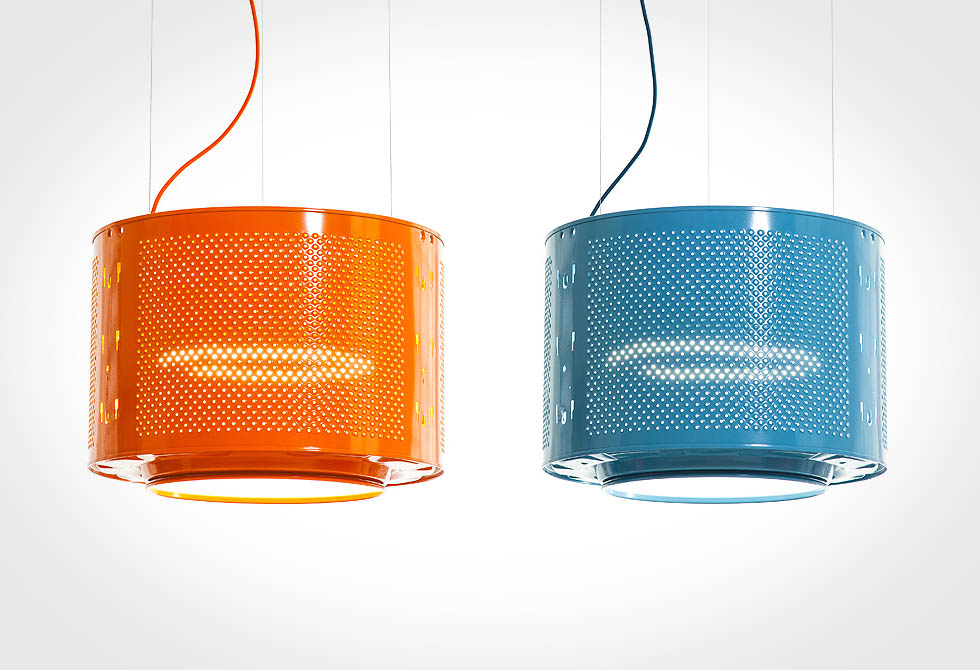
Recycled Washing Machine Drums
There are a number of organizations in Ireland that can help with reuse for items including clothes, furniture, paint, mattress, home appliances or IT equipment.
List of organizations involved with reuse in Dublin, Ireland
It worth noting, a focus on reuse has many benefits including
Reuse plays an important role in diverting waste from landfills and is the second step in the waste management hierarchy of “reduce, reuse, recycle.”
Reusing materials saves money, energy, and natural resources, therefore, improving our environment and reducing the negative effects of climate change.
Reuse has the potential for creating new markets for materials, new product and opportunities for training and employment.
Recycle IT encourage reuse and recycling and can help you with the collection of electrical and electronic equipment, anything with a plug or battery. Our Dublin based colleagues and members of the Community Reuse Network can also help so please do click on the links above to learn more.
For more information on electrical recycling and reuse, call Recycle IT on 01 4578321 or email info@recycleit.ie







 Recycle IT