International Women’s Day 2018 @ Recycle IT

March 8th 

International Women’s Day falls on March 8th each year. The day has been observed for over 100 years and is now celebrated around the world with events large and small taking place all over Ireland.

International Women Day 2018

Over 100 Years

The earliest Woman’s Day event was held in New York on February 28, 1909, and was organised by the Socialist Party of America. Only a year later, at the International Women’s Conference in Denmark, socialist representatives proposed that there be an International Women’s Day, inspired by the events in New York. The day was celebrated for the first time in Austria, Denmark, Germany and Switzerland in March 1911 with many countries following this lead over the next 100 years.

Women Workers Strike
Women Workers Strike – 100 Years

International Women’s Day 2018

International Women’s Day seeks to celebrate women’s achievements, as well as act as a catalyst for change when it comes to gender equality. The day brings together government, women’s organisations, businesses, charities and communities to remind and celebrate the value of women to the social, economic and environmental development of our world.

Press for Progress

The theme of this year’s International Women’s Day is #PressforProgress. This is a strong call to motivate and unite friends, colleagues and communities to think, act and be gender inclusive in all we do.

Recycle IT and Gender Inclusion

Recycle IT is a part funded employment initiative, a social enterprise and community electrical recycler. A lot of the work we do involves heavy lifting and it’s not the cleanest but that does not stop us involving women and men in roles across the organisation.

Our General Manager, Una Lavelle has been with the organisation since 2007,  We have three female colleagues in roles across finance and administration and a fourth works as a general operative recycling electronic equipment. Over the last two years the number of women employed has increased from 15% to 25% of our workforce.

Gender Inclusive Roles at Recycle IT

Jane Ebbe has been part of the Recycle IT team since April 2017 and has worked alongside male colleagues to complete many if not all of the same tasks. Jane is pictured above about to recycle a computer which is part of all our general operatives roles.

Over the coming weeks Jane will commence training as a forklift driver which until now has been task solely performed by male counterparts. Jane says ” the only real difference in her role and that of a male colleague is strength in lifting and moving heavier items and this have been overcome with the use of lifting equipment and a little team work”. Jane views Recycle IT as a safe place where the team are very understanding and inclusive of each others needs.

The future 

Recycle IT were possible try to encourage younger girls to consider “Green Business and Recycling” as a career path. Recycle IT visit a number of schools each year to share knowledge on the value of recycling to society, our economy and the environment. This message is shared equally amongst girls and boys. We also endeavour to work gender inclusively with third level students from at home and aboard to promote learning and share know-how.
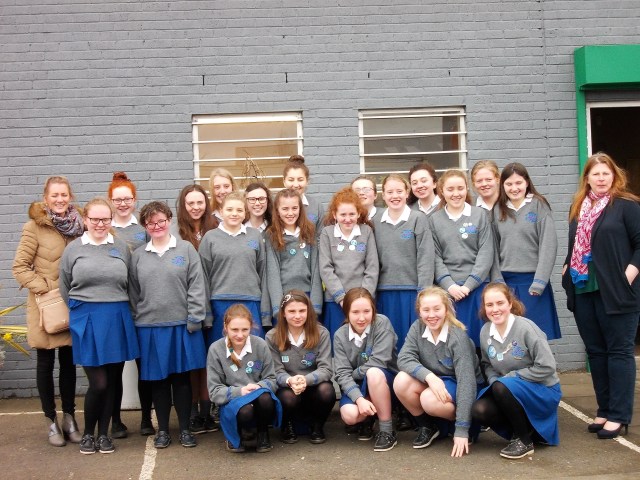
Loreto Secondary School, Kilkenny TY Studetns at Recycle IT
Loreto Secondary School, Kilkenny – Transition Year Students at Recycle IT

We recently hosted a site visit from 21  Transition Year students  many of whom are part of the ‘Green Schools’ committee at Loreto Secondary School, Kilkenny. The students showed a keen interest in our work and hopefully left with increased knowledge and a message, that a careers in recycling, green business or supporting a message of environmental change can be progressed equally by all genders.

Events 

InternationalWomensDayEvents
International Women’s Day Events

In early March you will find a number events taking place to celebrate International Women’s Day. To view some of these events please click here

About Recycle IT

Recycle IT is an award-winning not for profit social enterprise providing a collection and drop off service for all types of waste electrical, electronic and metal items. Over the last 18 month Recycle IT offered drop off and collection services to 140,000 homes and organisations across Dublin and surrounding areas collecting a range of WEEE which includes thousands of computers, cables, monitors, microwaves and TV’s.

This community collection service is provided in partnership with WEEE Ireland. Recycle IT are supported by Pobal, South Dublin County Council and authorized by the National Waste Collection Permit Office and the local authorities across Dublin, Kildare and Wicklow.
 

No-Cost – Low-Cost Waste Solutions

Reduce, Reuse and Recycle this Year

In 2016, each person living in Ireland produced, on average, 580 kg of municipal waste. This is well above the European average of 487 kg, and this type of waste is particularly difficult to recycle. This type of waste is made up of all the bits and pieces we throw out as we go through our daily lives, municipal waste is a mix of very different types of materials. To make recycling possible, the different materials need to be must be segregated at home or by the waste collection company into recyclable single material streams – Source EPA.

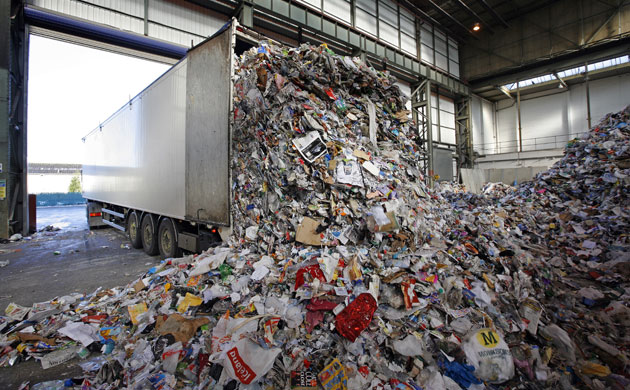
Truck Full of Waste
Truck Full of Waste

Endless Waste

It seems that most organisations create endless amounts of waste in their efforts to serve customers. Waste can range in type but some of our favourites are paper, cardboard, food waste, packaging waste, waste batteries, lights, desktop gadgets, electronic items, cables, chargers, audio and digital equipment.

It also fair to say savings in time, money and greater environmental wellbeing can be achieved by ensuring that waste is managed properly in both large or small organisations.

The first and most important steps involve identifying the quantity and type of waste produced. Once complete you can look at your waste and see what can be prevented or reused.

Hard Disk Drive Recycling
Hard Disk Drive Recycling – Recycle IT

All materials suitable for recycling should be segregated at source and stored for collection, (boxed/bagged) or compacted depending on type.

The EPA suggests business can save 10% on their waste costs by implementing no-cost and low-cost waste solutions by assigning responsibility for the task and monitoring waste improvements regularly.

Further steps include;

  • Analyse all waste at source – check how much cardboard, plastic, food, electronic and other waste is produce – identify what may be prevented/reused.
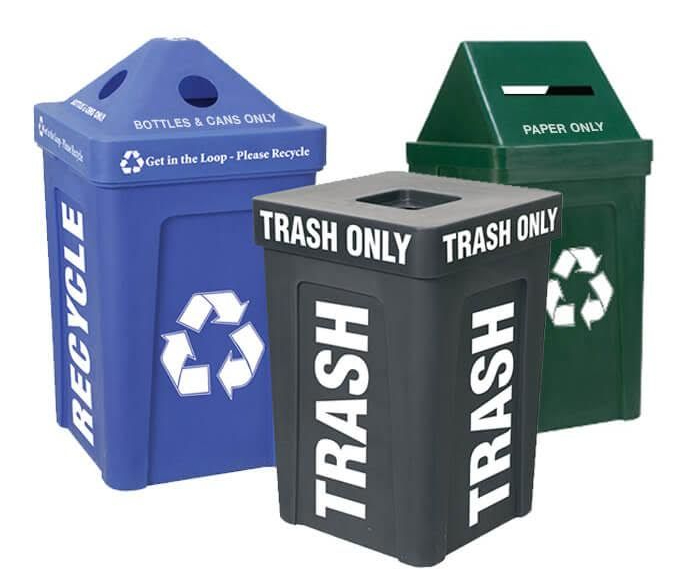
  • Improve segregation and recycling by using clear bags or labelled bins.
  • Improve waste management by placing bins and/or reuse receptacles near points where waste is generated
  • Reduce packaging and return packaging to your retailers and other suppliers.
  • Ask suppliers to take packaging away once products are delivered.

By trying some or all of the above initiatives you can improve your environmental performance while reducing costs.

bin-for-waste-recycle-it.jpg
Segregated Waste Disposal

18 Everyday Tips include; 

  1. Re-use paper – have collection points near printers/photocopiers for paper reuse.
  2. Regularly review /remove older customer accounts to save on postage and paper.
  3. Set up a central collection point for reusable office supplies and share with others.
  4. Use email, telephone, meetings and bulletin boards for office communication.
  5. Promote double-sided printing and photocopying.
  6. Stop using faxes machines.
  7. Recycle printer and toner cartridges.
  8. Send invoices and statements to customers via email.
  9. Ask suppliers to minimise packaging.
  10. Compact cardboard and plastics.
  11. Use shredded paper for infill.
  12. Buy business materials in bulk  (Helps reduce shipping and packaging costs).
  13. Spend time training staff on waste reduction and new initiatives which are planned. (just don’t expect change, encourage change)
  14. Use video conferences and conference calls rather travel to a meeting. Its saves all the related waste and expense of a meeting.
  15. Recycle kitchen or small office electronic items using a FREE drop off to Recycle IT – click here for a list of items which can be recycled
  16. Arrange a free (when in your area) or cost-effective electrical recycling collection for your business with Recycle IT. Just click here
  17. Don’t buy bottled water.
  18. Buy bulk and loss tea and coffee. Reuse the leaves and grains in the garden.

Through experience and feedback from others, we think success is achieved by waste segregation and by allocating individual staff members to specific areas of responsibility with reports on progress discussed at team meetings. A staff reward night might be included once cost saving has been achieved!

About Recycle IT

Recycle IT is an award-winning not for profit social enterprise providing a collection and drop off service for all types of waste electrical, electronic and metal items. During the last 18 months Recycle IT provide drop off and collection services to 140,000 homes and organisations in Dublin and surrounding areas collecting a range of WEEE which includes thousands of dishwashers, computers, cables, monitors, microwaves, TV’s and metal items.

Our electrical community collection service is provided in partnership with WEEE Ireland. Recycle IT are supported by Pobal, South Dublin County Council and authorized by the National Waste Collection Permit Office and the local authorities across Dublin, Kildare and Wicklow.

To speak with Recycle IT please call 01 4578321 or email us at here

Visit our website www.recycleit.ie

IMG_0453 (2)
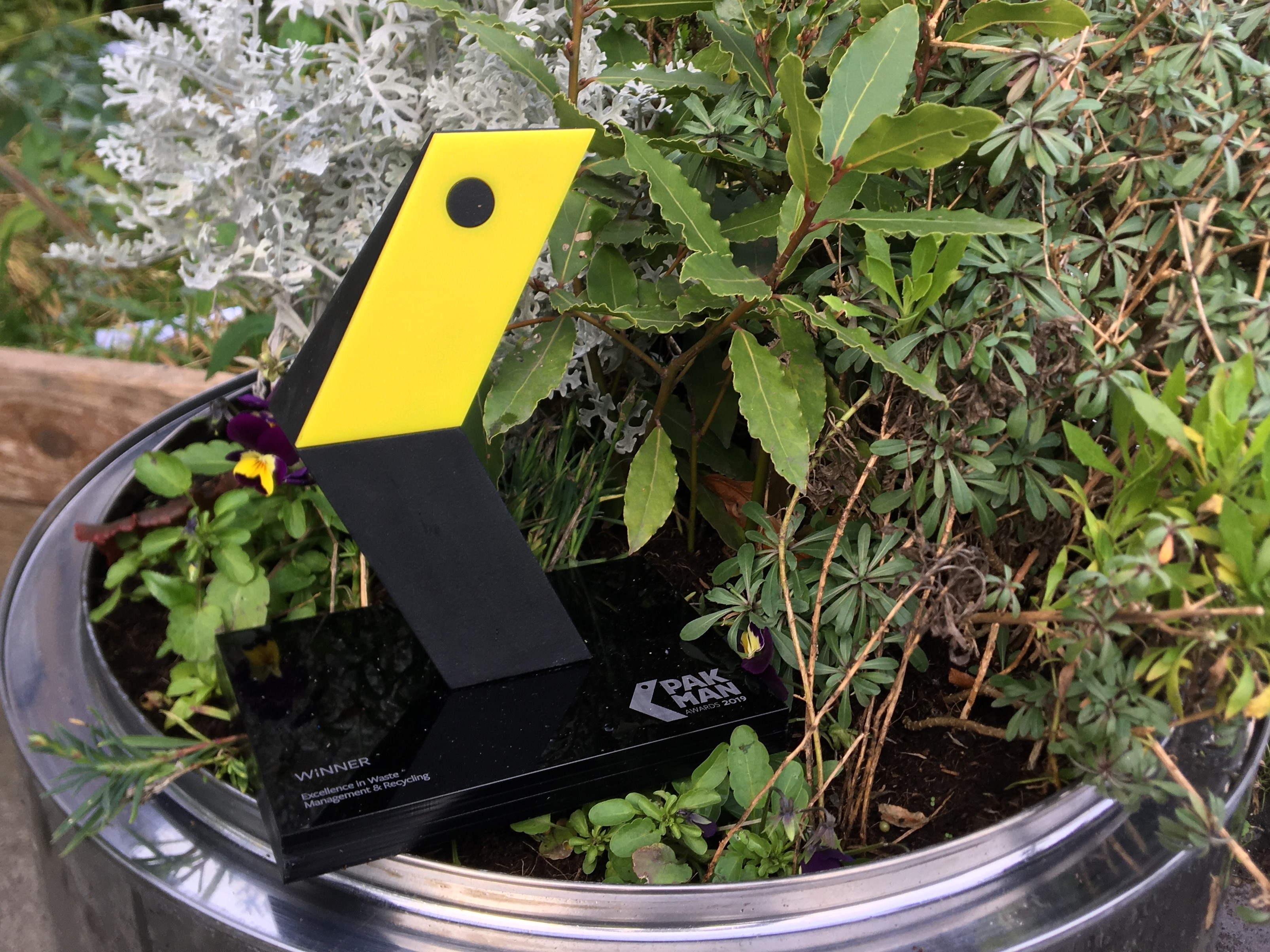
Recycle IT – Repak Award Winner 2019 – WEEE Champion

Sharing the Question of Plastic Recycling

Overview

For over 50 years, global production and consumption of plastics have continued to rise. An estimated 299 million tons of plastics were produced in 2013, representing a 4% increase over 2012, and confirming and upward trend over the past years. (Source: Worldwatch Institute – January 2015)

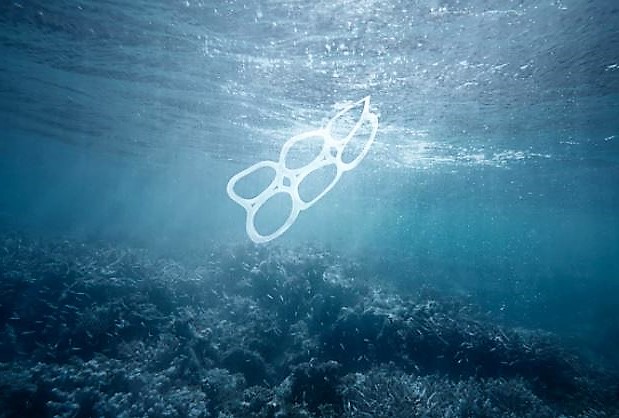
Greenpeace says that “right now an estimated 12.7 million tonnes of plastic, everything from plastic bottles and bags to microbeads – end up in our oceans each year. That’s a truckload of rubbish a minute”

Ocean Waste - Recycle IT
Ocean Waste – Recycle IT

Most plastics used daily have a very low economic reuse value. Think about bread wrapping or banana bags. Another fact is plastics wrappers can contain numerous materials which are hard to separate. Examples include sweet wrappers, take-away food containers, coffee cups, coffee capsules and plastic/foil-lined cartons for soup and milk. Are investments in recycling solutions for these materials profitable? If not, how can this change to benefit the world?

What we do today?

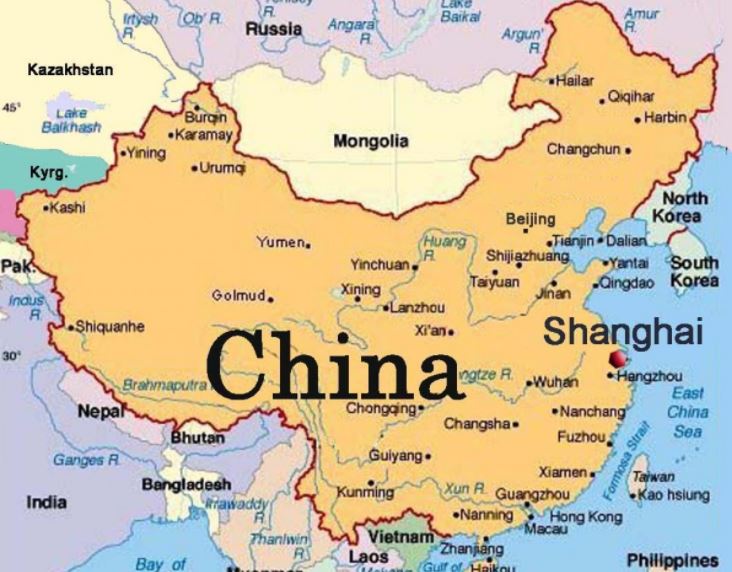
Since the 1980s China has become the world’s largest importer of waste. In 2012, up to 56% of global exported plastic waste ended up in China. Imported plastic waste alone reached a peak of almost 9 million tonnes in 2012 (Source: Greenpeace)

China offered advanced notification to the World Trade Organization (WTO) of its plan to ban the importation of 24 types of waste, including plastics for recycling, waste textile materials and all unsorted mixed waste paper, the sort of paper that accumulates in household bins. It also says cardboard for recycling must be “cleaner” and free of contaminants such as gravel, dust and stones.

According to Industry Week, the biggest quantity of waste comes from the US followed by Europe, Hong Kong, Japan and Southeast Asia all of whom export large amounts of recyclables.

Map of China - Recycle IT
Map of China – Recycle IT

Change now!

On January 11th, 2018 China’s Ministry of Environmental Protection (MEP) finalized a quality standard of 0.5% for certain imported recyclables. (Source; recycling today)

According to various government and trade organisations located across the globe, this action fails to properly consider the negative effects on global recycling efforts, but in our view, we must recognize this change as an opportunity for governments and communities to take responsibility and well as action locally for waste and its possible reuse.

A recent report in the Irish Times suggests Ireland, which has little capacity to recycle plastic has been trying to locate newer recycling markets, but could we do more at home to reduce, reuse and recycle.

Greenpeace urges industries and corporations that manufacture and market plastics and other disposable products to take responsibility for their products through their entire life-cycle, take responsibility for the environmental costs and invest in transformative solutions and alternatives to put an end to the current unmanageable levels of waste produced every year.

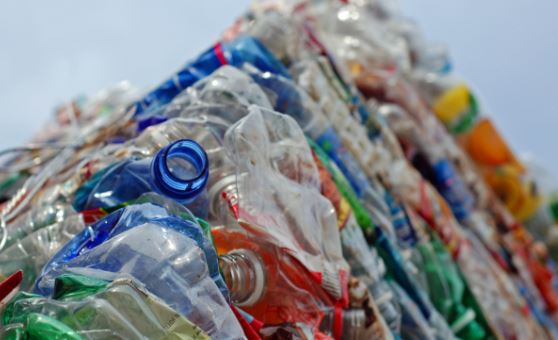
Plastic - Recycle IT
Plastic – Recycle IT

What we say

Recycle IT don’t directly offer a plastic recycling service but like lots of organisations and homes, we do accumulate plastic as part of our operations. We would love to see better plastic recycling routes and well as a reduction in overall packaging.

In our opinion, all stakeholders need to come together for the common good and find a range of solutions which meet the needs of different countries, markets and communities. Researching local needs, planning and infrastructure can help all stakeholders handle the plastic waste stream, hopefully with positive outcomes for the environment which we all share.

Recent Progress

The first-ever Europe-wide strategy on plastics was adopted on January 16th 2018. It is a part of the transition towards a more circular economy. It aims to protect the environment from plastic pollution whilst fostering growth and innovation, turning a plastics challenge into a positive for the Future of Europe.

Under the new plans, all plastic packaging on the EU market will be recyclable by 2030, the consumption of single-use plastics will be reduced and the intentional use of microplastics will be restricted.

For further information on recycling packaging includng plastic packaging in Ireland you can call Repak on 01 467 0190 or visit http://www.repak.ie.

About Recycle IT

Recycle IT is an award-winning not for profit social enterprise providing a collection and drop off service for all types of waste electrical, electronic and metal items. During the last 18 months Recycle IT offer drop off and collection services to 140,000 homes and organisations in Dublin and surrounding areas collecting a range of WEEE which includes thousands of dishwashers, computers, cables, monitors, microwaves, TVs and metal items.

Our electrical community collection service is provided in partnership with WEEE Ireland. Recycle IT are supported by Pobal, South Dublin County Council and authorized by the National Waste Collection Permit Office and the local authorities across Dublin, Kildare and Wicklow.
Call us on 01 4578321 or email us at here

Visit our website www.recycleit.ie

IMG_0453 (2)
Recycle IT – Repak Award Winner 2019 – WEEE Champion

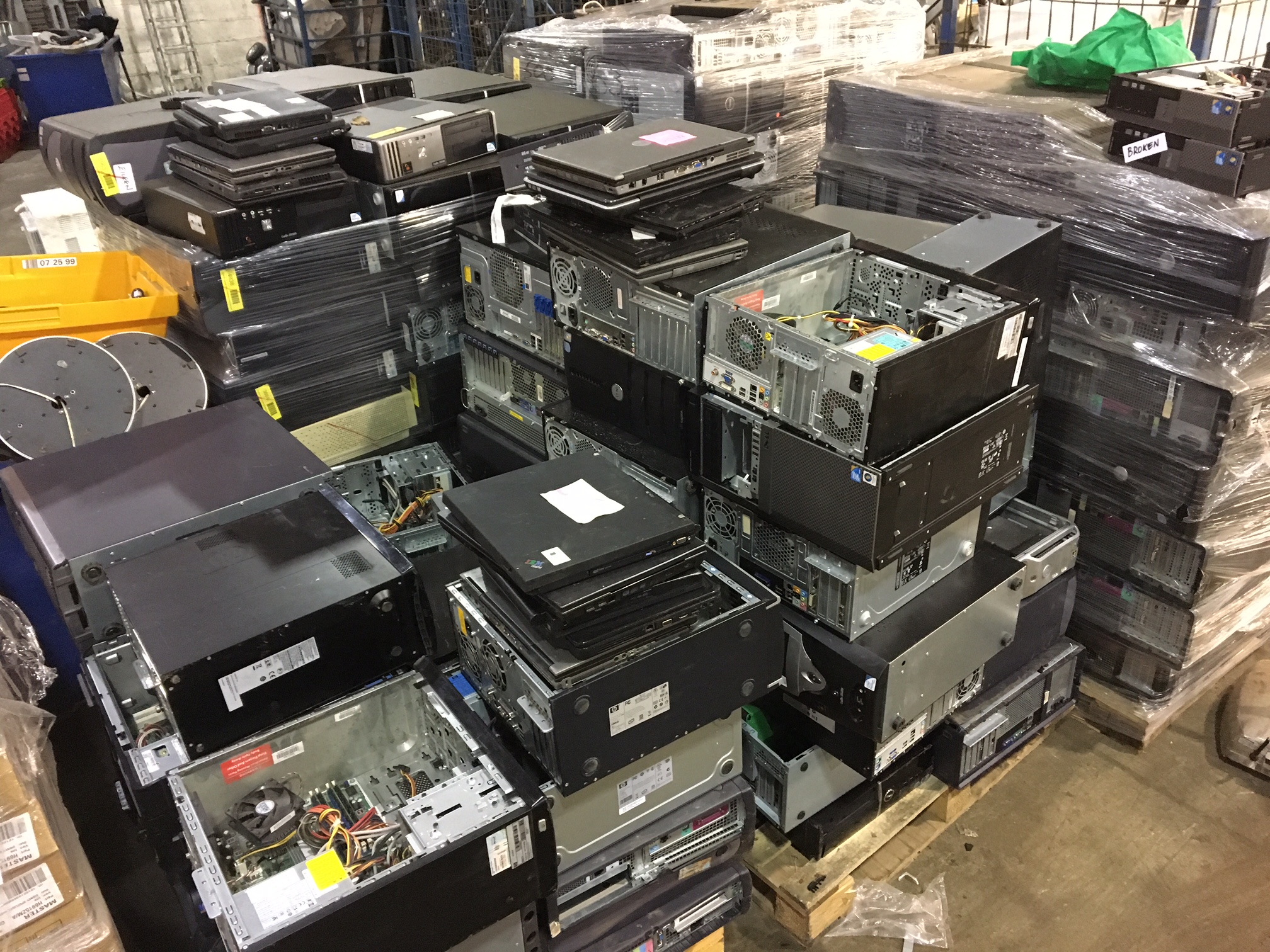
Recycling Computers – 9 Reasons

A Wonderful World of Computers 

Every day is a recycling day for our team. It’s our passion and the reason we share regular news, updates and information related to recycling.

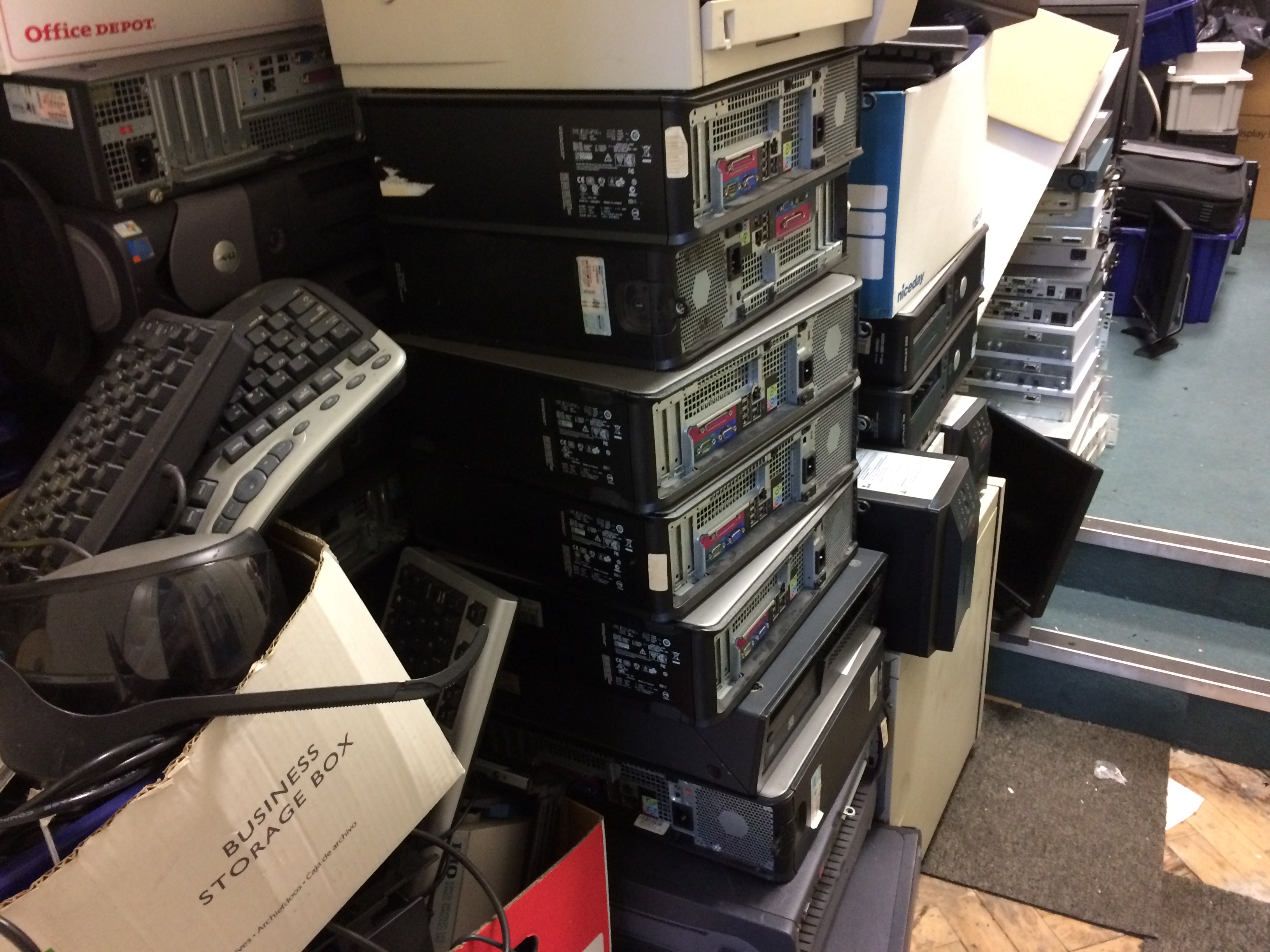
In this post, we have particularly focused on recycling computer or IT equipment. As we all know there are tons of old PCs and laptops in homes and offices which are of no further use and could be recycled for reuse.

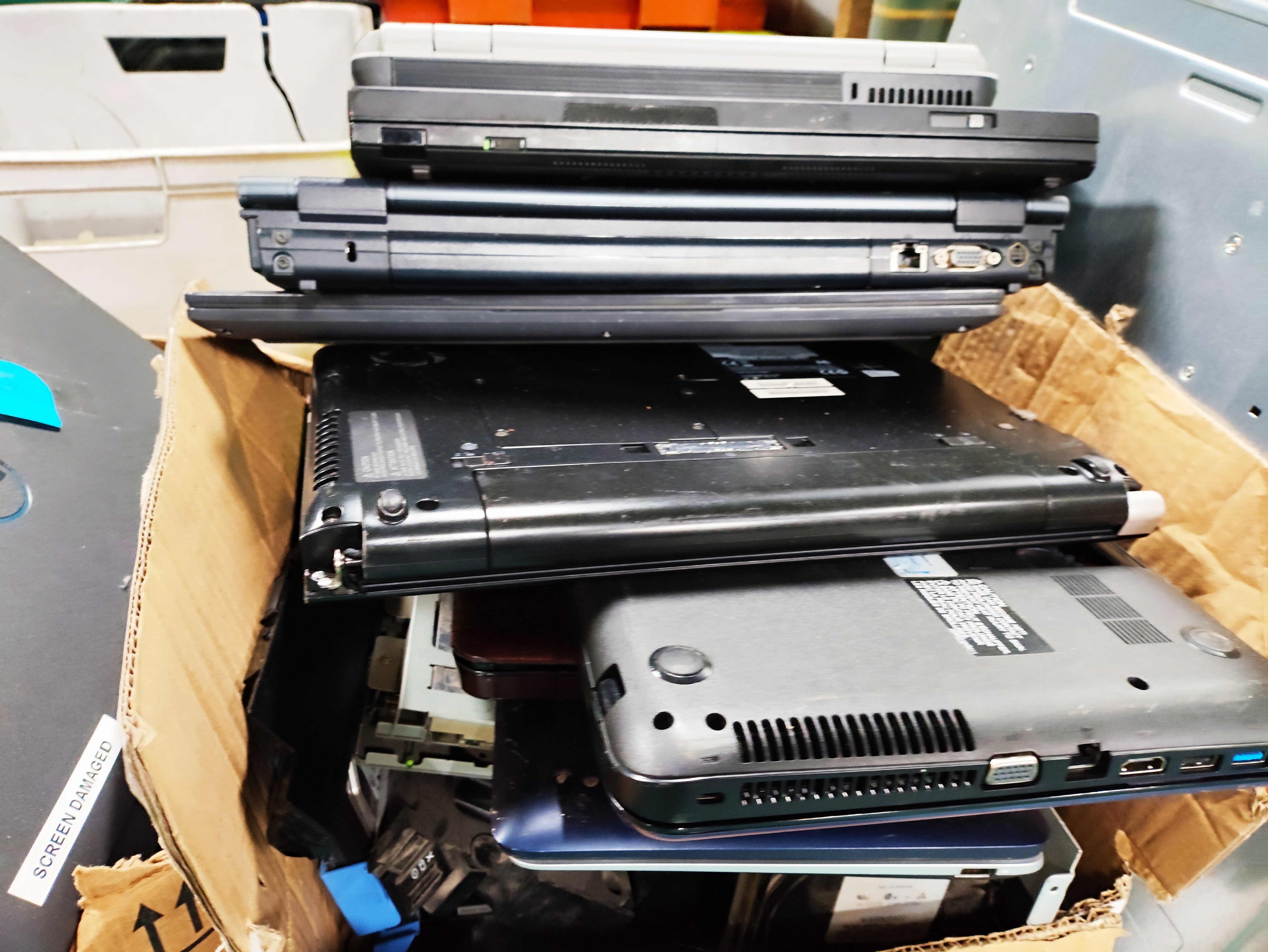
Laptop Computers for Recycling

Computers are a fast expanding stream of waste in Europe and across the developed world.

Consumers regularly update computers creating a waste mountain that continues to build. Thousands of obsolete computers are discarded every.

In 2018 United Nations University show that only 20% of e-waste (computers are a big part of e-waste) is collected and recycled while the fate of the other 80% is unknown. In 2024 Irish Central Statistic Office data revealed, seven in ten (70%) internet users said that their most recently disposed of mobile phone or smartphone is still at home. Nearly six in ten (58%) said that their old Laptop or tablet was still at home. Over one quarter of respondents (26%) still have their old desktop computer at home.

Computers should never be discarded without engaging with an authorised recycler. They contain toxic substances which can harm health and wellbeing. Some electronics or e-waste finds its’ way to the developing world where it causes harm to local people including children.

PC Recycling - Recycle IT
PC Recycling – Recycle IT

Computing Statistics

According to Statista 2022 As of January 2021, there were 4.66 billion active internet users worldwide – 59.5 of the global population. Of this total, 92.6 per cent (4.32 billion) accessed the internet via mobile devices. In 2021 alone, approximately 340 million PCs were shipped around the world. That is a lot of PCs that can be reused and/or recycled.

Computer Recycling

Continuous updates in technology are hard to keep up with. Every 12 – 18 months’ new models of computers, laptops, tablets and even phones are introduced. This, in turn, makes older models obsolete, and since they cannot be thrown in the bin, reuse or recycling becomes an option.

Computer recycling hopefully means giving old computers to a licensed waste facility where they are tested for reuse or disassembled into component parts for reuse. If required these components can be further broken down and reused as raw material for a new purpose.

A record 53.6 million metric tonnes (Mt) of electronic waste was generated worldwide in 2019, up 21 per cent in just five years, according to the UN’s Global E-waste Monitor 2020.

IT-AC2
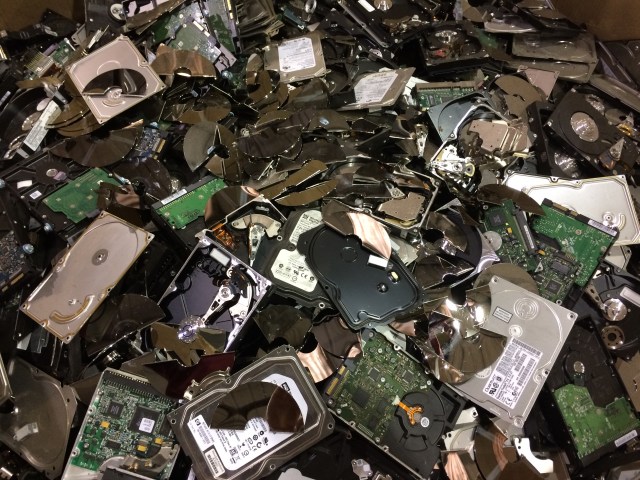
Broken Down Computers Hard Drives – Recycle IT

9 Reasons to Recycle Your Old Computer

  1. Recycling and Natural Resources

A lot of materials and parts can be recovered from old electronics. These materials can be reused as raw materials to make new products, thus reducing the need and cost to mine new materials. (e.g. metals like copper and iron)  Did you know the metals recovered from a computer’s circuit board can be recycled to make new circuit boards for other electronics items like house alarms or monitors?

  1. Recycling Computers and the Environment

Recycling is very eco-friendly, as it prevents hazardous waste like lead from entering our environment Many old computers contain harmful materials like lead and mercury, and if disposed of improperly, may harm humans, animals or the environment. Instead of dumping electronic equipment or storing items in the house or office why not recycle the items safely 

  1. Computer Recycling and Local Employment

Considering that more than 90% of computer products are recyclable, recycling can play a part in creating employment. Social Enterprises such as Recycle IT recovers electronic waste each day. The more equipment collected and recycled the greater the opportunities for future employment. Recycling is labour intensive and employment can be boosted by recycling locally so support social enterprises like Recycle IT to create jobs!

  1. Computer Reuse Supports the Community

Reuse of old computers and electrical equipment can help support the development of community training opportunities. You can enable people to access a computer, learn about technology, build confidence and prepare for a bright future in their community by simply giving your older computer for reuse by community groups or community educational programmes.

  1. Eco-Friendly Benefits

The amount of WEEE being discarded grows daily. Over time, the waste accumulates to take up valuable space in homes, offices warehouses and even outdoors. If toxins leak they can infiltrate soil and water systems which can cause soil and water pollution. Recycling can help reserve these consequences and protect the environment from pollution.

  1. Economic Benefits

Some newer computer equipment can be traded. This type of reuse helps the environment and your pocket. Many retail shops are offering trade-in options where you take back old electronic equipment and trade in to reduce the cost of the new equipment. Trading in means economic benefits for you, the consumer and helps shops and manufacturers close the loop on recycling.

IMG_4266 (2)
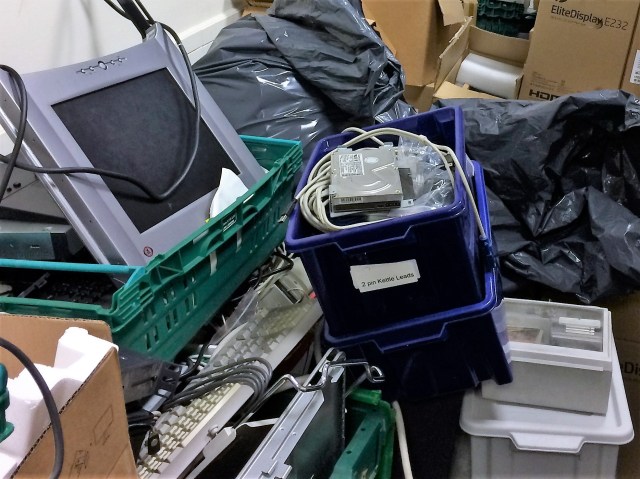
Mixed Electronics for Recycling – Recycle IT
  1. Recycling Supports Reuse

Recycling helps in the recovery of materials used in the initial manufacturing process. Many parts of computer hardware are reusable, and recycling them prevents them from going to waste. When recycling is complete correctly, fewer resources and energy are needed to manufacture the same products again.

  1. Recycling WEEE under Irish Legislation

To address increasing electrical and electronic waste streams the EU introduced the WEEE directive – 2002/96/EC.  Ireland implemented this legislation on time and approved two compliance schemes; WEEE Ireland and ERP Ireland.   The WEEE Directive 2002/96/EC from August 13th, 2005, places the obligation upon all producers and distributors of waste electronic and electrical equipment to comply. We can all help with compliance by recycling. You can try one of the many retail take-back schemes, your local bring centre or recycle with a community organisation.

  1. Social Donation

Social responsibility sometimes includes being able to donate to worthy causes. What you might consider an old computer may be a valuable resource which can be passed to others including families and children who can’t afford to buy a new computer. Refurbishment of computers allows reuse by others including community groups or low-income families.

Computer Recycling

Recycle for Reuse

Instead of keeping dusty old computers at home or in the office please consider recycling them for component reuse. As you can see it is extremely beneficial to both the environment and community.

Remember computers and similar items can be dropped off at no cost or you can avail of a free community collection service while we are in your area. Recycle IT can also offer a cost-effective personal or business collection if you decide to declutter or create space.

Call our team on 01 4578321 or click here to email for further information.

About Recycle IT

Recycle IT is an award-winning not for profit social enterprise providing a collection and drop off service for all types of waste electrical and electronic equipment (WEEE).  Recycle IT offers, drop off and collection services to over thousands of homes, schools, charities and businesses across Dublin and surrounding areas collecting a range of WEEE which includes thousands of computers, cables, monitors, microwaves and TVs.

Recycle IT services are provided in partnership with WEEE Ireland. Recycle IT are supported by Pobal, South Dublin County Council and authorized by the National Waste Collection Permit Office and the local authorities across Dublin, Kildare and Wicklow.
IMG_0453 (2)
Recycle IT – Repak Award Winner 2019 – WEEE Champion

Global Electronic Waste is Growing!

Recycle IT – January 2018

Electronic Waste has grown Globally by 8% over two years

More than 44 million metric tonnes of electronic waste was generated during 2016, but only 20% has been documented as being collected and recycled, a recent United Nations University (UNU) report found.

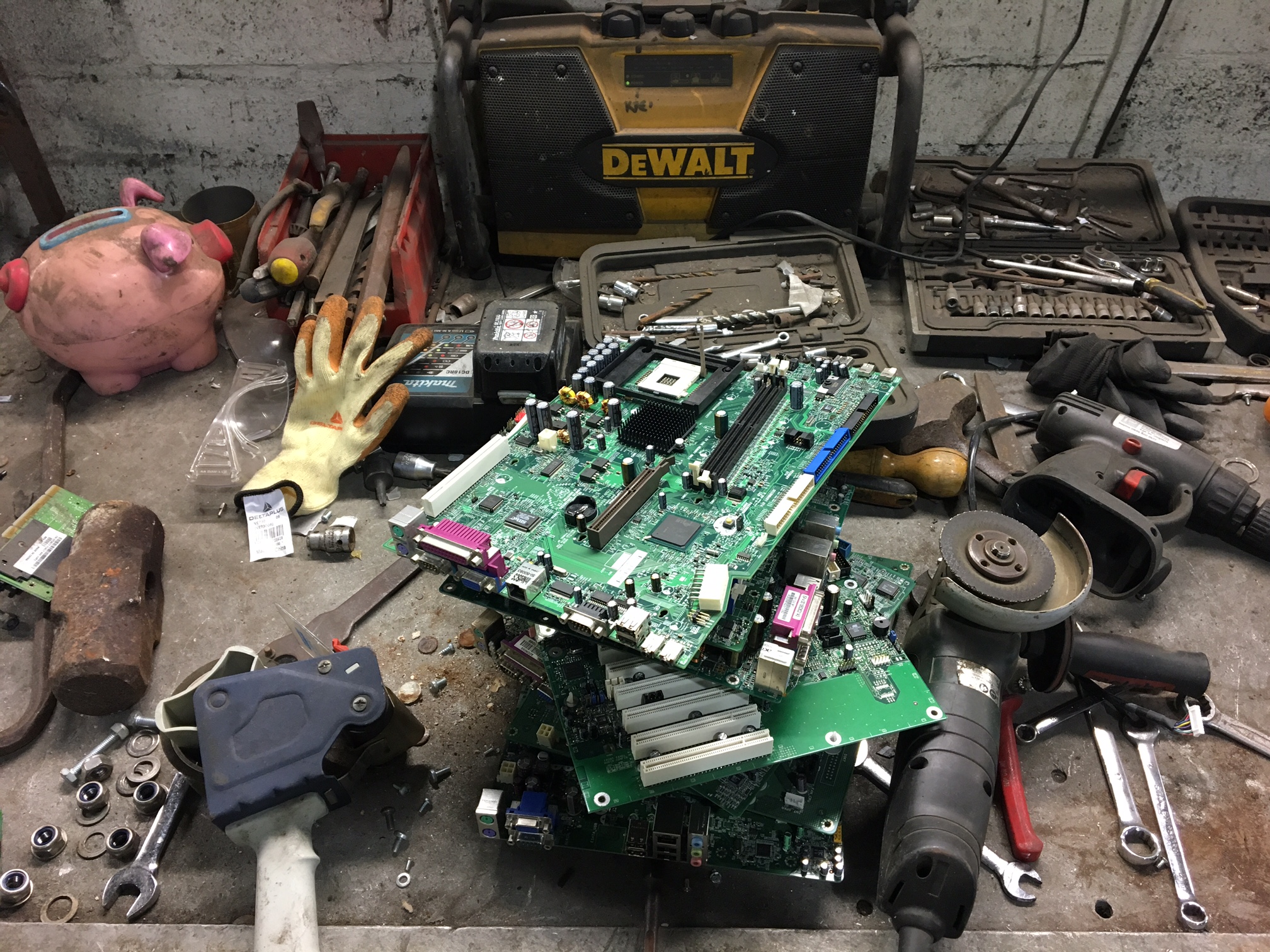
E-Waste System Boards from Computers

Today about eight in ten people on the Earth have or are covered by broadband signal and the population of 7.4 billion has 7.7 billion mobile device subscriptions –  amazing but it brings waste!

In 2017,  the Global E-waste Monitor found that items ranging from televisions to solar panels created an electronic waste “mountain” which in weight terms come close to the combined weight of Great Pyramids of Giza.

The report suggests that only one-fifth of global electronic waste is being recycled, despite the waste containing very recoverable materials, such as gold, copper and platinum.

The report produced suggests a 17% increase in electronic waste by 2021, making it the fastest growing domestic waste stream globally. This compares to an increase of 8% between 2014 and 2017 so its forecasted as ever increasing.

What the United Nations say!

Jakob Rhyner from the United Nations University, said. “Improved measurement of e-waste is essential to set and monitor targets, and identify policies. National data should be internationally comparable, frequently updated, published, and interpreted.

Today’s global and regional e-waste estimates which are based on production and trade statistics do not adequately cover the health and environmental risks of unsafe treatment and disposal through incineration or landfills.”

According to the report, just 4% of e-waste produced in 2016 is known to have been discarded into landfills. However, more than 75% is believed to have been incinerated, recycled through informal operations or remains stored in households.

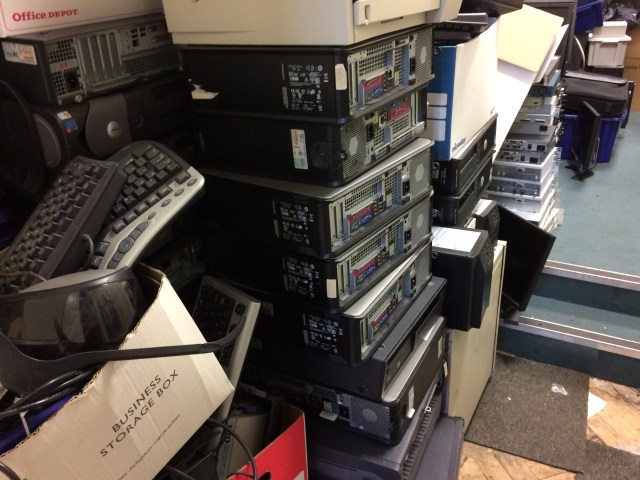
Recycle IT - Computers for Recycling
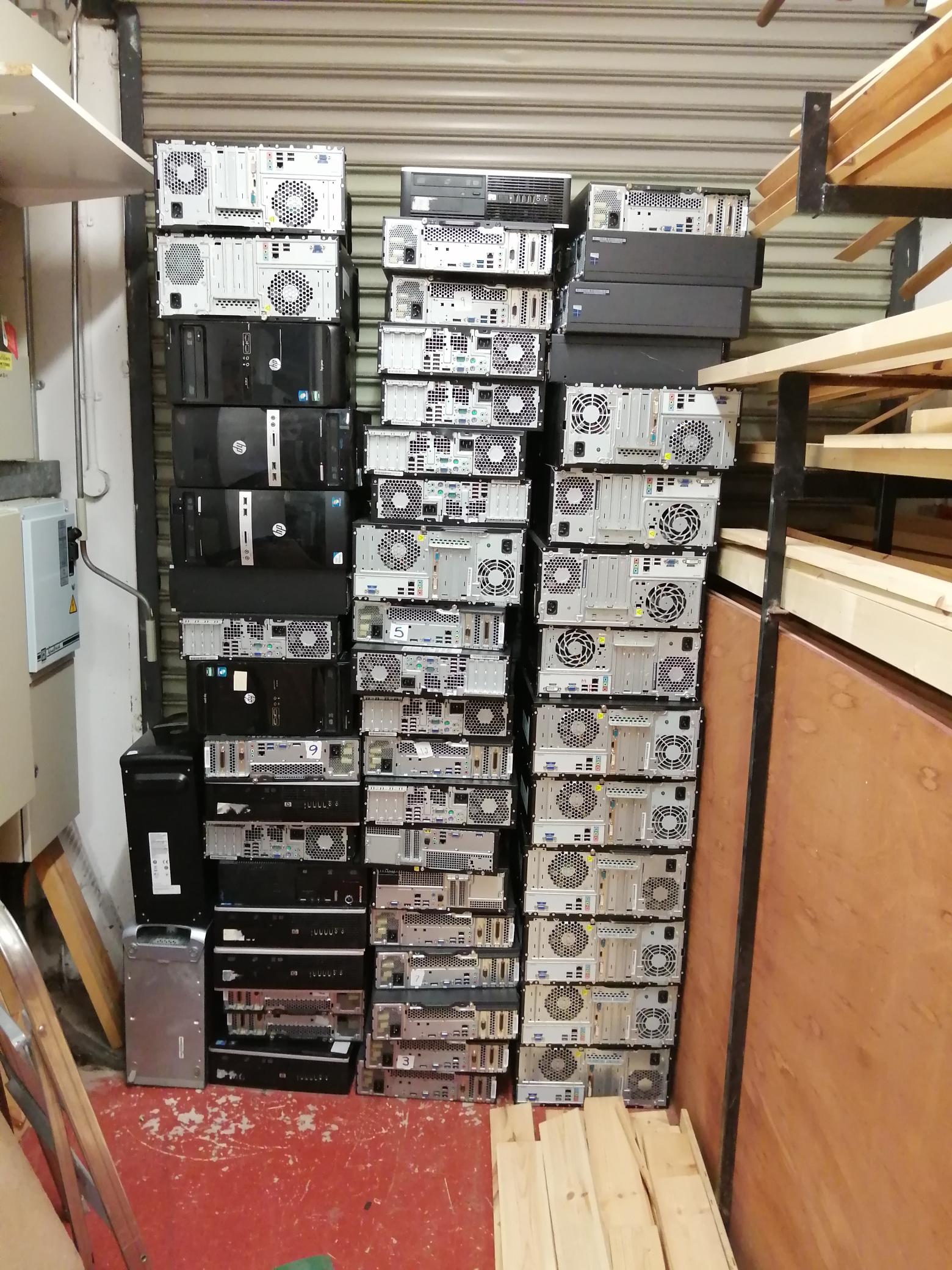
Recycle IT – Computers for Recycling

The report notes that Europe is the second largest e-waste generator, behind the US, per inhabitant, but that it has the highest collection rate at 35%. Africa, meanwhile, generates 1.9kg per inhabitant, but there is hardly any information on collection rates.

Fridge Appliances

Small, large refrigeration type appliances contribute to 75% of global e-waste by weight and the report anticipates that these will be the areas of fastest growth. More disposable income and increased technological applications were cited as drivers for the increase.

Phones and TV’s

The report also says the number of mobile phone subscriptions now exceeds the world’s population. More than eight in 10 people on Earth are covered by broadband signal and the population of 7.4 billion has 7.7 billion mobile device subscriptions.  The report also found that many older analogue TVs are unnecessarily trashed, while the average smart phone life cycle is between 18 months to two years.

Countries have been implored by the UNU to create better design practices in electrical and electronic equipment to facilitate reuse and recycling (EEE), and implement better tracking of e-waste and any recoverable resources.

Computers for Recycling - Recycle IT
Computers for Recycling – Recycle IT

The Basel Action Network (BAN) has reiterated a plea for electronic companies to publicly publish information on e-waste destinations. This follows an investigation revealing that many discarded electronic items are being exported to Asia for treatment, leading to unsafe labour and environmental conditions in the recipient countries.

About Recycle IT

Recycle IT is an award-winning not for profit social enterprise providing a collection and drop off service for all types of waste electrical, electronic and metal items. During the last 18 months Recycle IT offered drop off and collection services to 140,000 homes and organisations in Dublin and surrounding areas collecting a range of WEEE which includes thousands of dishwashers, computers, cables, monitors, microwaves, TV’s and metal items.

Our electrical community collection service is provided in partnership with WEEE Ireland. Recycle IT are supported by Pobal, South Dublin County Council and authorized by the National Waste Collection Permit Office and the local authorities across Dublin, Kildare and Wicklow.
Call us on 01 4578321 or email us at here

Visit our website www.recycleit.ie

Visit www. recyclinglistireland.ie to learn more