Circular Economy: Know more

Circular Economy: Learn more

In 2014, the European Commission (EC) put forward an initial Circular Economy proposal to address the issue and help European businesses and consumers make the transition to a circular economy where waste is viewed as a ‘resource’ that can be recycled, re-used or remanufactured.

The plan will be backed by €5.5bn from the European Structural and Investment Fund (ESIF) and €650m from Horizon 2020 (the EU funding programme for research and innovation).
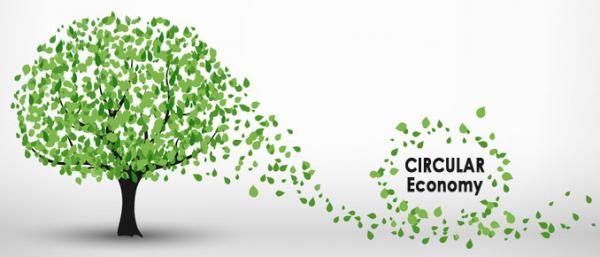
Circular Economy Tree

What is the status with EU waste policy today?

The 2008 Waste Framework Directive sets the overarching legislative framework for EU waste policy. The directive sets binding targets to be achieved by 2020: preparing for reuse and recycling of 50% of certain waste materials from households and similar sources, and preparing for reuse, recycling and other recovery of 70% of construction and demolition waste.

Meanwhile, the 1999 Landfill Directive bans landfilling of untreated waste. The directive sets a goal that the share of biodegradable municipal waste going to landfills may not be greater than 35% in 2016, compared to the baseline year of 1995.

The aims are to protect the environment and to safeguard the functioning of the internal market. It requires Member States to take measures to prevent packaging waste and to develop packaging reuse systems.

When will it happen?

The proposal is currently going through the EU legislative process. Before the Circular Economy proposal is passed into law, all three European institutions (the European Council, European Parliament and the European Commission) must have an agreed stance, which they will then take into a series of discussions.

Both European Parliament and Council of Ministers can amend the legislation but must agree upon the same text before the bills can become law. This means that a final proposal will likely not be established until the second half of 2017. Malta, currently hold the EU Presidency, hope to reach a deal with MEPs before 1 July, as its six-month Presidential term ends.

What does the change mean?

The targets listed under the Circular Economy proposal will be implemented by national governments across the EU Member States (including Ireland) and are targeted at the waste performance of households and businesses.

What are the targets listed under the proposal?

The original Circular Economy proposal intended to increase recycling levels and tighten rules on incineration and landfill. It consists of six individual bills on waste, packaging, landfill, end-of-life vehicles, batteries and accumulators, and waste electrical and electronic equipment (WEEE).

Evolving Circular Economy
Evolving Circular Economy –

The re-tabled proposal, unveiled in December 2015, included eco-design rules for products to make them easier to recycle. But it also had lower 2030 targets for recycling municipal and packaging waste, and replaced a 2025 aspirational landfill reduction target of 25% with a mandatory 10% goal for 2030.

This target was recently rejected as” watered-down” ambitions. A vote has advocated to reinstate the 70% target for municipal waste recycling, strengthening current proposals by 5%.

Meanwhile, a 2030 target for packaging recycling was voted to be 80% – higher than the 75% previously backed by the Commission. And the waste-to-landfill target has been restricted to 5%, replacing a mandatory target of 10% by 2030. MEPs have also voted for a European Union (EU) food waste reduction target of 30% by 2025 and 50% by 2030, compared to 2014.

The proposal includes a series of additional measures and targets, including:

  • The promotion of economic incentives to discourage landfilling;
  • A ban on landfilling of separately collected waste;
  • Simplified and improved definitions and harmonized calculation methods for recycling rates throughout the EU;
  • Define measures to promote re-use and stimulate industrial symbiosis – turning one industry’s by-product into another industry’s raw material;
  • Economic incentives for producers to put greener products on the market and support recovery and recycling schemes (e.g. for packaging, batteries, electric and electronic equipment, vehicles).
  • Four legislative proposals (included) are legal acts: Waste Framework Directive; Landfilling Directive; Packaging Waste Directive; Directives on end-of-life vehicles, on batteries and accumulators and waste batteries and accumulators, and on waste electrical and electronic equipment (WEEE).

About Recycle IT

Recycle IT is an award-winning not for profit social enterprise providing a collection and drop off service for all types of waste electrical and electronic equipment (WEEE). During 2016 Recycle IT supported drop off and collection services to over 100,000 homes, schools, charities and businesses across Dublin and surrounding areas collecting a range of WEEE which includes thousands of computers, cables, monitors, microwaves and TV’s.

Recycle IT services are provided in partnership with WEEE Ireland. Recycle IT are supported by Pobal, South Dublin County Council and authorized by the National Waste Collection Permit Office and the local authorities across Dublin, Kildare and Wicklow.

To learn more about Recycle IT or to book a collection or drop off please call 01 4578321 or email us here.
Recycle IT - Pakman Award Winner 2016
Recycle IT – Pakman Award Winner 2016

Recycling Office and Home Computers Safely

Recycle IT Safely – Computers, Phone, Tablet & Hard Disks!

According to preliminary sales figures from Gartner and IDC, PC sales fell throughout 2016. Its seems that infrequent users like you and me are more likely to reach for a smartphone to access applications that ten years ago would have needed a PC.  As a result of this trend, the market is declining and is set to decline again in 2017. The graph below shows PC sales figures from 2006 to 2015 and the ongoing reduction in sales over more recent years.

PC Shipping Data
PC Shipping Data

It’s also worth noting that PC enthusiasts, gamers and the business sector will continue to purchase PC in large volumes and globally, PC sales in 2016 stood at approx. 269.7 million units shipped which is still a large number.

Data and Information 

Even with PC sales slowing we are all still large consumers of information and we are buying lots of electronic equipment with hard disk drives (HDD) to store business and personal customer information including photos of everything from our kids to bank statements and passwords (so we can have a reminder).

Whether this information is stored on external HDD, mobile phones, tablets, memory cards, memory keys or other storage devices people should be aware how important it is to destroy and recycle safely once the items have served their purpose. Both business and personal data can be valuable to others so it’s important to destroy the data on your PC, phone, memory card or tablet.

Hard Disk Drives - Recycle IT
Hard Disk Drives – Recycle IT

You might be thinking, what will I do with all that information on the HDD before recycling a PC?  If so, please don’t try to burn or use industrial-strength magnetic forces on the devices as these methods are not full proof or safe!

What to Do next?

The key is to destroy your computer HDD is ensuring it can’t ever spin again. The physical destruction of the drive means increased confidence that stored data is obliterated and can never be used again. This is the method Recycle IT prescribe and practice.

In the interest of time and money, you don’t need to destroy the full PC or laptop just the hard drive which is a small box inside of computer itself and usually contains sensitive information including credit card information, photos or contact details. So if you are upgrading to a new computer device (desktop computer, phone, laptop, tablet, etc.) please arrange for the removal of the hard drive at the same time as recycling the computer!

How to Destroy the HDD?

If you are looking to dispose of an old computer with a hard drive, it’s really best to physically destroy the old hard drive just to be 100% certain that the old data is completely destroyed.  Recycle IT use electronic tools and powerful cutting tools to ensure the HDD is destroyed. This method is an ideal option for disposal of home or office hard drives.

Drilling or Cutting Hard Disk Drives - Recycle IT
Drilling or Cutting Hard Disk Drives – Recycle IT

Safety in Destruction

Our team take every precaution from wearing protective goggles, gloves, and a dust mask for mouth and nose when cutting into the metal drive. They can cut right through the drive, from one side to the other multiple times ensuring the platters and the controller board are shattered.  Once complete Recycle IT can provide destruction and disposal certification depending on your needs.

Finally

It’s worth making the point again – failure to arrange the destruction of your old hard drives at the time of recycling your computer or phone could result in the inappropriate sharing of sensitive information.

About Recycle IT

Recycle IT is an award-winning not for profit social enterprise providing a collection and drop off service for all types of waste electrical and electronic equipment (WEEE).

During 2016 Recycle IT offered drop off and collection services to 100,000 homes and businesses across Dublin and surrounding areas collecting a range of WEEE which includes thousands of computers, cables, monitors, printers and networking equipment. This helps sustain jobs and create training opportunites for people returning to works.

Recycle IT services are provided in partnership with WEEE Ireland. Recycle IT are supported by Pobal, South Dublin County Council and authorized by the National Waste Collection Permit Office and the local authorities across Dublin, Kildare and Wicklow.

Recycle IT - Pakman Award Winner 2016
Recycle IT – Pakman Award Winner 2016

If  you need more information you can call Recycle IT a call on 01 4578321 or email info@recycleit.ie

To learn more about recycling old batteries from you office safely please click UPS battery systems

Recycle IT – Pakman Award Winners 2016

The Pakman Awards 2016

The Pakman Awards are a national awards programme that recognize excellence in waste management and recycling among businesses, organisations, community groups and individuals in Ireland. The overall awards are arranged by Repak with various categories sponsored by a range of Irish organisations which you will find listed here.

Whether you are a local recycler, tidy towns group just starting out or a large organisation recovering, processing or transporting waste materials you are encouraged to submit an entry.

Recycle IT - Shortlisted for Pakman Awards 2016
Recycle IT – Pakman Award Winners 2016

In late summer 2016  Recycle IT submitted our first application to the Pakman Awards and we were delighted to be shortlisted. Then on October 27th 2016 we went one step further and were announced as winners of the overall award in the category, Environmental Education and Awareness Initiatives. 

The award ceremony was held at the Intercontinental Hotel in Ballsbridge Dublin 4 on the evening of October 27th. It was a fantastic event which promoted and rewarded the work of organisations large and small across Ireland.

cv23vdkweaaonc8-3
John McEntee and Una Lavelle – Recycle IT

As an organisation we were thrilled to receive our award from Minister for Communications, Climate Action and Environment. Mr Denis Naughten and CEO of Repak, Mr Seamus Clancy. (pictured above)  We want to thank all those involved throughout the process for their efforts and support and especially our hard working collection and recycling teams.

About the Pakman Award

The Pakman Awards was launched in 2015 by Repak to replace the Repak Recycling Awards and allow more accessibility to the awards for all organisations who demonstrate their sustainability and environmental efforts.  The inaugural Pakman marked a significant change in the direction for Repak whose awards were previously only open to its members and recovery operators. Now all organisations who can demonstrate their environmental waste management practices and efforts can enter.

About Recycle IT

Recycle IT is a not for profit social enterprise providing a collection and drop off service for all types of waste electrical and electronic equipment (WEEE). During 2015 Recycle IT offered drop off and collection services to 100,000 homes and businesses across Dublin and surrounding areas collecting a range of WEEE which includes thousands of computers, cables, monitors, microwaves and TV’s.

Recycle IT  work with schools, residents associations, voluntary groups and charities across Dublin and the surrounding areas to support reuse and recycling initiatives including WEEE workshops, bring days, and community gardening using re-purposed waste.

Recycle IT services are provided in partnership with WEEE Ireland. Recycle IT are supported by South Dublin County Council and authorized by the National Waste Collection Permit Office and the local authorities across Dublin, Kildare and Wicklow.

Visit our website for further details.

Please click here to learn more about all the Pakman Award Winners 2016.


full-agefriendly-ireland-sticker_2015
Recycle IT  are recognised as Age Friendly by Age Friendly Ireland