
Social Enterprise – it’s moving ahead!
A first-in-kind research by the Schwab Foundation’s Global Alliance for Social Entrepreneurship finds that there are approximately 10 million social enterprises worldwide, which collectively generate around $2 trillion in annual revenues, creating over 200 million jobs.
The social enterprise sector now outranks other mainstream industries by annual revenue, like telecoms and apparel. Moreover, social enterprises align their missions with the Sustainable Development Goals (SDG’s), notably in creating decent work, driving climate action and reducing poverty and inequalities.
Social enterprises, which make up 3% of all businesses globally, stand out from traditional businesses by placing a strong emphasis on creating social and environmental value along with economic value. Unlike conventional nonprofit organizations, social enterprises are self-sustaining through their business activities. They prioritize social impact over financial returns and reinvest their profits back into their mission. Source: (François Bonnici, Director, Schwab Foundation for Social Entrepreneurship, Head of Social Innovation, World Economic Forum).
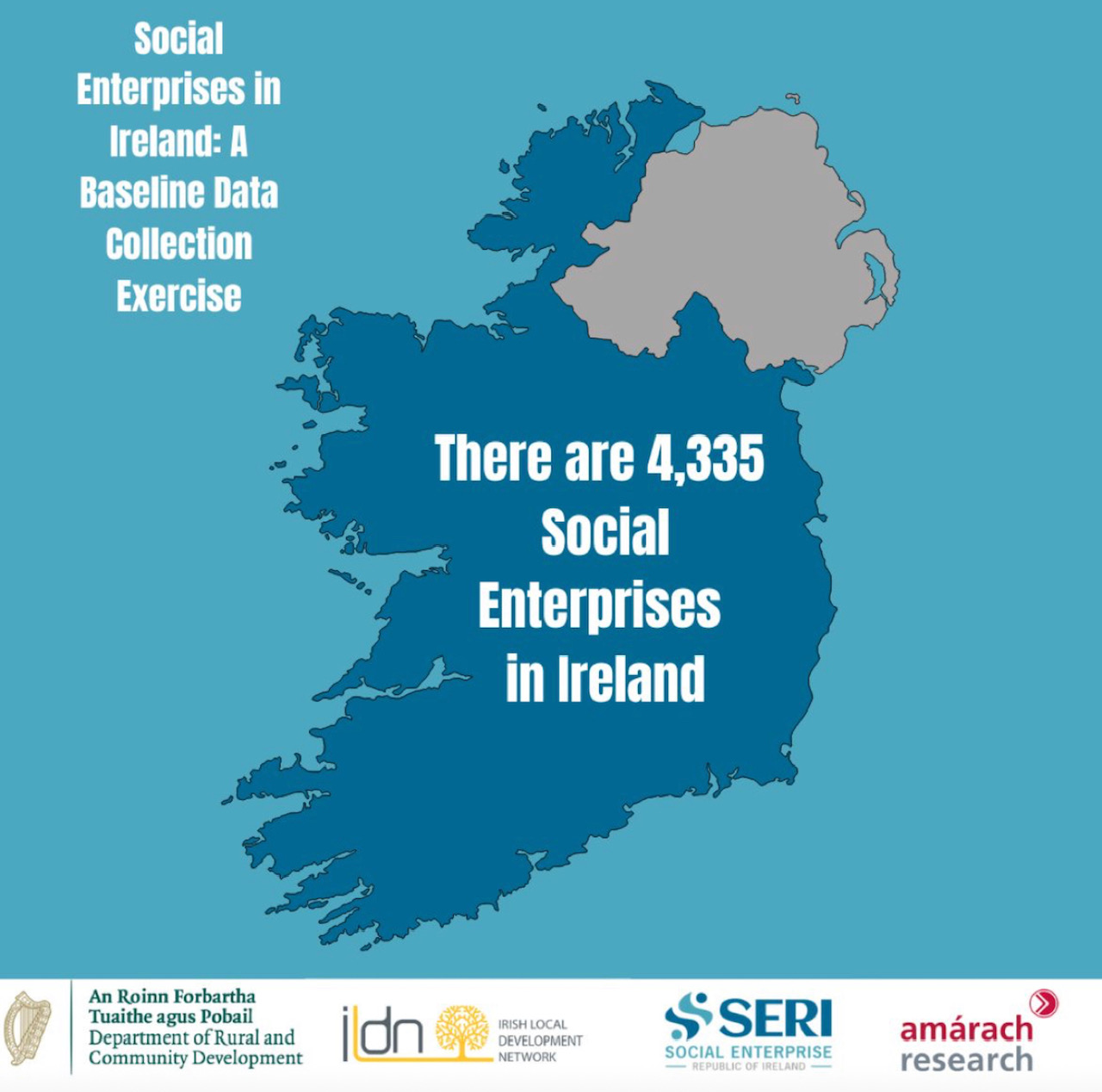
As of 2022, Ireland estimated there were 4,335 social enterprises employing 84,342 people, accounting for 3.7% of the workforce. These social businesses generated income estimated at EUR 2.34 billion in 2021 (Amárach/SERI/ILDN, 2023)
EU Social Enterprise
The European Economic and Social Committee (EESC) has been actively involved in the European social enterprise and social economy agenda for more than 10 years and supports social enterprise growth and development as a key element of the European social model.
There are 2.8 million social economy enterprises, representing 10% of all businesses in the EU. Almost 13.6 million people – about 6.2% of the EU’s employees – work for social economy enterprises. On top of the paid workforce, social economy mobilizes volunteers, equivalent to 5.5 million full-time workers. Characteristics included:
- Membership – up to 160 million people in Europe are members of social economy enterprises (mostly retail, banking and agricultural cooperatives, as well as mutual societies offering services complementary to social security regimes)
- Objectives – social economy enterprises contribute to the EU’s employment, social cohesion, regional and rural development, environmental protection, consumer protection, agricultural, third countries development, and social security policies
- Size – social economy entities are mostly micro, small, and medium-sized enterprises (SMEs)
Today, DG Internal Market, Industry, Entrepreneurship and SMEs is promoting, in particular, the development of social economy enterprises and organisations via the Single Market Programme
It is also particularly focused on supporting the development of social economy by implementing the European action plan on social economy (2021).
Irish Social Enterprise Sector
The estimated 4335 Social Enterprises operate in communities all over Ireland. Like social enterprises in other OECD countries, childcare; community infrastructure and local development; health, youth services, social care, and heritage, festivals, arts and creative industry account for 67.4% of the social enterprise sector.
Other areas of activity include sport and leisure; training and work integration; consultancy and support services; housing; food, catering and hospitality; environmental services; retailing; transport; financial services; manufacturing; and others.
Almost 77% of social enterprises function in more than one sector of activity. (Source: OECD 2023). In reality Social Enterprises offer essential services and tackle problems in society like food poverty, housing or environmental issues.
A 2012 report from Forfas defines social enterprise in Ireland as “an enterprise that trades for a social/societal purpose, where at least part of its income is earned from its trading activity, is separate from government, and where the surplus is primarily reinvested in the social objective.”
The report also lists the four categories under which social enterprises trade
- commercial opportunities that are established to create a social return;
- employment opportunities for marginalized groups;
- economic and community development organisations;
- services delivery organisations.
From experience, it can be said that these four categories almost always overlap and are shared objectives for many social enterprises,
Progress in the Sector
In 2016, the top country in the world for social enterprise action was recorded as the Canada, . Ireland ranked in second-last place on the list.
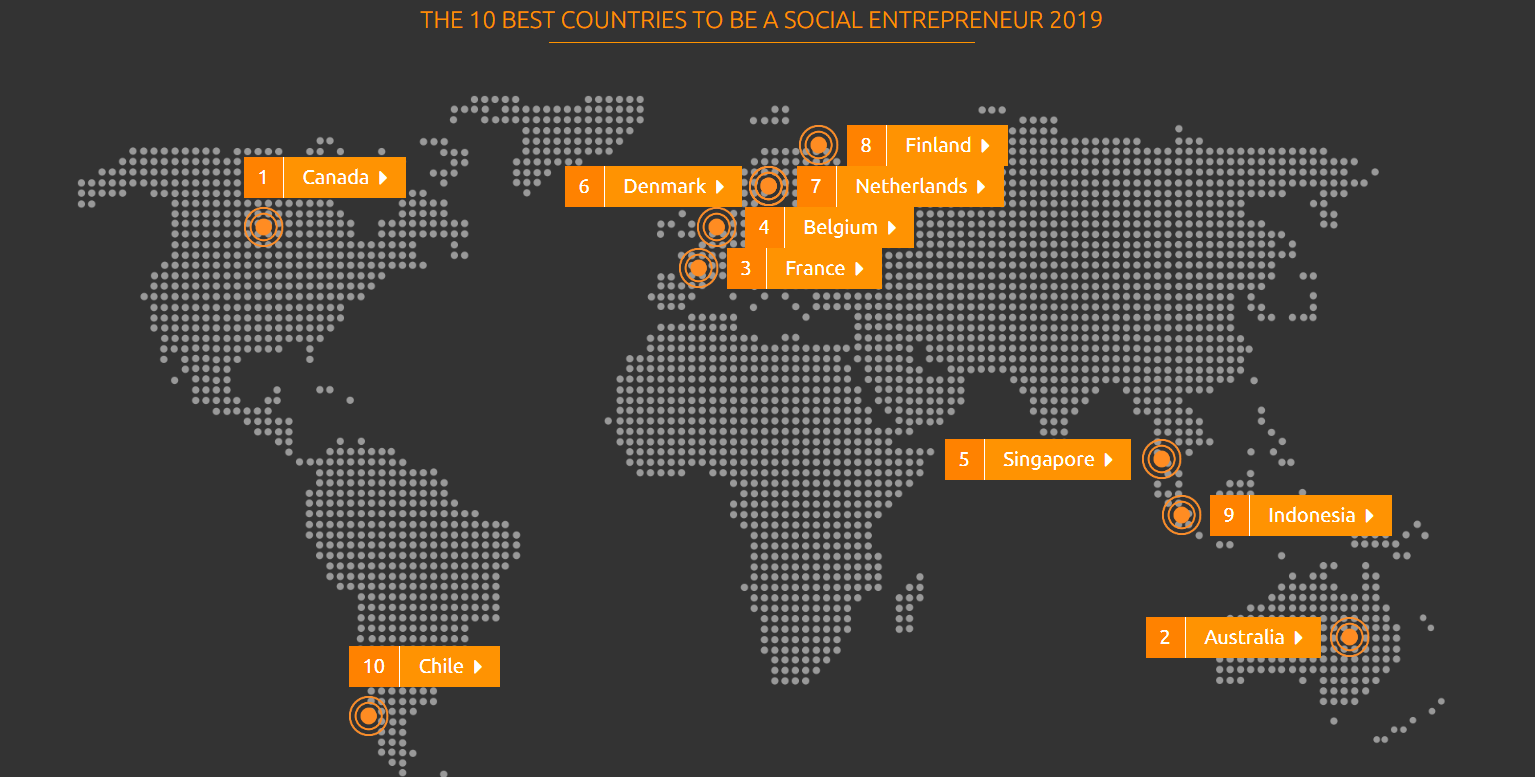
Over a 3 year period, Ireland moved from a near bottom ranking in 2016 to 36th place as it reported improvements in almost all categories. Social entrepreneurship gaining momentum, up 16 points to 17th place, while more social entrepreneurs can make a living from their work, up 17 spots to 21st place. Source: (Research by the Thompson Reuters Foundation, 2016 & 2019).
Social enterprise in Ireland is a growing, dynamic and vibrant space and is now supported by a national policy that commits to building awareness, growing and strengthening the sector, and achieving better policy alignment.” Source: (Sheila Cannon, assistant professor of social entrepreneurship, Trinity College Dublin)
Some of the criteria used to decide if there is a favorable environment for social enterprise include:
- Conditions are favorable for social entrepreneurs to start and grow their businesses
- Government policy supports social entrepreneurs
- It is easy for social entrepreneurs to get grant funding
- It is easy for social entrepreneurs to access investment (debt and/or equity)
- Social entrepreneurs can access the non-financial support they need (e.g. financial, legal and technical advice; access to markets and networks; coaching, mentoring and training)
- It is easy for social entrepreneurs to sell to the government
- It is easy for social entrepreneurs to sell to business
- It is easy for social entrepreneurs to sell to the public
- It is easy for social entrepreneurs to attract staff with the required skills
- The public understands what social entrepreneurs do
- Social entrepreneurs can make a living from their work in my country
- Social entrepreneurship is gaining momentum

The role of social enterprises is growing, both on the island of Ireland and internationally. Social enterprise straddles the space between the national economy and local community, and plays an important role in providing services to marginalized groups and in disadvantaged areas, as well as creating and providing jobs, and contributing to innovative social and environmental initiatives. While much of the activity is at local level, social enterprises also contribute to the national economy. Source: (NESC Report Social Enterprise on the Island of Ireland 2023)
National Social Enterprise Policy for Ireland
The Department of Rural and Community Development published Ireland’s first-ever Social Enterprise Policy in July 2019. The first National Social Enterprise Policy for Ireland 2019 – 2022 focused on three key objectives:
- Building Awareness of Social Enterprise;
- Growing and Strengthening Social Enterprise and
- Achieving Better Policy Alignment.
In July 2024, Minister for Rural and Community Development Heather Humphreys TD launched Ireland’s second Social Enterprise Policy ‘Trading for Impact’ the National Social Enterprise Policy 2024 -2027
‘Trading for Impact’ the second National Social Enterprise Policy details five key objectives:
- Building Awareness of Social Enterprise
- Growing and Sustaining Social Enterprise
- Supporting the Green Transition
- National and International Engagement
- Impact Measurement.
With 57 concrete actions defined under these objectives, which will be implemented between 2024 to 2027. A ‘Stakeholder Engagement Group’ will oversee the delivery of the policy.
The National Social Enterprise Policy for Ireland is part of a suite of policy initiatives from the Department of Rural and Community Development to support those who work with communities and disadvantaged groups.
Social Enterprise at Work
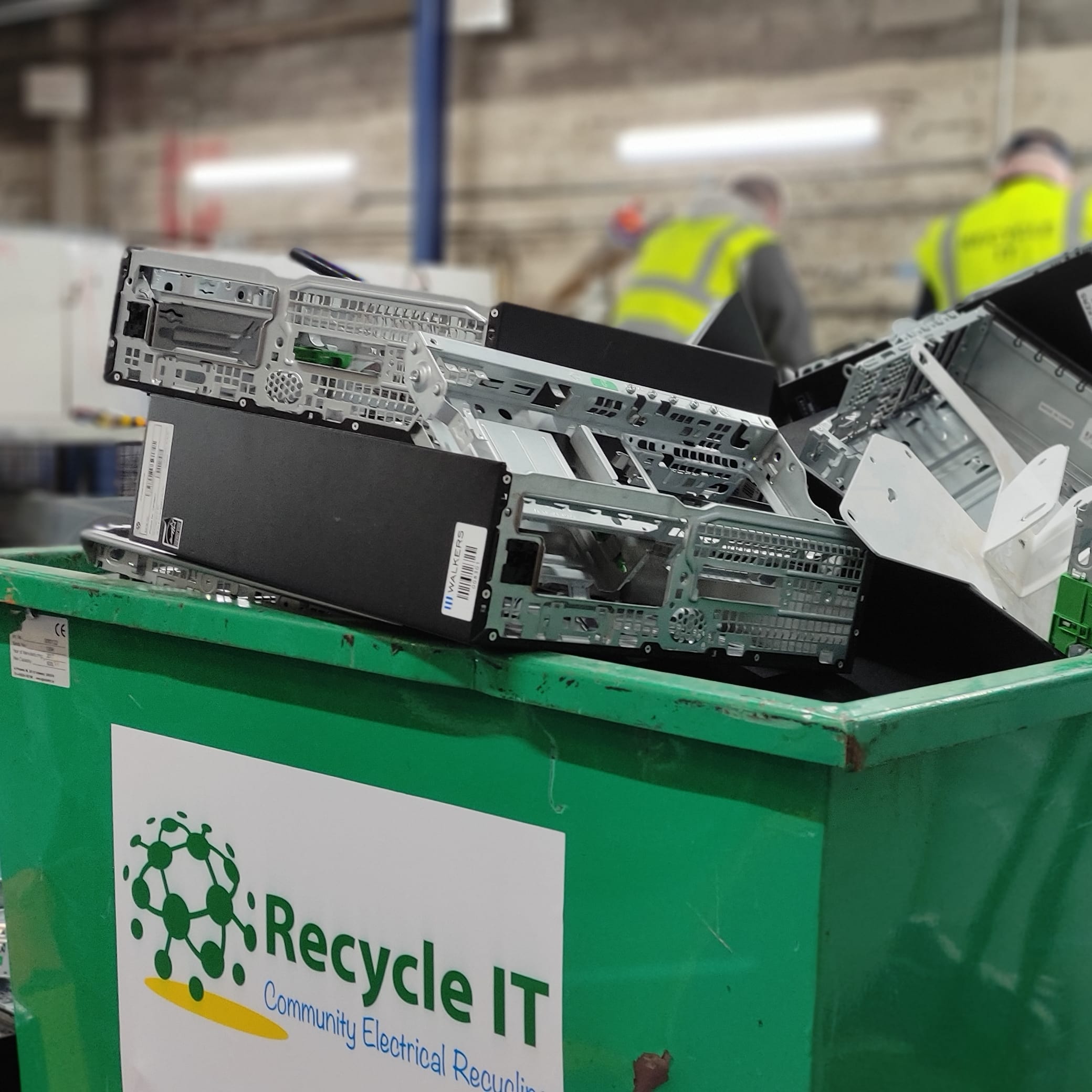
Recycle IT runs an electrical recycling business in the social economy sector with the aim of creating social, economic and environmental value. Our team offers recycling services for communities and the market. Any profits generated are used to support social objectives which include a range of community-focused services, internal training progressions and employment.
Profit is not shared with company directors and the organisations has no commercial stakeholders. Our board is voluntary and any profits are reinvested in recycling operations. Recycle IT is a not-for-profit Social Enterprise.
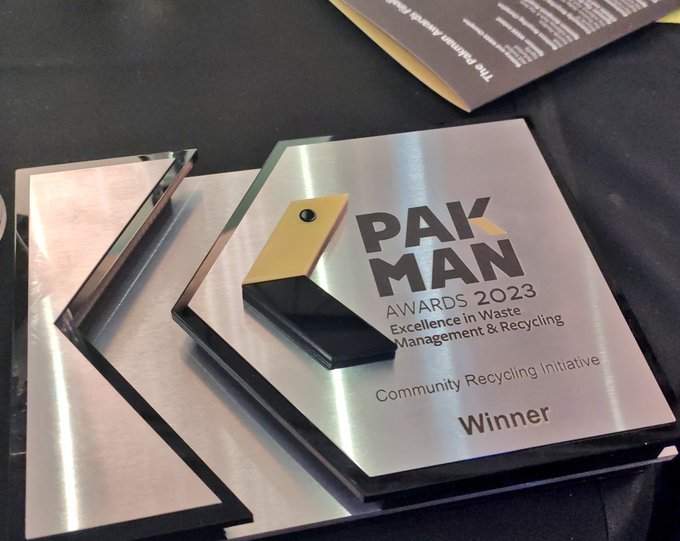
Our awarding-winning recycling service is friendly and effective, yet not glamorous. Work is hard but offers real opportunities for training and skills development. Teamwork helps support our goals and everyone involved “works to do good” while at the same time helping to allow financial sustainability. There is a focused approach to identifying and managing revenue streams to support the company to cover operating costs and reinvest for the future.
What’s Real about Social Enterprise
Social enterprise success generally means more social and/or environmental good with profits reinvested to deliver change.
Usually, social enterprises have more inclusive and diverse structures with women and men coming from a wide range of backgrounds to help start-ups, develop and lead organisations. Social enterprises work on a range of challenges using the tools of business to advance ideas and deliver services. Social Enterprise is more innovative and experiment more than traditional businesses as they work to fill gaps in the market that are of little interest to public sector bodies and profits are limited for the private sector companies. Finally, most work collaboratively and bring people on a journey of change.
Learn more about fiftheen Social Enterprises operating in Dublin: Click each one:
Click here to learn about the impact on communities when you decide to buy from a social enterprise Below you will find a list of Irish Social Enterprise support organisations and networks.
Social Enterprise Supports
- Irish Social Enterprise Network
- Social Enterprise Republic of Ireland (SERI)
- Inner City Enterprise
- Carmichael Centre
- Social Entrepreneurs Ireland Academy
- Local Enterprise Office (LEO)
- The Wheel
- Irish Local Development Network (ILDN)
- Local Development Company Directory – Click here
- Community Resources Network Ireland (CRNI)
- Social Enterprise Supports Table – Click here
- Irish Government Supports – Click here
- Rethink Ireland
- Irish Local Authorities – Click here
About Recycle IT
Recycle IT is an award-winning social enterprise providing recycling collection and drop-off services for all types of waste electrical, electronic equipment (WEEE) and pure metal items.
Recycle IT services are provided in partnership with WEEE Ireland. Recycle IT is supported by the Department of Rural and Community Development, Dormant Accounts Fund, Pobal, South Dublin County Council and authorized by the National Waste Collection Permit Office and the local authorities across Leinster.
For further details about our free and cost-effective services call us on 01 4578321, email info@recycleit.ie or visit the Recycle IT website at www.recycleit.ie
Read about social enterprise funding here.
 Recycle IT