Information Technology Equipment at Home

How do we dispose of IT Equipment?

In 2022, the Central Statistics Office (CSO) published its Information and Communications Technology (ICT) Household Survey.

They asked survey respondents how they had disposed of their most recently disposed of/replaced ICT device. The types of ICT devices is broad and includes laptops, tablets, mobile phones, smartphones, desktop computer, console, printer, speaker, camera, etc. They also asked what factors influence their purchase of devices.

2022 – The way in which responds disposed of their most recently replaced mobile or smartphone

Some Survey Results

Six in ten (62%) internet users said that their most recently disposed of mobile phone or smartphone is still at home. This old phone is either out of use or is being used by another person in the household.

The survey also reports one in six (16%) had sold their old phones or given it to someone outside the household.

Almost one in eight (13%) internet users had disposed of their most recently disposed of/replaced mobile phone or smartphone at an electronic waste collection/recycling.
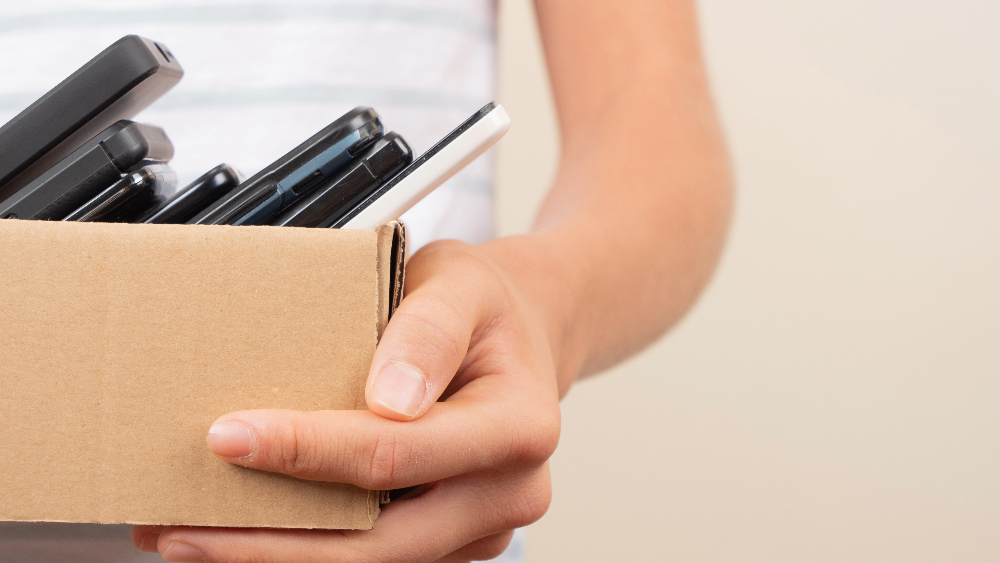
Box of Mobile Phones

When it comes to laptops, one in seven (15%) disposed of their laptop or tablet using a WEEE recycling/e-waste collection point.

Nearly half (47%) said that the old laptop or tablet was still at home, either not being used or being used by someone else in the house, and over one in ten (11%) had sold it or given it away.

Desktop computers tend to be less frequently replaced. Over half (53%) of respondents said that they had never replaced their desktop PC. This compares with just over one in five (21%) internet users who have never replaced their laptop or tablet and have always used the same one.

When buying a ICT equipment, eco design of the device was only important for one in eight (12%) internet users.  The eco design of an ICT device relates to how sustainable it is. It includes its durability, does it have an easily upgradable or repairable design that require fewer materials, are environmentally friendly materials used for packaging and is it designed for a longer life.

What Next?

At the end of long and useful life all ICT equipment should be safely disposed off. The alternative is hoarding which means keeping things that have outlived their usefulness or are no longer helpful in your daily life.

Today most homes have a smartphone or four, a laptop as well a PC, games console, two TVs, and wireless hubs that help you and your family with work and/or entertainment. These devices are recently acquired— but are you keeping the older, outdated equipment you don’t need!  
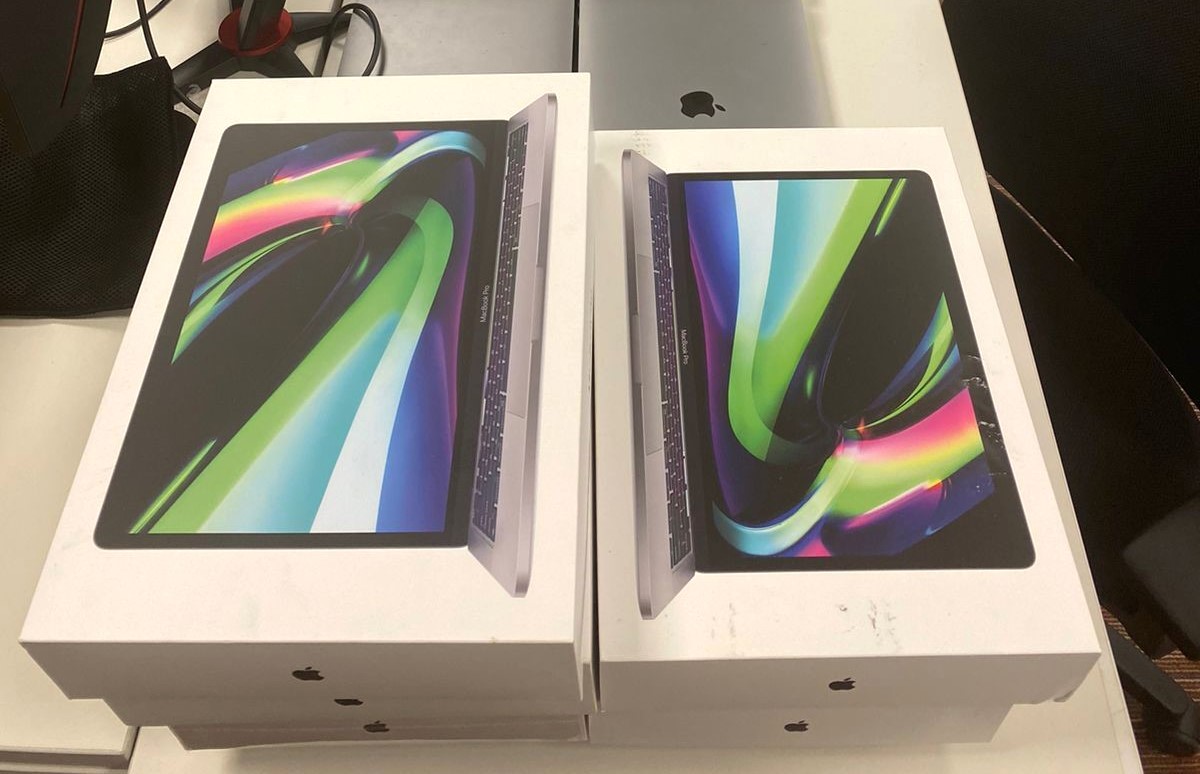
Old Laptops

At the end of their life, all household and office ICT products require careful handing and treatment in order to ensure the recovery and reuse of their components or safe disposal of those parts which cannot be recycled.

Safe Recycling

There are free household Waste Electrical and Electronic (WEEE) recycling/e-waste collection points in most towns across Ireland. Recycle IT is one such location which offers a range of safe and secure value-add services for ICT equipment.

Its better to make sure no personal data is left on your old computers, laptops, smartphones, tablet or any other devices. Id there is data stores on your equipment, you might consider using deletion software, or asking an organisation like Recycle IT to safely and cost effectively destroy the data store beyond reuse.

Other recyclng options including returning old devices, to a retailer. The retailer take-back system is free. It operates on a one-for-one and like-for-like basis – the appliance you are returning must be of a similar type or perform the same function as the one you are buying
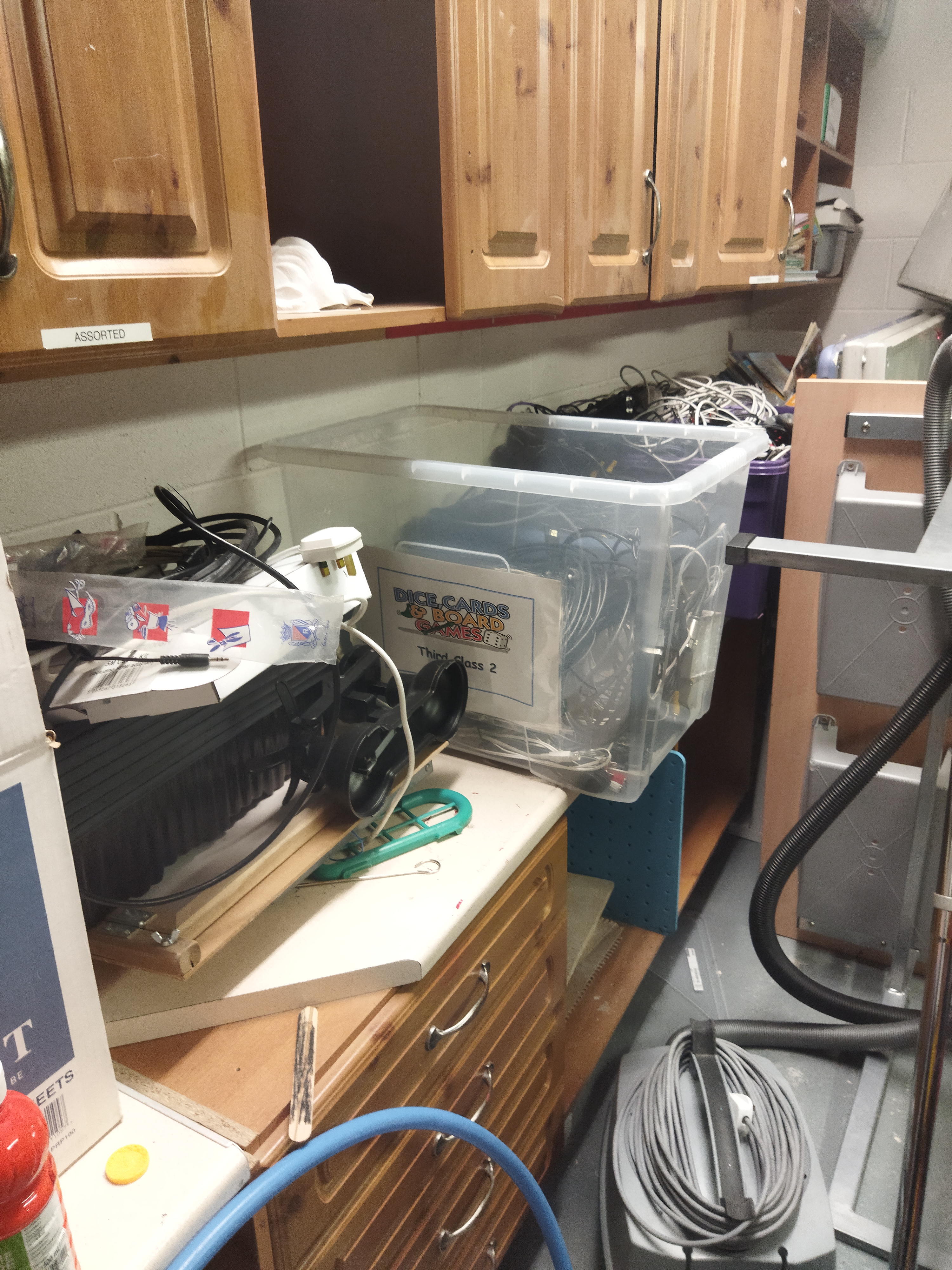
Electrical Clutter

About Recycle IT

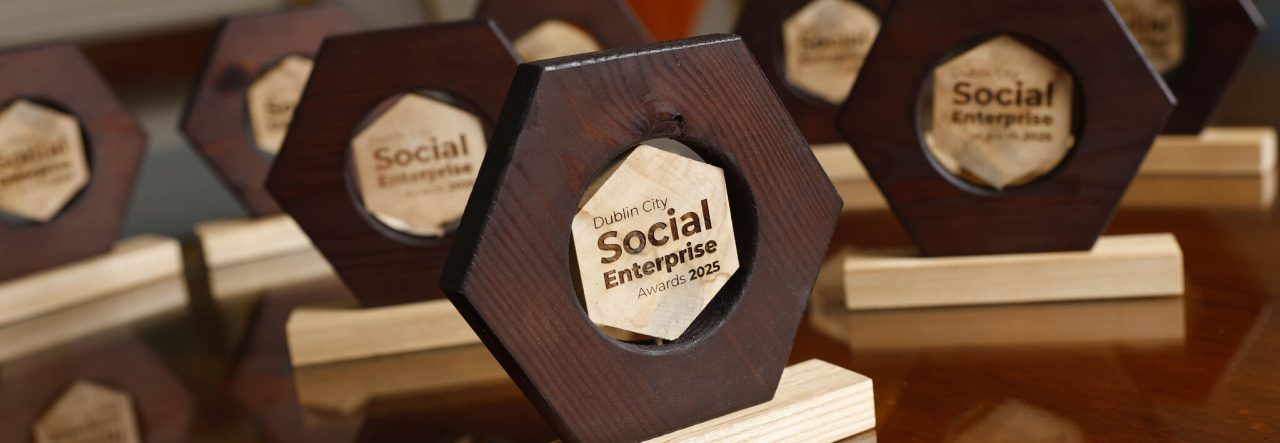
Recycle IT, is an award-winning social enterprise offering electrical, electronic and metal recycling services through drop off and collection. Recycling services are provided in partnership with WEEE Ireland and South Dublin County Council.

Recycle IT is supported by Pobal and Dormant Accounts and authorised by the National Waste Collection Permit Office and the local authorities across the east midlands waste region.

Our goal is to create training and employment opportunities through the provision of waste management services. Surplus earned income is reinvested in operational, and employment-related costs.

For more information on Recycle IT please call 01 4578321, email info@recycleit.ie or visit our website http://www.recycleit.ie

Electrical Recycling Van

Back to School 2025 – 31 Saving Tips

Going to school for the first time or going back to school is an exciting time when students of all ages head to classes after a break. It’s about meeting friends, getting new supplies, and starting fresh with new subjects, classes and activities.

Back to School

Managing the Cost

It’s a time of learning, growth, and getting back into routines, with both challenges and fun ahead. It’s also a time when students can reuse notebooks, pens, backpacks, tablets, laptops and more. This saves time, money, reduces waste, and helps protect our planet.

A recent Competition and Consumer Protection Commission survey of 1,202 parents and guardians of primary and secondary school children has revealed the back-to-school costs facing families across the country. Take a look!

Going back to school a costly time for families, and maybe a time to consider reuse; which reduces spending, clutter and waste while encouraging eco-friendly behaviour at home and in school.

School Supplies

You will find tips below which can help!

Here are 31 simple back-to-school saving tips that focus on reuse and recycling:

  1. Reuse last year’s school bag if it’s still in good condition.
  2. Clean and reuse lunchboxes and water bottles.
  3. Check if uniforms still fit before buying new ones.
  4. Swap school uniforms with other families.
  5. Reuse old stationery like pens, pencils, and rulers.
  6. Repurpose used copybooks with blank pages.
  7. Use recycled paper for notes and rough work.
  8. Repair torn clothes instead of replacing them.
  9. Donate or sell school items your child no longer needs.
  10. Use reusable sandwich wraps instead of cling film.
  11. Print on both sides of paper.
  12. Buy refillable pens and markers.
  13. Shop at charity shops for school supplies or clothes.
  14. Buy second-hand schoolbooks where possible.
  15. Cover books with reused paper or leftover wrapping paper.
  16. Turn old t-shirts into gym bags or pencil cases.
  17. Save and reuse last year’s art supplies.
  18. Label all items to avoid losing and replacing them.
  19. Use leftover supplies before buying more.
  20. Reuse last year’s school calendar or planner if pages are left.
  21. Encourage kids to take care of their belongings.
  22. Use cloth napkins instead of paper ones in lunchboxes.
  23. Pass down school supplies between siblings.
  24. Decorate and personalize old items to give them new life.
  25. Store supplies properly so they last longer.
  26. Create a “supply swap” event with other families.
  27. Donate gently used items to schools or charities.
  28. Choose eco-friendly, recyclable school products.
  29. Recycle broken electronics or batteries properly.
  30. Reuse boxes or containers for organizing supplies.
  31. Keep a reuse drawer for extras like erasers, rulers, and notebooks.

These small actions can add up to make a big difference!

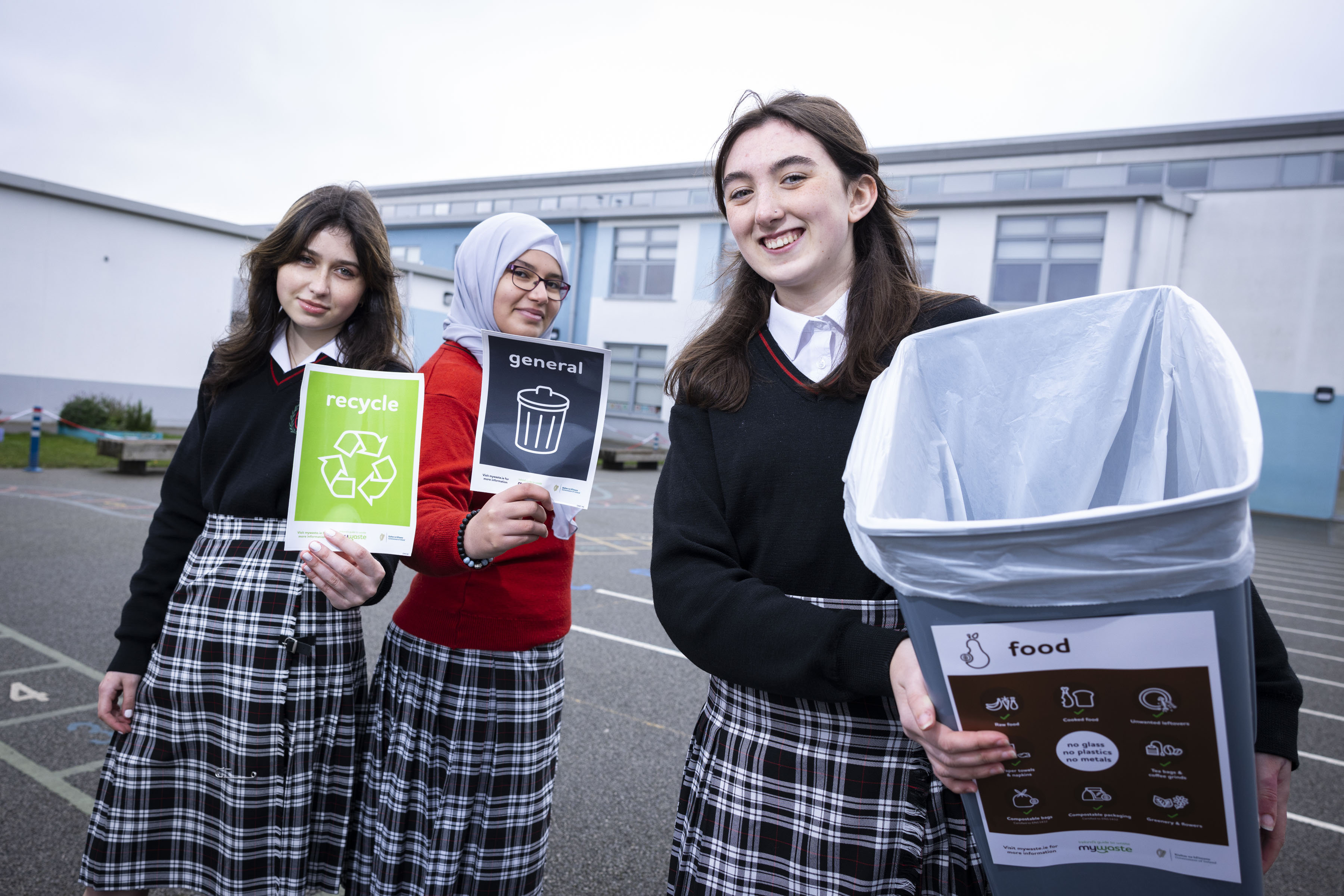
Recycle in School

Give It A Go!

Family, children and students can all try the reduce, reuse and recycle mantra to help protect the environment, save resources, and minimize waste. These actions reduce pollution, conserve energy, and help create a sustainable future.

By practicing these habits early in life, students can make a positive impact on their communities and learn the importance of responsible living.

About Recycle IT

Recycle IT is a not-for-profit, social enterprise working to deliver environmentally friendly recycling solutions and real training and employment opportunities.

Recycle IT operates under the Community Services Programme (CSP). The programme supports community companies and co-operatives to deliver local social, economic, and environmental services that disadvantaged communities. The Community Services Programme is managed for the Department of Rural and Community Development by Pobal, a not-for-profit company tasked with managing programmes on behalf of the Irish Government and the EU. Recycle IT is one of over 400 social enterprises operating with funding support from the programme in Ireland.

This Free Mattress Recycling Initiative is supported by: South Dublin County Council and operated by Recycle IT for a limited period.

Learn more @ www.recycleit.ie

Recycle IT Logo

GreenBoost4WISEs

Recycle IT – Project Award

GreenBoost4WISEs is a project co-financed by the Single Market Programme. The Single Market Programme (SMP) is the EU funding programme to help the EU single market reach its full potential.

Stakeholders Logo

What will happen

This project aim is to make business and processes in Work Integration Social Enterprises (WISE) more sustainable by raising awareness of the benefits of greener practices through capacity building, knowledge transfer and transnational cooperation.

After applying through the Irish Social Enterprise Network (ISEN), Recycle IT (Ireland) was selected as one of the participant organisations from across the EU to take part in study visits to Austria, Belgium, Italy and Ireland. The participants will also benefit from coaching and mentoring sessions on greening strategies.

All project activities are aimed at exploring and enabling peer learning among Work Integration Social Enterprises (WISEs) and Social Economy Enterprises (SEEs) with the goal of adoption of greener and more sustainable practices within business operations.  

The specific objectives are:

Supporting transnational and cross-sectorial cooperation and exchange of good practices to enable sustainable growth of WISEs to manage the green transition.

Upskilling and training towards staff and management of WISEs to embrace greener operations.

Encouraging the uptake and adoption of sustainable measures and innovative solutions.

Fostering cooperation between WISE organisations and other relevant stakeholders (e.g., other social economy entities, mainstream businesses, academia and public authorities).

EU Social Economy Numbers

This project consortium is composed of WISE organisations, networks and circular economy representative. Two specific target groups have been identified in the framework of this project.

  1. the main direct target groups of GreenBoost4WISEs are WISEs managers and their representatives,
  2. other types of social economy enterprises (cooperatives, foundations, networks, etc.) and public authorities.

Indirect target groups including disadvantaged groups working in Work Integration Social Enterprises (WISE) and mainstream businesses.

Recycle IT are thrilled to join the GreenBoost4WISEs Project because it aligns with our mission to promote sustainability, fosters innovation, and offers a platform for impactful environmental initiatives. This collaboration enhances our ability to drive positive, eco-friendly networking and change.

About Recycle IT

Recycle IT is a not-for-profit, social enterprise working to deliver environmentally friendly recycling solutions and real training and employment opportunities.

Recycle IT operates under the Community Services Programme (CSP). The programme supports community companies and co-operatives to deliver local social, economic, and environmental services that disadvantaged communities. The Community Services Programme is managed for the Department of Rural and Community Development by Pobal, a not-for-profit company tasked with managing programmes on behalf of the Irish Government and the EU. Recycle IT is one of over 400 social enterprises operating with funding support from the programme in Ireland.

This Free Mattress Recycling Initiative is supported by: South Dublin County Council and operated by Recycle IT for a limited period.

Learn more @ www.recycleit.ie

Recycle IT Logo

Mattress Recycling Initiative – 2024

Background to Recycling

In 2023 an EU Impact Assessment Report states mattresses currently have a reuse and recycling rate of 20% across the EU and generate approx. 240,000 tonnes of textile waste per year. The report go’s on to say “discarded mattresses are unlikely to be resold in social enterprises and are more likely to be sent for recycling where their most valuable components (metals and foams) are removed for safe recycling

Support with Mattress Recycling – Recycle IT

In July 2202, the Community Resources Network Ireland released a briefing paper titled “Improving Mattress Recycling”. It states mattresses are complex and bulky products that have traditionally been managed within a linear economy model. This model is also called the “take-make-waste economy, ” meaning we take the world’s resources, make a product, use that product, and make it waste. This waste is mainly handled at the bottom of the waste hierarchy.

The report says the market is starting to shift toward more circularity. Key suppliers, such as the foam industry are beginning to invest in recycling options while manufacturers and retailers are also looking to natural materials such as foams or the overall design to ensure ease of dismantling or include recycled content.

Mattress Recycling Initiative at Recycle IT

The Sleep Foundation suggests replacing your mattress if one or more of the following apply:

  • It’s 6-8+ years old
  • It’s negatively affecting your sleep
  • It’s noticeably saggy or damaged in certain areas
  • It’s making more noise than usual (noisy springs are common in old innerspring mattresses)
  • You find that you sleep better at hotels, friends’ houses, etc.
  • You notice an increase in allergies and/or asthma
  • You regularly wake up with muscle or joint stiffness

What Can Be Recycled

About 80% of materials in the average mattress can be recycled. That’s because most are made of steel springs, a wood frame, polyurethane foam and fabric. All mattress types are fair game, from traditional innerspring mattresses to latex, hybrid and memory foam options. And yes, you can recycle nontoxic mattresses and organic mattresses. (Source: Green Living – The Readers Digest).

Mattress Recycling 2023

Disposing of Old Mattresses

Many households struggle with how best to dispose of old and unwanted mattresses after spending hundreds or in some cases thousands of euros on a new or specialized mattress. Most people would prefer not to spend much money on the disposal of old mattresses. 

One option is to visit your local civic amenity site. They usually accept old mattresses for recycling, but getting the mattress to the location can be a challenge in terms of time and cost. You’ll also need a vehicle big enough to fit a mattress.

If you have a car but your boot is too small to fit the mattress when flat, you might find it fits if you roll it up and fasten it with rope. This effort usually takes 2 people. You might also use a van to get your mattress to the civic amenity site/mattress recycling centre.

Mattress Recycling for Reuse

When you hand over your old mattress for recycling it will make its way to a specialist social enterprise operating as mattress recycling facility in Ireland, Most of the recycling breakdown and separation work is done by hand. You will see the general steps in the table below.

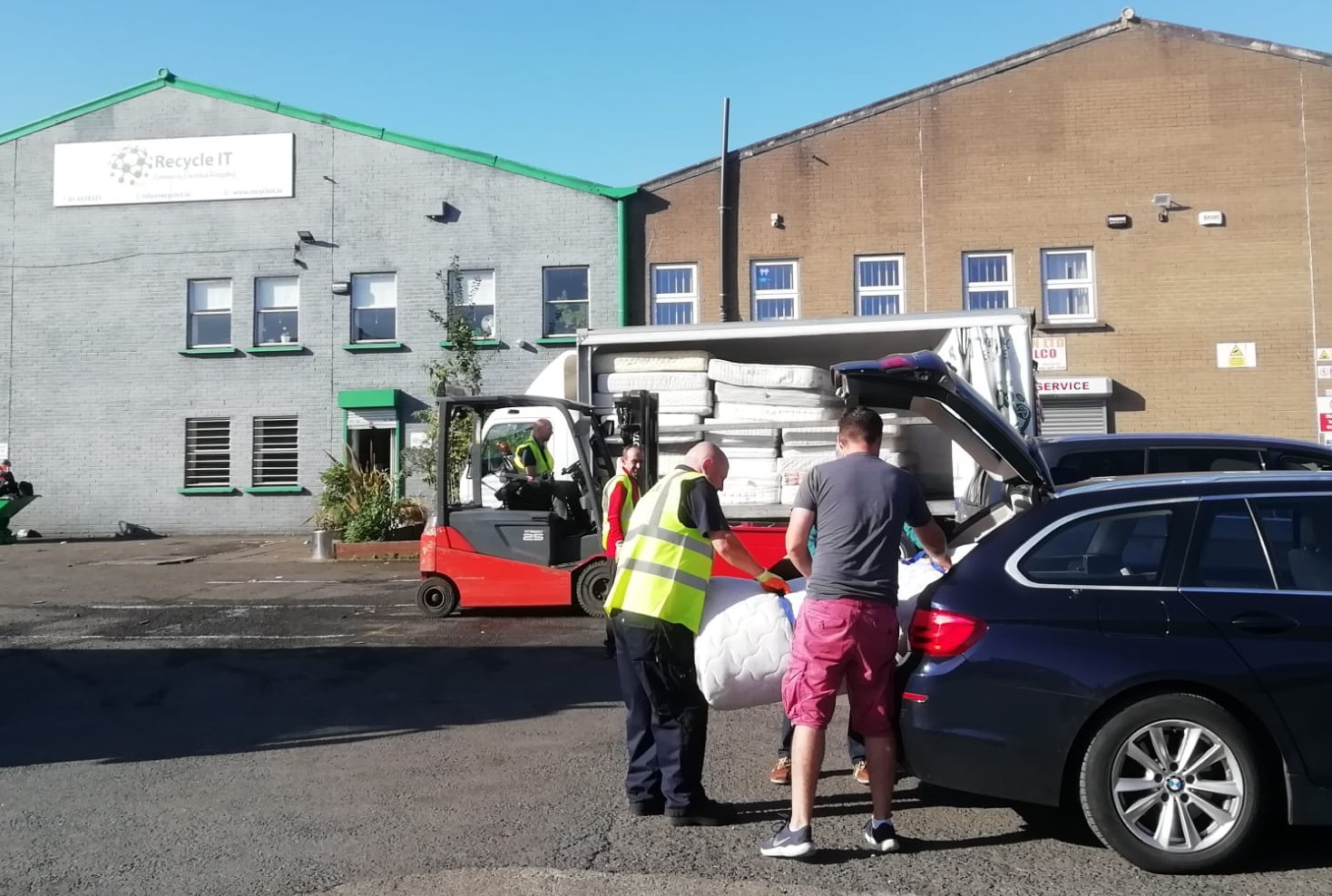
Mattress Drop Off at Recycle IT, Dublin 22
Mattress materialHow is it recycledWhat it is recycled into
Metal springs removedShipped and melted down for reuseHow is it recycled
Foam padding separated Extracted/cleaned for reuseFurniture stuffing, pillows, and carpet underlay
Spilt natural fibre (i.e. wool & cotton)Washed and spun into new fibreInsulation, new yarn, or other recycled textiles
Detach outer fabricStripped from mattress and shredded downLow-grade fabric, refuse-derived fuel (renewable energy)

Mattress Recycling 2025

To help, Recycle IT offers a simple, convenient, sustainable and free solution over a number of weeks each year. Householders can drop off Monday to Friday between 8.30am and 3pm

Our facility will open on a number of Saturdays in September between 9.30am and 12.30pm with dates to be confirmed. There will be a number of community collection days in different areas of South Dublin. These areas will be confirmed closer to the confirmed the dates for the 2025 Mattress Recycling Amnesty

  1. This Mattress Recycling Amnesty is for householders only and is not open to business
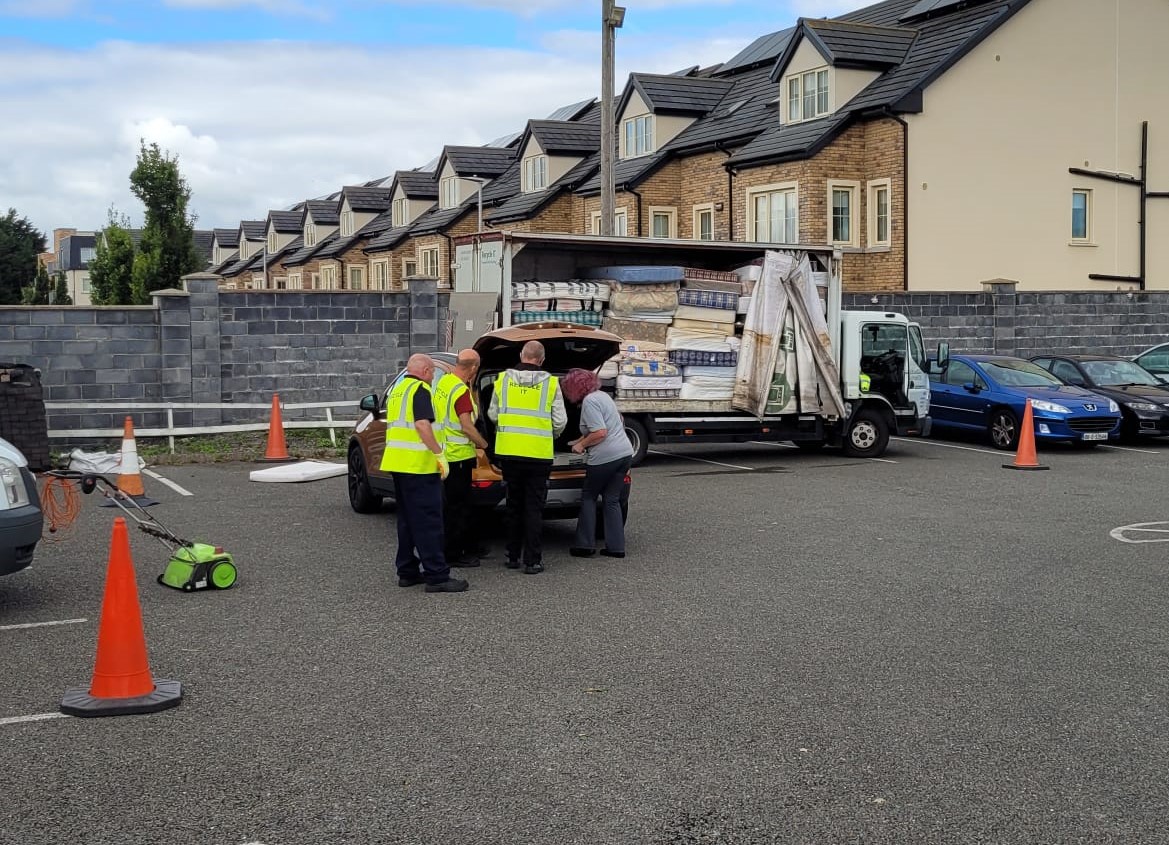
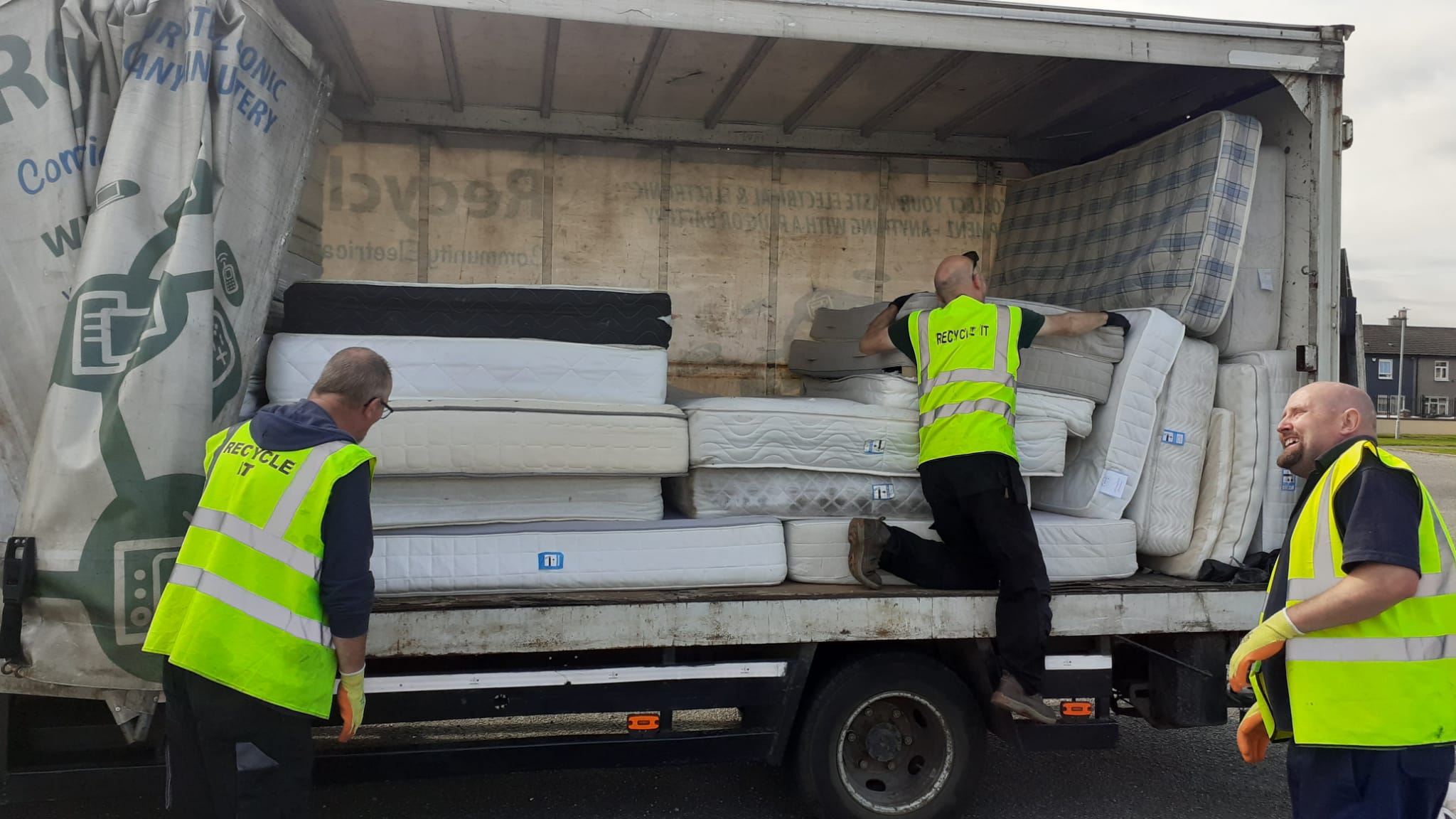
  2. Help will be on hand to lift and move old mattresses from cars and vans to the mattress recycling colleciton point. We will also be open on a number of Saturday mornings (dates to be confirmed).
  3. Recycle IT will accept mattresses. Teams can accept metal bed frames but we are unable to accept wooden bed frames.
  4. During this initiative Recycle IT can offer cost effective personal collections to homes wishing to recycle an old mattress.
  5. You will find the Recycle IT, address, telephone number and a map here.

Listen to Una Lavelle, General Manager at Recycle IT speaking with Sunshine 106.8 FM about mattress and electrical recycling during. Click here.

Mattress Recycling Event 2022

About Recycle IT

Recycle IT is a not-for-profit, social enterprise working to deliver environmentally friendly recycling solutions and real training and employment opportunities.

Recycle IT operates under the Community Services Programme (CSP). The programme supports community companies and co-operatives to deliver local social, economic, and environmental services that disadvantaged communities. The Community Services Programme is managed for the Department of Rural and Community Development by Pobal, a not-for-profit company tasked with managing programmes on behalf of the Irish Government and the EU. Recycle IT is one of over 400 social enterprises operating with funding support from the programme in Ireland.

This Free Mattress Recycling Initiative is supported by: South Dublin County Council and operated by Recycle IT for a limited period.

Learn more @ www.recycleit.ie

Order a Cost-Effective Personal Collection

Old Telephony Equipment: Reduce, Reuse, Recycle

Innovation in Home and Work Phones

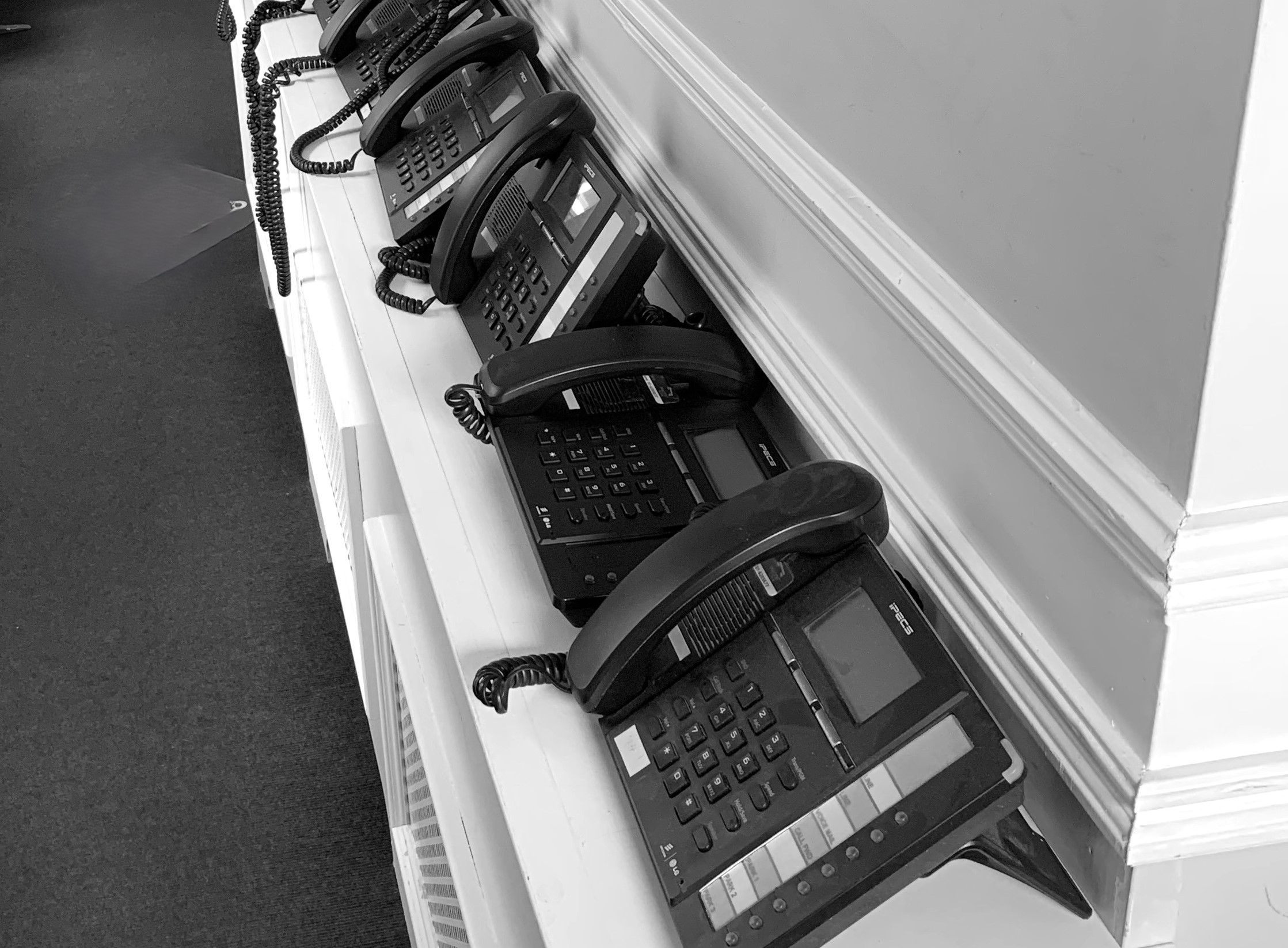
No so long ago desk phones were an essential part of business communication in every office, but over time and especially post pandemic, it has been replaced in many cases by the mobile and laptop communication using software such as Zoom or Teams.

Deskphone

Many telecoms companies in Europe are retiring PTSN and ISDN services The PTSN (Public Switch Telephone Network) gave us what we all know as a landline. This is the fixed phone connection that many of us used at home or work.  Similarly ISDN (Integrated Service Digital Network phone services will be switched off because it’s now outdated and can’t manage modern business communications.

Change

Change has already come in the United States where a 2022 National Health Interview Survey, reveals 72.6% of adults (about 186 million) and 81.9% of children (nearly 60 million) lived in households that did not have a landline telephone but did have at least one wireless telephone

In Ireland the proportion of households with a fixed line telephone has fallen steadily since 2004, when 86.9% of households had a fixed line telephone in their home. By 2019 this had reduced to 59.2% of households – Source – Central Statistics Office.

Household Fixed Line Telephone Ownership

What next?

Home and work phone and broadband services are changing, as steps are taken to enhance and upgrade the technologies on Irish networks over time. These enhancements are not unique to Ireland and are happening all around the world.  

As change happens VoIP (Voice over Internet Protocol) technology will allow us make calls over an internet connection. This can be done using a computer, laptop, smartphone, tablet or any other electronic mobile communication device. 

As fibre broadband becomes an increasingly available technology, and fixed landlines decrease, VoIP services will be in more demand in years ahead. Consumers should see lower costs for calls particularly international calls

Office Phones and Cables

Desk phones service over broadband

You can still keep your home phone service over your fibre broadband internet. A home phone service over fibre broadband (Voice over Internet Protocol (VoIP)), can still use a standard telephone handset, but it will be plugged into the internet modem instead of into a socket in the wall.

If you need new equipment your service provider should arrange to supply the equipment needed to keep your landline phone working – for example, a new modem, new telephone handset or if you need a new broadband service installed, your provider may be able to advise you.

Office Phones

Recycling Old Phone Equipment

Landline or desk telephones should not be placed in the green or black bin. Landline telephones are made with chemicals and hazardous materials found in plastics, circuit boards and batteries. These materials are dangerous when placed in landfills because they can leach into water supplies.

For environmental sustainability, it’s important that desktop phones are recycled when they reach end of life. Recycle IT can collect phones from business organisations for safe recycling, possibly in combination with other computer or IT waste. All the old telephone waste will be sent for authorised electrical waste recycling, and none will go to landfill.

About Recycle IT

Recycle IT is an award-winning, not-for-profit social enterprise established to create employment and promote environmental awareness through recycling and reuse. We work in partnership with WEEE Ireland and are authorized by your local authority to provide electrical, electronic and pure metal recycling collections across Dublin since 2007. Recycle IT are fully compliant for WEEE Recycling with permit details available here.

Recycle IT Logo