Sustainable Irish Christmas

Environment-Friendly Festive Season

Christmas is a time of fun, laughter, and joy, especially for children. We all want to have a wonderful time, but this year please remain mindful of the unnecessary buying and excess waste which can be created.

Our natural resources are precious so let’s try to keep them safe this festive season. All it takes is a little effort and your imagination for you, your family, and your friends to share an eco-friendly Christmas and New Year.

Everything from presents, wrapping paper and festive food can be made a little greener with a little effort. We have 8 suggestions below to get you started!

Snow At Christmas

8 Tips to Help!

1.   Gifting an event or experience to your loved ones this Christmas will reduce the demand for physical resources. Bringing people together by gifting shared time at an event or day out when brighter days arrive is special. You might try tickets to shows, concerts or summer events. Make a restaurant booking or share a gift card. Why not plan a day out to an Office of Public Works (OPW) Heritage site. You could even make and share a homemade meal or do some share spring gardening. It means Christmas comes twice for the receiver when they receive the gift and get to share an experience!

2. Give gifts with little or no wrapping or packaging. Shopping locally can help with this, especially if you have a local refill shop. If you must use packaging, use recycled, or recyclable, materials.  Avoid plastic where possible and being your reusable bags to carry all your shopping home! If you shop online, try charity shopping at www.thriftify.ie
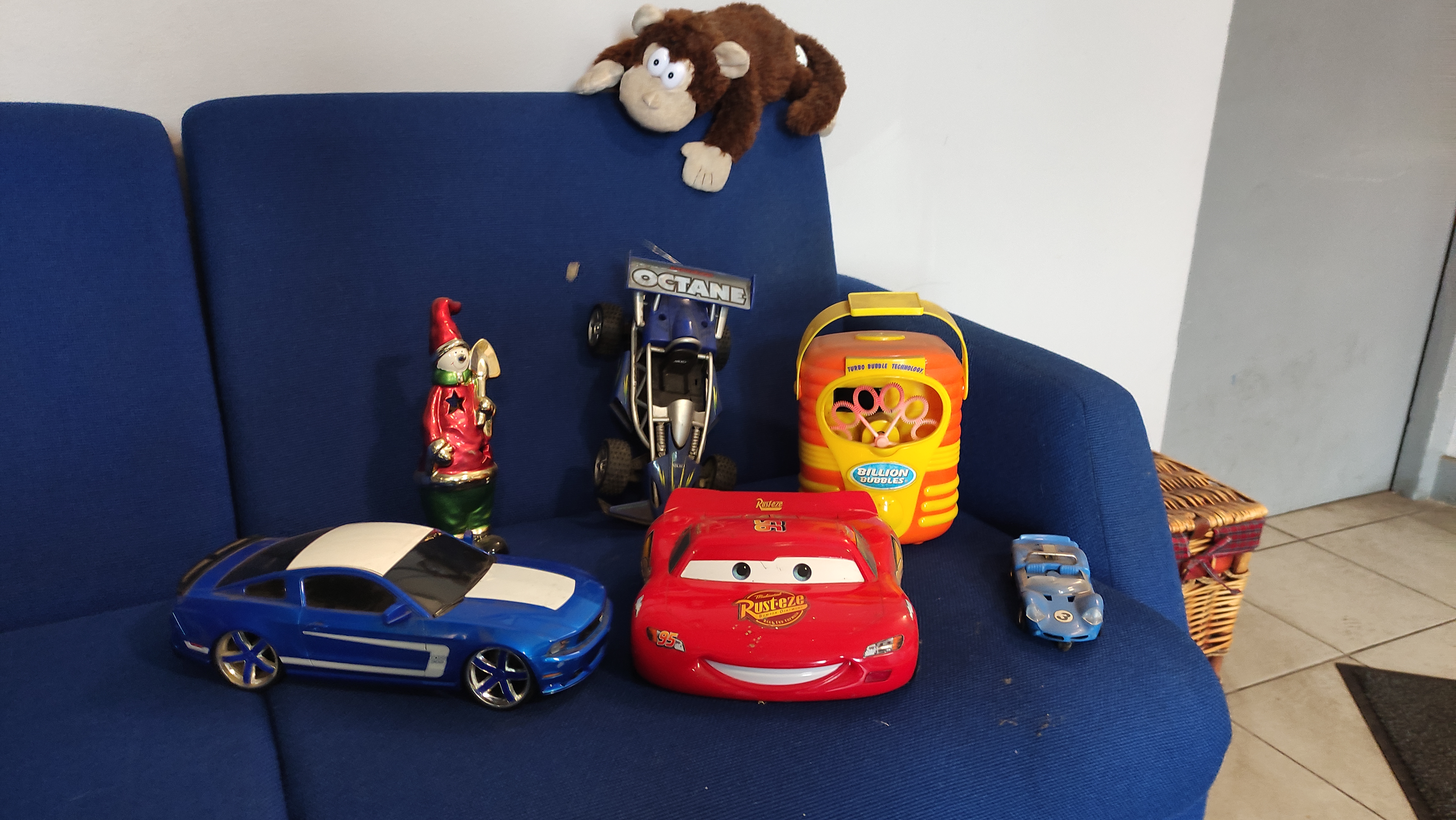
Old Toys – Think Reuse

3. Reduce the quantity of waste created. In 2014, the Irish Mirror reported that “Over 50% of gifts received at Christmas are considered useless” Not good news for the giver or receiver!  When buying gifts less is the new more. Think better, putting the time into picking a quality item that will last. This reduces gifts going to waste and can be better for your January credit card bill.  

4. Many Christmas crackers are not recyclable, and the toys inside are often made of plastic. Instead, look out for FSC-certified crackers with good-quality items inside which can be reused over and over. Another idea involves creating your own festive crackers. Fill yourself or get children involved in choosing and packing sustainable options (like chocolates, dice, and nail clippers) and other festive favours with a personal touch. 

Glitter and Plastic Free Festive Wrapping Paper

5. If you’re not sure what to give – why not support the work of a charity by choosing a cause close to the heart of the person you’re thinking of. It might be mental well-being, animal welfare, nature, wildlife, or the environment. This can include a gift of membership to an organisation, a donation, planting a tree or adopting endangered wildlife.

6.  Make your festive shopping basket more sustainable by buying locally produced, seasonal products. Doing so reduces the energy used in growing food. It reduces the purchase and use of out-of-season fruit and vegetables. It also reduces the shipping of food around the globe and supports the work of local Irish farmers by buying and eating seasonal produce like rooster potatoes, kale, carrots, leeks, cabbage and broccoli and brussels sprouts.

7. A survey by iReach in 2019 for Aldi found 50% more food is thrown away during the festive period. This food has an estimated value of €42 million. This waste is challenging on a number of fronts including carbon emissions and waste generation but especially for vulnerable families. We all can buy less, eat less, and share more this festive season!

Origin Green Programme

8. Know your food producers: When shopping for food, look for Irish produce to reduce food miles. Search for sustainability certifications such as Origin Green. This programme collaborates with over 55,000 farms and 324 leading Irish food and drinks companies to prove and improve the sustainability of the food they produce. You can also check out the Bord Bia Quality Mark.

When you see Bord Bia Q Mark on a product it means that the product has been produced in accordance with the required Quality Assurance standards and secondly the flag and the ‘Origin Ireland’ on the mark verify that the product was produced, in its entirety, in Ireland – where you see this mark it means that the food was farmed and slaughtered in the Republic of Ireland. You can view the Bord Bia Quality Mark here.

Origin Green is the world’s only national food and drinks sustainability programme, enabling the industry to set and achieve measurable sustainability targets that respect the environment and serve local communities more effectively. To help you can see some Irish-origin green producers with sustainable products in Irish supermarkets – click here.

To get more tips you can visit My Christmas Waste, just click here.

About Recycle IT

Recycle IT is an award-winning, not-for-profit, social enterprise established to create employment and promote environmental awareness through recycling and reuse. We work in partnership with WEEE Ireland and are authorized by your local authority to provide electrical, electronic and pure metal recycling collections across Dublin since 2007. Recycle IT are fully compliant with WEEE Recycling Requirements and permit details are available here.

For more information about Recycle IT please click here.

The Gift of Christmas Fund Raising

Social Enterprise Policy Bank Launched

The Launch Event

Monaghan Integrated Development has launched its newly developed Social Enterprise Policy Bank. This website was officially unveiled in Castleblayney. Co Monaghan on Nov 14th 2022 with the event hosted at Íontas Arts & Community Resource Centre.

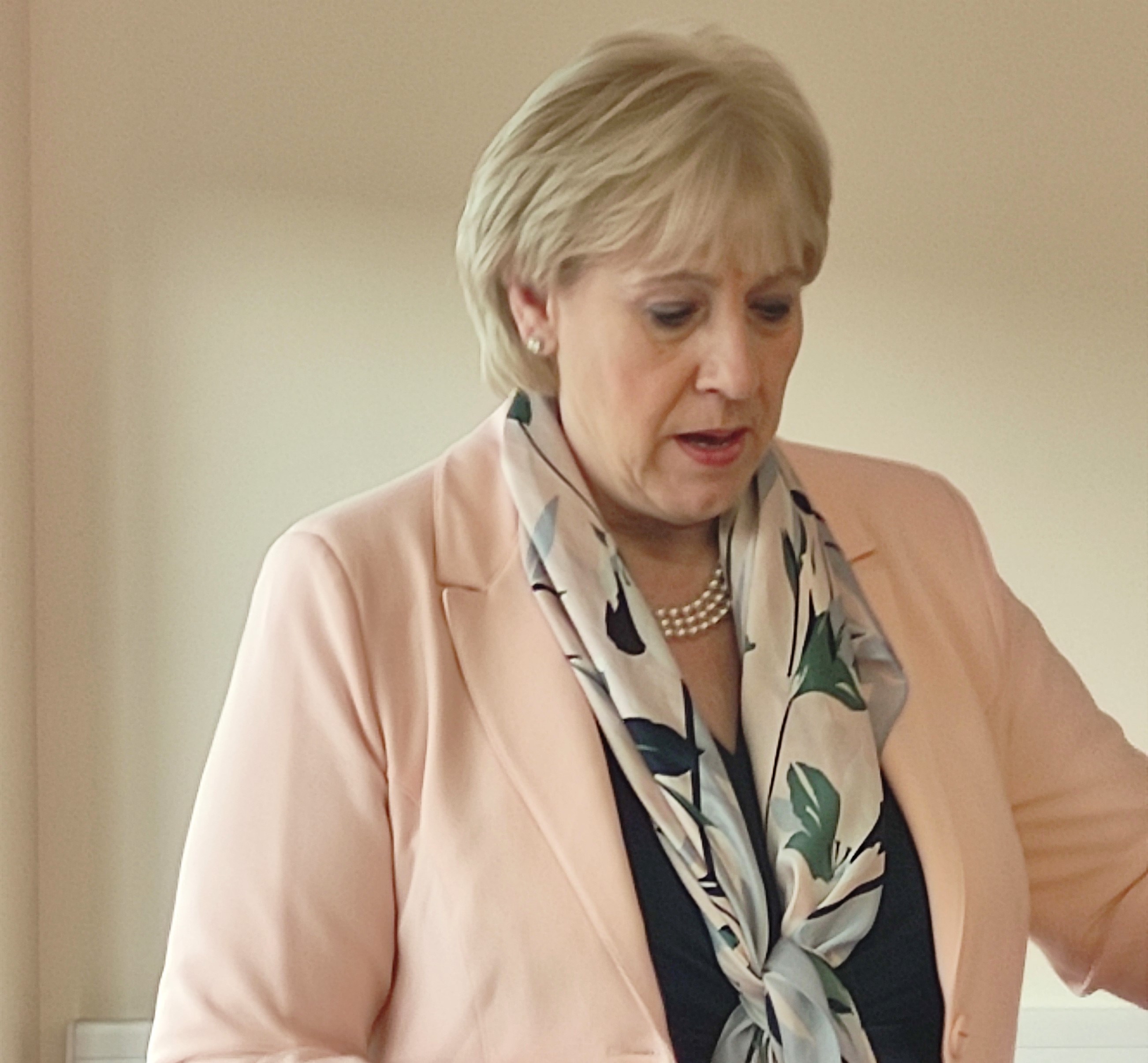
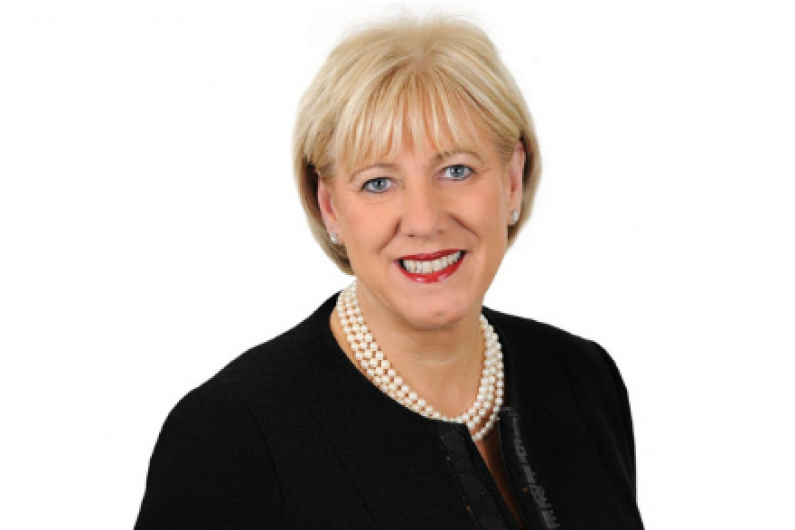
Heather Humphreys, Minister for Rural and Community Development launched the website, which is a resource developed to support the social enterprise sector in Ireland. The event was attended by representatives from existing social enterprises and community-based organisations supporting the social enterprise sector in Ireland.

Heather Humphreys, Minister for Rural and Community Development

Policies

Policies once developed help communicate an organisation’s culture, values, and views. Policies can cover several area such as those listed below. They can outline what employees can expect from the organisation (employee benefits, holiday leave, breaks, training, progression opportunities), what the company expects from employees (code of conduct, respect, dignity), and what customers and the community can expect from the organisation (the interaction between the consumer and representatives of the organisation).

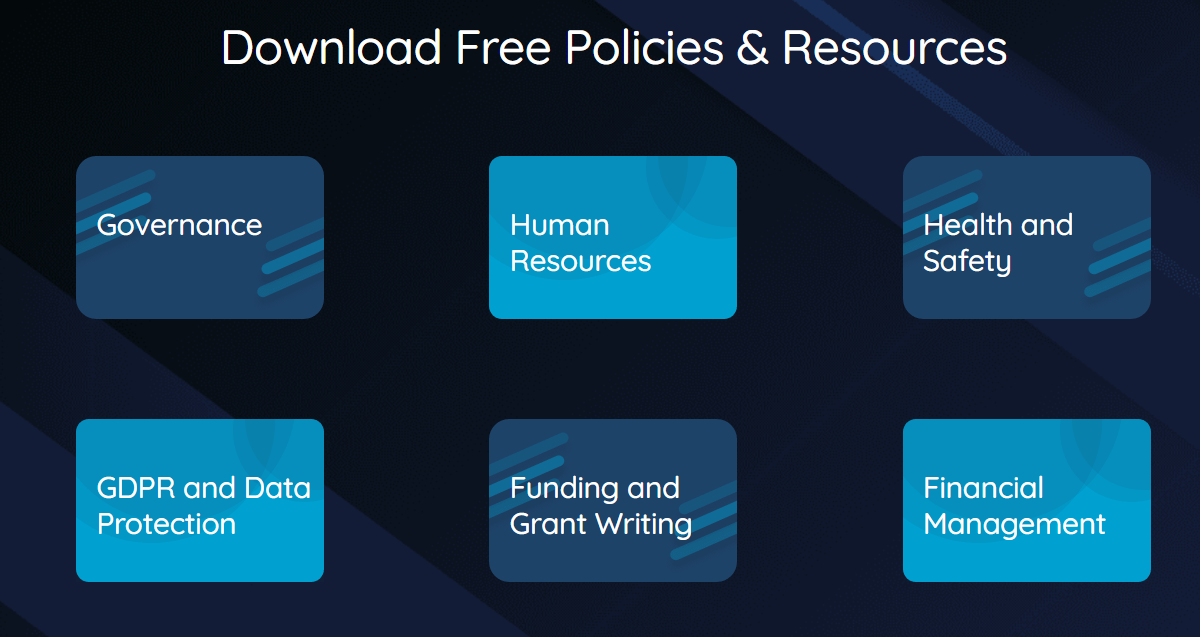
The Social Enterprise Policy Bank website contains a set of tailored resources to meet the unique and specific needs of the social enterprise sector in Ireland. The website aims to make it easier for volunteer board members to improve their organisational governance through the provision of a dedicated resource where they can download sample policies and procedures and readily tailor these to their specific organisation.

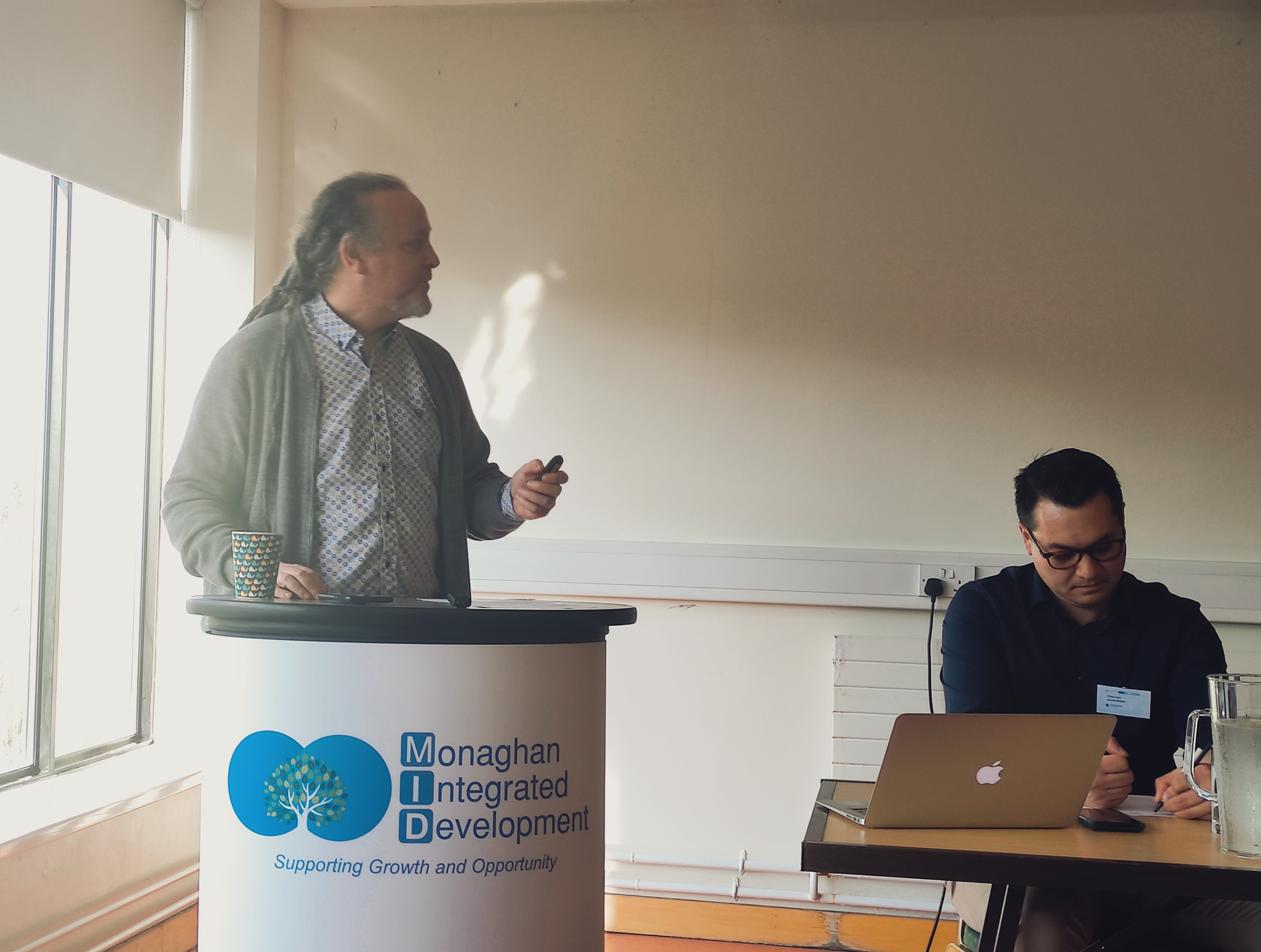
Philip Isard, Quality Matter provided an overview of the Social Enterprise Policy Bank giving the audience a first taste of what to expect and how the resource can help social enterprises.

Social Enterprise Policy Bank

Speakers

Following the official launch, there were presentations and discussions on how to grow and diversify social enterprise operations including a presentation on European Funding Opportunities by Emma Murtagh of The Wheel.

Attendees got the opportunity to hear and learn from some existing Not-for-Profit Social Enterprise from around Ireland including

  • Dr Oliver Moore, Chairperson, Cloughjordan Ecovillage, Cloughjordan, Co. Tipperary.
  • Emma Cunningham, Manager, Leitrim Design House, Carrick-On-Shannon, Co. Leitrim.
  • Micheal Ward, Manager, Mullingar Employment Action Group, Mullingar, Co. Westmeath
Dr Oliver Moore, Chairperson, Cloughjordan Ecovillage & Philip Isard, Quality Matters

This was followed by a panel discussion and a question and answers session.

About The Policy Bank

The Social Enterprise Policy Bank was created for social enterprises in Ireland to help with achieving good governance and meeting its statutory and legal requirements. In other words, this website contains a series of free policy guidebooks, templates and other helpful resources to help your organisation with its governance.

The project was developed by Monaghan Integrated Development, Cavan County Local Development and Louth Local Development. The Social Enterprise Policy Bank was approved by the Government and funded by the Dormant Accounts Fund.

Please click www.sepolicybank.ie to visit the website.

About Recycle IT

Recycle IT, is an award-winning Dublin-based, not-for-profit, social enterprise offering electrical, electronic and metal recycling. Services are provided in partnership with WEEE Ireland. Recycle IT is supported by Pobal, the Dormant Accounts Fund, and South Dublin County Council. Recycle IT is authorised by the National Waste Collection Permit Office and the local authorities across Leinster.

For further details about our free and cost-effective services call us on 01 4578321, email info@recycleit.ie or visit the Recycle IT website at www.recycleit.ie

Social Enterprise Policy Bank Logo

Recycle IT – Business Electronic Recycling

Calling Business

Waste Electrical and Electronic Equipment (WEEE) recycling is an important consideration for every business, including small and medium-sized companies and especially those with a lot of electronics, such as computers, laptops, phones, networking equipment, printers, batteries and other office devices. Watch our video below!

Recycle IT – Community Electrical Recycling

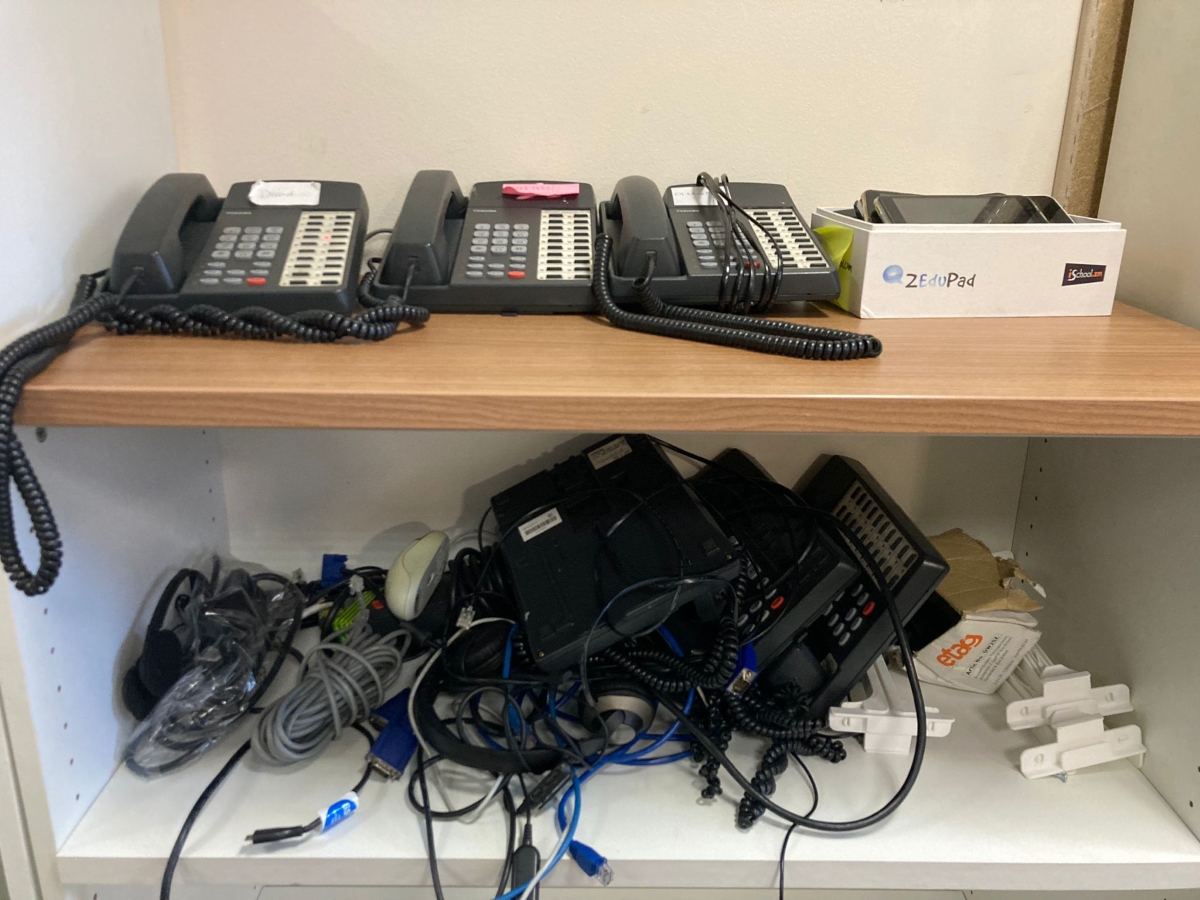
Some of these old and unused items may be stored in desk drawers or stationary rooms and years out of use. The safe disposal of old, damaged, or unused equipment is essential to good environmental practice.

Some Background

According to the United Nation’s Global E-Waste Monitor, e-waste is the world’s fastest-growing domestic waste stream. Its disposal contributes to climate change due to the chemicals released when it gets burned. Furthermore, 10 % of all electricity consumption and 4 % of all carbon emissions worldwide stem from the ICT industry.

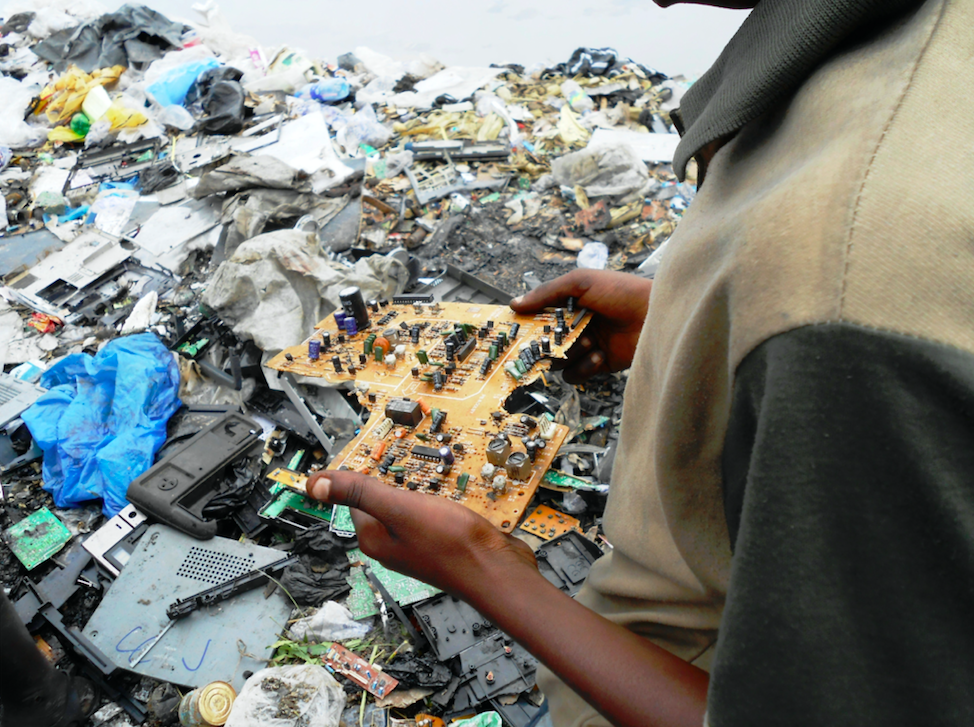
E-waste is hazardous because the components used to make devices contain metals and chemicals known to harm human health. Adults and children in developing countries often work, live, and play in or near e-waste recycling centres and are therefore especially vulnerable.

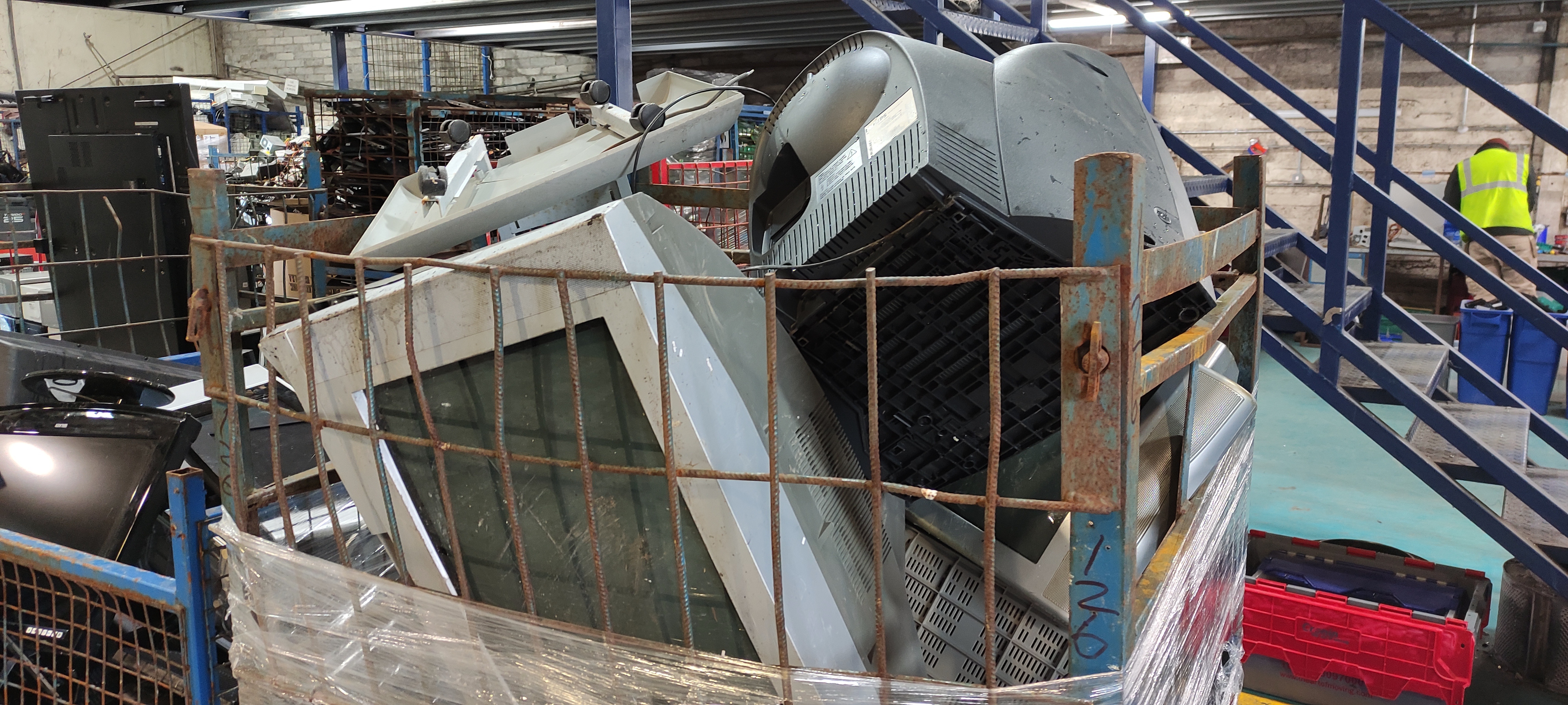
Unauthorised Disposal of Electronic Equipment

Why We Do

Recycle IT safely recycle Waste Electrical and Electronic Equipment Recycling for business. We offer a collection service for all types of electronic equipment. Many items are broken down into their component parts and salvaged components that can be reused including the metal from outer casings. This is a much more practical solution for the growing challenge of e-waste. Simply dumping the equipment in the bin is not the right thing to do.

Before the safe disposal of computer equipment, Recycle IT can on request offer data destruction to ensure that sensitive information is not stolen and used for fraud – an important and often legal consideration for many companies. Just ask in advance of drop off or the collection and the service can be arranged.

Computers including Hard Disk Drives

Recycle IT aims to support the Circular Economy which favours designing products for durability, reuse, remanufacturing, and recycling. It aims to keep materials circulating for as long as possible. It’s an economy that encourages many different uses for materials instead of just using them up and throwing them in a landfill or an incinerator.

Our recycling initiatives have led to positive recognition from several sources, including Repak Ireland, Dublin City Council, Rethink Ireland, and others.  Please click here to learn more.

If your business needs to free up space, declutter and safely recycle old electronic equipment or pure metal items please do contact Recycle IT via email or telephone at 01 4578321

About Recycle IT

Recycle IT, is an award-winning Dublin-based, not-for-profit, social enterprise offering electrical, electronic and metal recycling. Services are provided in partnership with WEEE Ireland. Recycle IT is supported by Pobal, the Dormant Accounts Fund, and South Dublin County Council. Recycle IT is authorised by the National Waste Collection Permit Office and the local authorities across Leinster.

For further details about our free and cost-effective services call us on 01 4578321, email info@recycleit.ie or visit the Recycle IT website at www.recycleit.ie

Recycle IT – 2022 Award Winner

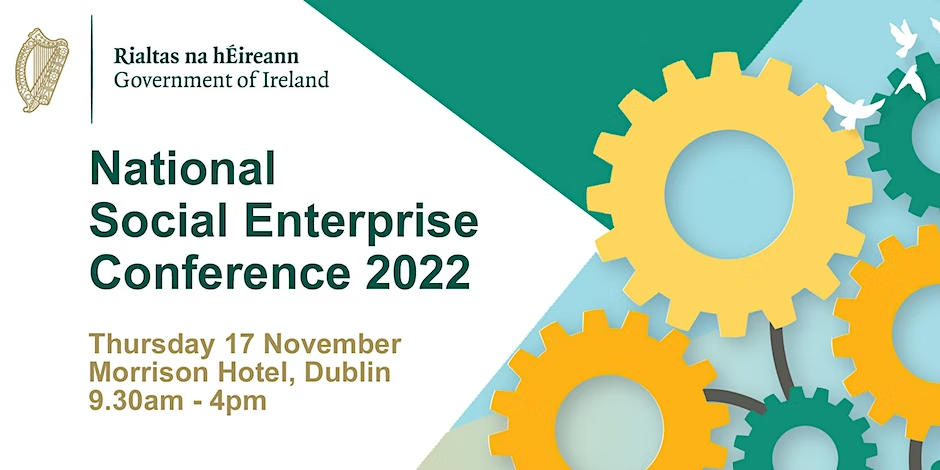
NATIONAL SOCIAL ENTERPRISE CONFERENCE 2022

Social Enterprise

Social enterprises are businesses that work primarily to improve the lives of people. Their core objective is to achieve a social, societal, or environmental impact. They frequently work to support disadvantaged groups; including people experiencing long-term unemployed, youth unemployment, people of differing abilities and ex-offenders, or to address, issues such as health and well-being, food poverty, social housing, or environmental challenges such as safe recycling and reuse.

Like other businesses, social enterprises pursue their objectives by trading in goods and services on an ongoing basis. However, any surpluses generated by social enterprises are re-invested into achieving social objectives, rather than maximising profit for their owners.

The Conference 2022

To help further develop the sector, Heather Humphreys T.D., Minister for Rural and Community Development, has announced the 4th Annual National Social Enterprise Conference which will take place on International Social Enterprise Day, Thursday 17 November 2022.

This event will be held in person in the Morrison Hotel, Ormond Quay, Dublin 1, and will also be virtually live-streamed.

The National Social Enterprise Policy 2019-2022 includes a commitment to hold an annual Social Enterprise Conference as part of its objective to Build Awareness of Social Enterprise. The Conference aims to provide networking opportunities, disseminate information, share experiences and inform policy implementation.

Heather Humphreys, Minister for Social Protection,  Minister for Rural and Community Development

The Theme of the Conference is: ‘A New Beginning’

You can confirm your attendance via the ‘Register’ below before Wednesday 16 November at Noon.

  • Click HERE to attend the in-person event in Dublin
  • Click HERE to attend the live-streamed event Online

Recycle IT hope you enjoy the National Social Enterprise Conference 2022 whether attending in person or online.

You can learn more about Social Enterprise in Ireland here.

About Recycle IT

Recycle IT, is an award-winning Dublin-based, not-for-profit, social enterprise offering electrical, electronic and metal recycling. Services are provided in partnership with WEEE Ireland. Recycle IT is supported by Pobal, the Dormant Accounts Fund, and South Dublin County Council. Recycle IT is authorised by the National Waste Collection Permit Office and the local authorities across Leinster.

For further details about our free and cost-effective services call us on 01 4578321, email info@recycleit.ie or visit the Recycle IT website at www.recycleit.ie

Ireland’s Fourth National Social Enterprise Conference

Is Ireland Winning the WEEE Battle?

Report for 2020

The Irish Environmental Protection Agency (EPA) recently published its annual Waste Electrical and Electronic Equipment (WEEE) Statistics Report for 2020.

We are delighted to share the news that a record 64,856 tonnes of waste electrical and electronic equipment were collected in Ireland for processing.

Mixed Household Electrical Equipment

This is the highest quantity ever recorded in Ireland. However, for the second year, we did not meet the waste electrical and electronic equipment collection target of 65%. We achieved a 60% collection rate, slightly reduced from the 61% recorded for 2019.

Recycling Trends

The trends identified by the Irish Environmental Protection Agency are listed below.

  • Ireland collected a record 64,856 tonnes of WEEE for treatment.
  • Ireland achieved a WEEE collection rate of 60% in 2020 as efforts to increase collection were outpaced by the growth in Electrical and Electronic Equipment placed on the market.
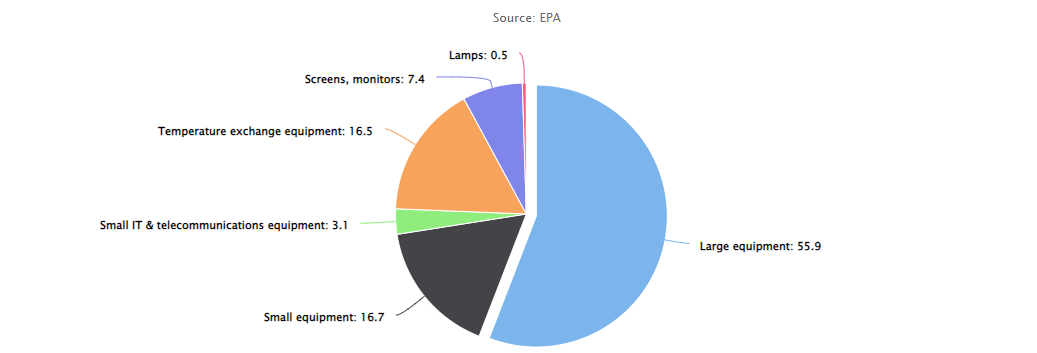
  • Large household equipment accounted for 56% (by weight). This includes washing machines, tumble dryers, cookers, ovens etc. ‘
  • Small electrical equipment accounts for 17% (by weight) of electrical items collected. This includes coffee machines, food processors, radios, kettles, toasters and similar items.
  • Fridges and freezers accounted for 16% (by weight).
Percentage Breakdown of WEEE collected in 2020 by Weight

Buying and Recycling

Generally, the purchase and usage of electronic goods are closely linked to people’s economic wealth. This is reflected in the WEEE data for Ireland for 2008-2020 shown in Figure 2.

Screens and Monitors

It is evident that the economic recession between 2008 and 2011 led to a decrease in the quantity of WEEE collected and recovered, as Irish householders and businesses did not replace electrical and electronic equipment as frequently during this period.

The growth in the Irish economy since 2012 has led to large rises in electrical equipment collected and recovered, which reached record highs in 2020.

This rise matches the reported increases in retail sales of electrical goods in 2020. The trend is likely attributable to changes brought about by the Covid-19 pandemic such as the widespread shift to remote working and a surge in household clear-outs.

Based on data provided by the Producer Register Limited, Ireland’s national register of electrical and electronic equipment (EEE), there was an increase of 11% in overall EEE placed on the market in Ireland in 2020 compared with 2019, while there were considerably larger increases in quantities of ‘small IT and communications equipment, screens and monitors’ which rose by 32% and 31% respectively

Communication Equipment

European Reporting

As part of annual reporting under the EU WEEE Directive, the EPA compiles statistics on WEEE collection and treatment in Ireland. The data are required to be submitted to Eurostat, the statistical office of the European Union, by 30th June of the reference year +2 (i.e. 2020 data were collected and processed in 2021 and reported in 2022). Following validation of the data by Eurostat, official statistics for all Member States are published on the Eurostat website as part of the following dataset here.

About Recycle IT

Recycle IT, is an award-winning Dublin-based, not-for-profit, social enterprise offering electrical, electronic and metal recycling. Services are provided in partnership with WEEE Ireland. Recycle IT is supported by Pobal, the Dormant Accounts Fund, and South Dublin County Council. Recycle IT is authorised by the National Waste Collection Permit Office and the local authorities across Leinster.

For further details about our free and cost-effective services call us on 01 4578321, email info@recycleit.ie or visit the Recycle IT website at www.recycleit.ie

Electrical items collection for recycling