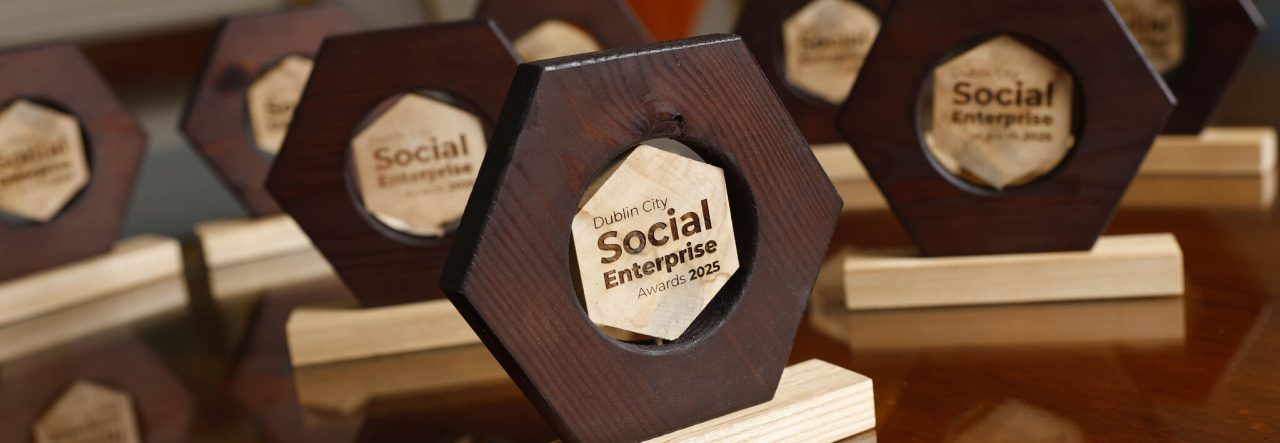
E-Waste Recycling Hits Record High

E-Waste – New Highs in Ireland

Ireland recycled a record 21.1 million electrical and electronic waste items in 2025, marking another significant increase in the countryโ€™s e-waste recycling efforts.

However, despite the record volume of electrical waste collected, Ireland still fell short of the European Unionโ€™s 65% e-waste collection target, according to new figures from WEEE Ireland.

The organisationโ€™s latest annual report shows that almost 39,000 tonnes of e-waste were collected across Ireland during 2025 โ€” equivalent to approximately 7,425 truckloads.

The number of items collected also increased substantially from 18.8 million in 2024.
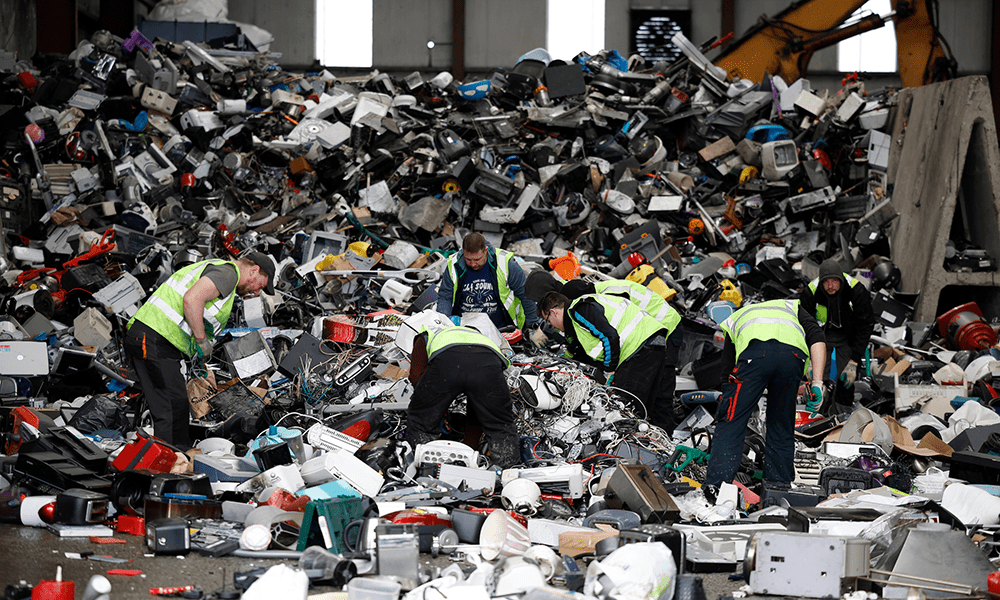
Ireland E-Waste - Recycling at Work
Electronic Recycling At Work

What Electrical Waste Was Recycled in Ireland?

Small electrical appliances accounted for the vast majority of items collected in 2025.

WEEE Ireland reported the recycling of:

  • 18.5 million small appliances
  • 1.9 million lighting products
  • 278,222 TVs and monitors
  • 123,060 fridge-freezers

The figures highlight the growing volume of electrical equipment being diverted from general waste and instead entering dedicated recycling systems.

Why Did Ireland Miss the EU E-Waste Collection Target?

Despite achieving record e-waste recycling volumes, Ireland remains below the EUโ€™s 65% collection target.

WEEE Ireland says the issue is partly linked to how the target is calculated.

Under the current European system, a countryโ€™s e-waste collection rate is measured against the amount of electrical and electronic equipment placed on the market during the previous three years.

In 2025, Irish producers placed around 25kg of household electrical equipment per person on the market.

The system, WEEE Ireland argues, does not fully reflect the increasingly long lifespan of modern electrical products.

Many products can remain in use for considerably longer than three years before eventually becoming waste.

This is particularly relevant for newer technologies such as solar PV systems and heat pumps, which can remain operational for decades.

As a result, equipment sold today can influence future collection targets even though it may not enter the recycling system for many years.

E-Waste – Collected by Recycle IT

WEEE Ireland Calls for a Modern E-Waste Measurement System

Leo Donovan, CEO of WEEE Ireland, said Irish consumers are recycling more electrical waste than ever, but argued that the EUโ€™s current measurement system was designed for a very different market.

He said current collection targets do not adequately account for modern consumption patterns, longer product lifespans or emerging technologies.

The comments come as the EU WEEE Directive is being re-evaluated, creating an opportunity to reconsider how national e-waste recycling performance is measured.

WEEE Ireland supports a more modern approach that better reflects how electrical products are purchased, used and eventually discarded.

Ireland Exceeds EU E-Waste Recovery Requirement

While Ireland did not meet the EU collection target, the latest figures show strong performance when it comes to recovering materials from collected e-waste.

An average of 82% of materials collected were recovered for reuse in manufacturing, exceeding the EU recovery requirement of 80%.

Meanwhile, 84% of counties increased their WEEE recycling rates year-on-year.

This suggests that the debate around e-waste should not focus solely on the quantity of waste collected.

How effectively valuable materials are recovered and returned to manufacturing is becoming an increasingly important measure of circular economy performance.

Battery Recycling in Ireland Continues to Grow

Ireland also achieved the EUโ€™s 45% collection target for portable waste batteries, with WEEE Ireland collecting 1,284 tonnes during 2025.

Lithium battery collections have more than doubled over the past five years.

That increase reflects the growing number of products powered by rechargeable batteries, from consumer electronics to electric devices and other technologies.

Vape recycling is another emerging issue. More than 1.4 million vape devices were recycled through WEEE Irelandโ€™s national takeback scheme in 2025.

Why Critical Raw Materials Matter

The growing volume of e-waste presents both an environmental challenge and an opportunity to recover valuable resources.

Electrical and electronic products contain critical raw materials including lithium, copper, cobalt and aluminium.

Recovering these materials through effective recycling can help reduce the need for virgin raw materials while supporting Europeโ€™s ambitions to improve resource security and develop a more circular economy.

WEEE Ireland says the focus needs to move beyond simply collecting electrical waste.

The next stage is ensuring that valuable materials are recovered to high standards and kept within the manufacturing cycle for as long as possible.

How Can Consumers Recycle Electrical Waste in Ireland?

Consumers can play an important role in increasing Irelandโ€™s e-waste recycling rate.

Old, broken or unwanted electrical items and waste batteries can be recycled free of charge through a number of collection routes, including:

  • Local authority civic amenity centres
  • Participating electrical retailers
  • WEEE Ireland collection events
  • Dedicated battery collection points

Electrical equipment should not be placed in general household waste where dedicated recycling facilities are available.

Irelandโ€™s E-Waste Challenge Is Changing

Irelandโ€™s record 21.1 million recycled electrical items in 2025 demonstrates that consumers are increasingly using dedicated e-waste recycling systems.
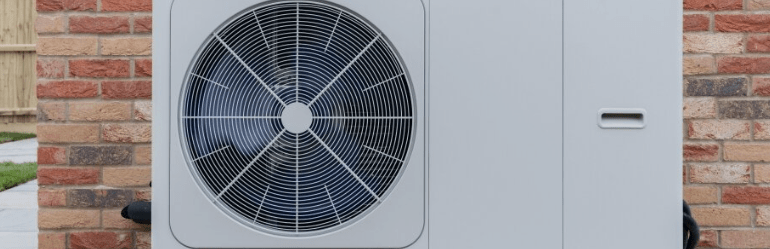
Heat Pump Equipment
Heat Pumpย Equipmnet

Yet the countryโ€™s failure to meet the EU collection target raises questions about whether the current measurement system accurately reflects the modern electrical goods market.

With products such as heat pumps, solar PV systems, rechargeable batteries and other technologies becoming increasingly common โ€” and often remaining in service for many years โ€” the way Europe measures e-waste recycling may need to evolve.

The future of Irelandโ€™s e-waste strategy is therefore likely to involve more than simply collecting greater quantities of discarded electrical equipment.

It will also depend on recovering more valuable materials, improving recycling quality and keeping critical resources within the circular economy.

Ireland may have missed the EUโ€™s collection target in 2025, but the record volume of electrical waste recycled shows that significant progress is being made.

Get the full article here

About Recycle IT

Recycle IT is an award-winning social enterprise providing recycling collection and drop-off services for all types of waste electrical, electronic equipment (WEEE) and pure metal items.

Recycle IT services are provided in partnership with WEEE Ireland. Recycle IT is supported by the Department of Rural and Community Development, Dormant Accounts Fund, Pobal, South Dublin County Council and authorized by the National Waste Collection Permit Office and the local authorities across Leinster.

For further details about our free and cost-effective services call us on 01 4578321, email info@recycleit.ie or visit the Recycle IT website at www.recycleit.ie

Recycle IT – Award Winners

Tablets – Recylce IT Safely

Why Is It So Important to Recycle Old Tablets Safely?

Have you ever found an old tablet hidden in a drawer? Maybe it’s cracked, doesn’t hold a charge anymore, or has been replaced by a newer device. Many kids and teens have old tablets lying around at home. It might seem easy to throw them in the bin or forget about them, but recycling old tablets safely is actually very important.

So, why does it matter? Let’s find out!

Tablets Can Be Recycled Safely
Children’s Tablet – Can be Recycled

Tablets Contain Valuable Materials

A tablet may look like just a piece of plastic and glass, but inside it are many useful materials. Tablets contain metals like gold, silver, copper, and aluminium. These materials are valuable and can be reused to make new devices.

If old tablets are thrown away, these precious resources are wasted. Mining for new materials takes a lot of energy and can damage the environment. By recycling tablets, we can recover these materials and use them again instead of digging up more from the Earth.

Think of recycling as giving your old tablet a second life!

Electronic Waste Is a Growing Problem

Electronic waste, often called e-waste, is one of the fastest-growing types of rubbish in the world. Every year, millions of phones, tablets, computers, and other gadgets are thrown away.


Electronic Equipment for Recycling

When too much e-waste ends up in landfills, it creates huge environmental problems. The more devices people throw away, the more space is needed for rubbish dumps, and the more natural resources are used to make replacements.

By recycling your old tablet, you become part of the solution. Even one tablet recycled properly can make a positive difference.

Old Tablets Can Contain Harmful Materials

Some parts inside electronic devices contain materials that should not be left in ordinary rubbish bins. If tablets are damaged or broken down in landfills, certain substances can leak into the soil and water.

This pollution can harm plants, animals, and even people. Clean water and healthy soil are important for everyone, and safe recycling helps protect both.

When old tablets are taken to proper recycling centres, experts know how to handle these materials safely and responsibly.

Your Personal Information Needs Protection

Here’s something many people forget: old tablets can still contain personal information.

Even if you stopped using your tablet months or years ago, it may still store:

  • Photos
  • Videos
  • Passwords
  • Messages
  • Email accounts
  • Game information
  • School projects
  • Personal notes

Throwing a tablet away without clearing the data can put your privacy at risk. Someone else might be able to access information you thought was deleted.

Safe recycling means taking a few important steps first:

  1. Back up anything you want to keep.
  2. Sign out of your accounts.
  3. Delete your files and photos.
  4. Perform a factory reset.
  5. Take the tablet to a trusted recycling centre.

Protecting your personal information is just as important as protecting the environment.

Recycling Helps Fight Climate Change

Making new electronic devices requires factories, transportation, and mining. All of these activities use energy and produce greenhouse gases that contribute to climate change.

Climate Change – Click to Enlarge

Recycling old tablets reduces the need to make everything from brand-new materials. Reusing metals and parts saves energy and lowers pollution.

You may think one old tablet won’t make much difference, but imagine millions of people safely recycling their devices. Together, small actions can have a huge impact on our planet.

Recycling Teaches Responsibility

Taking care of old electronics teaches an important lesson: our choices matter.

Being responsible doesn’t only mean cleaning your room or doing homework. It also means thinking about how your actions affect the world around you.

When you recycle your tablet safely, you show that you care about:

  • The environment
  • Wildlife
  • Natural resources
  • Other people
  • Your personal information

These are habits that can last a lifetime.

You Can Help Create a Circular Economy

A circular economy is a system where products and materials are reused instead of thrown away.

Imagine if every old tablet was simply dumped in the rubbish. We would constantly need new materials and create more waste. But if tablets are recycled, many of their parts can be reused to create new products.

It’s like turning old Lego pieces or now old plastic bottles into a brand-new creation instead of throwing them away.

Circular Economy – Click to Enlarge

The goal is to keep materials in use for as long as possible. Safe recycling helps make this happen.

What Should You Do With an Old Tablet?

If you find an old tablet at home, here are some smart steps to follow:

  • Ask a parent or guardian for help.
  • Save any important files.
  • Remove personal information.
  • Reset the device to factory settings.
  • Take it to an approved electronics recycling centre or trade-in programme.

Never throw tablets into ordinary household bins.

Every Action Counts

You don’t have to be an environmental scientist to make a difference. Small actions from kids and teens can lead to big changes.

Recycling old tablets safely helps protect nature, saves valuable resources, keeps harmful materials out of the environment, reduces pollution, and protects your private information.

The next time you see an old tablet gathering dust in a drawer, remember that it still has value. Instead of treating it like rubbish, give it a chance to be recycled properly.

By making smart choices today, you can help create a cleaner, safer, and greener future for everyone. And that’s something worth tapping into! You can learn more about computer usage and recycling here.

About Recycle IT

Recycle IT is an award-winning not-for-profit social enterprise providing a collection and drop-off service for all types of waste electrical, electronic and metal items. Recycle IT offer drop-off and collection services to both homes and organizations in Dublin and surrounding areas collecting a range of WEEE which includes thousands of printers and we can help recycle yours!

Our electrical community collection service is provided in partnership with WEEE Ireland. Recycle IT is supported by Pobal, South Dublin County Council and authorized by the National Waste Collection Permit Office and the local authorities across Leinster.

To speak with Recycle IT please call 01 4578321 or email us here

Visit our website www.recycleit.ie

Photocopier and Printer Recycling

Today

According to Transparency Market Research the global photocopier market was valued at US$ 727.2 million in 2023. The market is projected to reach US $1.2 billion by 2034 through the increasing demand for multifunctional devices and the expansion serval end-use industries. People working from home and rising disposable income are other reasons for increased demand for smaller printers & copiers across the globe.

Some History

The photocopier has come a long way since the first model’s produced in the early 20th century with models found in homes and offices across the world!

In 1937 Chester Carlson, a patent attorney in New York invented a process called electrophotography. In 1938, this was renamed Xerography and the first known photocopied document was the “10-22-38 Astoria”.

The Xerography copying process went on to become one of the most well-known inventions of the 20th century and it’s estimated that Carlson gave away almost $100 million to charity and foundations before his death in 1968. Well done Chester.

Developments

In 1955, Haloid – by then Haloid Xerox – produced Copyflo, the first automated xerographic machine and many other companies followed Xerox into the market over the next 50 years.

Companies that manufacture photocopier cartridges and printers began offering recycling services in the early 1990s. Over the years many businesses developed photocopiers and cartridge recycling services as part of their customer sales, returning an environmental policy.  It may take decades to figure out if these policies are good for the environment, but one thing we can say is it’s best to reduce, reuse and recycle!

1626873387795
Office Copier, Printer, Scanner – Recycle IT

Safety 

Over the years photocopiers have developed into a computer with scanners and printers attached. As with other computers and servers, photocopies have a hard disk drive. This hard drive allows scans of documents and images to be stored on that drive.

As photocopiers and printers are replaced or upgraded the older model which has been in your office for years may have a hard disk drive filled with pages that have been copied over those years. Some of those pages will contain all sorts of business and personal information.

Think about what you or your office colleagues might have copied – bank account details, birth certificates, passports, tax forms โ€“ As old photocopiers are replaced think about any potential risks which the disposal of the old machine might create for your business and staff.

Office Photocopier - Recycle IT

Office Photocopier – Recycle IT

Recycling

Today technology for printing and copying comes in a variety of sizes, from lightweight and budget-friendly printers to larger standalone multifunction machines. Printers, copiers, scanners, and fax machines are among the most common office equipment in work environments that need to be recycled.

When you dispose of your printer, please do so responsibly to ensure no toxic materials or e-waste go’s to landfills or is dumped in a remote location.

Recycle IT can remove large standalone photocopiers from office buildings and work spaces with lift access or no lifted access. Our trained team and specialised equipment can help clear old heavy equipment from second or third, floor buildings letting you take back the space. Just let us know the manufacturer name and model number of the photocopier or multi-function printer and we can check the specifications prior to removal.

If you need to safely and cost-effectively recycle copier and printing equipment, please call 01 4578321 or email Recycle IT.

Larger Photocopier and Stand

About Recycle IT

Recycle IT is an award-winning not-for-profit social enterprise providing a collection and drop-off service for all types of waste electrical, electronic and metal items. Recycle IT offer drop-off and collection services to both homes and organizations in Dublin and surrounding areas collecting a range of WEEE which includes thousands of printers and we can help recycle yours!

Our electrical community collection service is provided in partnership with WEEE Ireland. Recycle IT is supported by Pobal, South Dublin County Council and authorized by the National Waste Collection Permit Office and the local authorities across Leinster.

To speak with Recycle IT please call 01 4578321 or email us here

Visit our website www.recycleit.ie

Recycle IT โ€“Sustainability Award Winner 2025

Free Electrical Recycling – 12 Tips for Householders

Consumers recycled a record-breaking 41,730 tonnes of electronic and electrical waste in 2023 โ€“ the equivalent of almost 200 forty-foot containers Waste Electrical and Electronic Equipment (WEEE) Irelandโ€™s annual report shows that approximately 18.1 million appliances were collected for recycling last year โ€“ exceeding all European norms. 

Recycling Events for Residents - Recycle IT
Large Electrical Household Appliances – Collected for Recycling by Recycle IT

Over 15 million small appliances such as coffee makers, calculators, kettles and keyboards, along with the equivalent of 66 million used AA batteries were also handed back to make their way into the circular economy.

Recycling in Communities

Recycle IT want to further encourage communities, householders, families, and children to take action and recycle more old, unwanted or unused stuff from around your home. This includes kettles, cookers, games, batteries, phones, metals, and electronic toys; the list is endless so click here for more. To support we offer free resident association collection in many areas of Dublin.

Recycle IT has a focus on recycling old, once loved electrical and electronic equipment (WEEE) and pure metal. If your cooker, hobs or battery-operated toys, radio or phone is broken or surplus to requirements what do you do? Do you leave them to gather dust in the cupboard, attic or garden shed or do you add them to the weekly rubbish? (out of sight, out of mind) Why not consider recycling now! We will except metal including outdoor heaters, BBQ’s, old bikes, pots, pans and more…

TV's from Residents for Recycling

Household TVs – Collected for Recycling by Recycle IT

In 2024 Recycle IT through residents associations and community groups offered collections to over 40,000 homes located on roads and in estates across Dublin and surrounding area. The weight of items safely recycled by our team in 2024 totaled well over 700 tons. 

Many of us simply donโ€™t realize that items with a plug or battery can be reused, re-purposed or recycled. So if your TV’s, monitors, laptops or washing machine have become obsolete think about the positive impact you can make by recycling with Recycle IT.  You can help the environment, sustain jobs and create training opportunities by taking part in our resident’s recycling days.

Recylcing TV's - Recycle IT
TV Recycling By Recycle IT

12 Reasons to avail of Free WEEE Recycle

  1. Recycling conserves resources e.g. metal, plastics, water, fuel.
  2. Recycling reduces clutter and creates space.
  3. Recycling helps reduce Co2 emissions.
  4. Recycling saves energy.
  5. Recycling helps protect the environment e.g climate change
  6. Recycling reduces landfill.
  7. Recycling reduces domestic waste charges.
  8. Recycling helps create and maintain local employment.
  9. Recycling encourages others in your community to recycle.
  10. Recycling using official locations or collections reduces the dumping of waste.
  11. Recycling helps our children learn about sustainability so involve your kids.
  12. Recycling provides access to materials for repurposing and reuse by others

You can drop off your items free of charge with Recycle IT or arrange a residents association collection for you and all your neighbors once loved electronic toys, laptops, PCs, white goods, kitchen appliances, electric gardening tools, TVโ€™s, old video games consoles and lots more.

Electrical Equipment
Household Electrical Equipment

Once received the items, they can be reused, re-purposed or recycled leading to an overall reduction in the number of electrical items going to landfill or illegally shipped to third world countries. Another real benefit is the fact that our service helps create training and employment opportunities.

  • Hugh reductions in CO2 emissions from fridge freezers.
  • Over 100 million electrical appliances already collected through WEEE Ireland.
  • A reduction in harmful batteries ending up in landfill.
  • Fewer light bulbs found in domestic waste.
  • Increased employment opportunities.
  • Better overall environmental awareness.

About Recycle IT

Recycle IT an award-winning community recycler wishes to build on Ireland’s recycling success story and helped increase the 10 kg of waste electronic and electrical equipment recycled per person, per year. We are inviting resident associations and community groups including tidy towns to speak with us about arranging a FREE collection in your area over the coming months.

Our recycling service is provided FREE to resident associations and communities in South Dublin, Dublin City and Dรบn Laoghaire-Rathdown with surrounding areas in Wicklow and Kildare also serviced so please give us a call to learn more and arrange a residents collection for your area.

Please call us on 01 4578321 or email info@recycleit.ie.

Recycle IT is supported by Dormant Accounts to deliver our scheduled community and residents recycling collection service.

Supported by Dormant Accounts

Electrical Appliance Recycling – Drop free!

Recycling home appliances helps protect the environment, saves energy, reduces waste, and conserves valuable materials. It’s a smart, eco-friendly choice for everyone. Recent statistics show consumers recycled a record-breaking 41,730 tonnes of electronic and electrical waste in 2023 โ€“ the equivalent of almost 200 forty-foot containers more than the previous year, new figures reveal.

Electrical and Electronic Equipment or Parts using in Electrical and Electronic Equipment
Tons of Electrical and Electronic Waste

Over 15 million small appliances such as coffee makers, calculators, kettles and keyboards, along with the equivalent of 66 million used AA batteries were also handed back for safe recycling to make their way into the circular economy.

Members of the public may dispose of all their old household waste electrical and electronic equipment (WEEE)  free of charge at Recycle IT in Clondalkin, Co Dublin.

40 Foot Collection Trailer

Recycle IT are happy to say we have worked in partnership with WEEE Ireland for 20 year to help recycle appliances like washing machines, dishwashers, cookers, hobs, televisions, computers, laptops, tablets, cables, toasters, kettles, heaters, clocks, lights, lamps and lots more! You will find helpful lists here.

How it Works

WEEE Ireland supports Recycle IT  in the collection and recycling of old damaged or unused electrical items. This service is part-financed by the payment of tariffs from the producers who originally put the WEEE into the marketplace. Recycling opportunities are available free to resident groups through a door to door collection services. Up to 500 homes per day are offered an electrical recycling collection with help provided with lifting and moving items. The service is age-friendly and our teams are helpful so don’t be shy!

Recycle ITWhat does Electrical / WEEE Recycling Mean?

The WEEE Regulations were introduced to promote the environmentally responsible disposal, recovery, and recycling of consumer electrical goods and appliances in Ireland.  The Regulations apply to all kinds of Electrical & Electronic Equipment but contain limited exemptions for certain types of devices, such as some medical or military items.

These regulations require the Producers (manufacturers and importers) and Retailers of Electrical & Electronic Equipment to ensure systems are in place to fund and encourage the return, collection, and recycling of WEEE items from the general public. Recycle IT supports this recycling activity and is licensed to do so.

Retailer / Consumers Recycling

Retailers of Electrical & Electronic Equipment, including internet sellers, are now required by law to provide for take-back of WEEE articles from customers free of charge, subject to the conditions below:

Free retailer take-back only applies when a new item has been purchased and on a one-for-one basis.

Mixed Domestic Appliances

Any item for return must be of a similar type as the new item being bought; e.g. a retailer is not obliged to accept a television if a customer has only bought a toaster.

With any household items that require delivery, retailers must collect the old appliance free of charge, and give at least 24 hours’ notice of delivery. Items such as fridges must be properly de-frosted and disconnected by the customer before collection. Depending on the retailer there may be a delivery charge.

All retailers selling Electrical & Electronic Equipment to the general public are legally obliged to comply with various other requirements under the WEEE Regulations, including measures relating to the:

  • Display of statutory WEEE signage in-store, which must be displayed at each point of sale;
  • Provision of information explaining WEEE take-back procedures and deadlines to the public;
  • Provision of a suitable storage area for any returned WEEE items.
  • Further information on the WEEE Regulations is also available on the EPA website.

Civic Amenity Recycling 

In Dublin and surrounding areas all old, damaged and unwanted household electrical items, batteries and energy-saving light bulbs can be brought to your nearest civic amenity site for free recycling. A list of these locations in Dublin is available here

Recycle IT Recycling 

Electrical and electronics recycling services have been operated by Recycle IT since 2002. Our teams work with householders, charities, schools, colleges, businesses, government, non-government and community-based organizations in Dublin and the surrounding counties of Kildare and Wicklow.

Recycle IT 2019 TV
Recycle IT / Recycle TV’s

Recycle IT offer Residents Association door-to-door collections, personal collections and business recycling collections. Recycling services are offered to homes and organisations to help ensure electronic, electrical and metal equipment is safely recycled. Equipment collected flows through an authorized and approved recycling supply chain which feeds the circular economy and ultimately reuse.

As a not-for-profit social enterprise, Recycle IT has benefited the WEEE sector since 2007 by collecting waste electrical and electronic equipment (WEEE) from householders and community organizations who can find it costly and therefore hard to recycle.

IMG_20160422_140933
Recycle IT Community Residents Collection

Examples of items that can be recycled for free include:

  • All types of batteries including farm fencing and automotive batteries
  • Torches, Power tools, and other Small Electrical Devices
  • Fridges, Freezers, Washing Machines, and Electric Ovens
  • PCs, Networking, TVs, Monitors, Cables, Chargers
  • Energy Saving Lamps and other Lighting Equipment
  • Along with any other household WEEE, you may have.

These types of items are accepted free by (Residents’ associations and organisations).

For full/downloadable lists of all items recycled please click here

To learn more call 01 4578321 or email info@recycleit.ie 

If you miss your Recycle IT collection day remember that you can recycle your household electrical waste and waste batteries at our recycling centre free of charge. Click here for our location and directions. You can also arrange a cost-effective personal collection with Recycle IT. Just click here

Learn more about free recycling for school and colleges here.

About Recycle IT

Recycle IT is an award-winning, not-for-profit, social enterprise established to create employment and promote environmental awareness through recycling and reuse. We work in partnership with WEEE Ireland and are authorized by your local authority to provide electrical, electronic and pure metal recycling collections across Dublin since 2007. Recycle IT are fully compliant with WEEE collection regulations. Our permit details are available here.

Recycle IT Social Enterprise Award 2025

Reduce and Reuse Tips for the Workplace – Sustainable Practices

Reduce and Reuse means Change

Reducing and reusing materials in workplaces like, schools, colleges, shops, offices and warehouses is one of the simplest ways to cut costs, reduce waste, and run a more sustainable operation. Small changes, done consistently, can make a real difference across your daily, repeatable, step-by-step routines you follow to get your work done, from start to finish. Think about how to include reuse and recycling into daily routines.

Recycling and reusing at work shows both staff and customers that your organisation takes responsibility for its impact. It signals that sustainability isnโ€™t just a policyโ€”itโ€™s part of everyday decisions.

Source: Born Again Pallets – www.bornagainpallets.com

When you encourage a culture of awareness, teamwork, and pride in doing things properly, colleagues are more likely to follow good reduce, reuse and recycling practices. Once supported and normalized in the workplace, reuse and recycling efforts will take hold, continue and extend into home life!

For customers, it builds trust. It shows your business is forward-thinking, responsible, and committed to reducing wasteโ€”not just talking about it.

Overall, visible recycling and reuse demonstrate leadership, accountability, and a genuine commitment to sustainability.

Reusable Cable Tie – www.besbet.co.uk

21 practical reuse tips

  1. Reuse sturdy boxes for internal shipments and storage.
  2. Turn used pallets into shelving or workbenches.
  3. Refill and reuse printer cartridges where possible.
  4. Use both sides of paper before recycling.
  5. Repurpose old folders for internal documents.
  6. Store small parts in cleaned, reused containers.
  7. Reuse bubble wrap and packing materials.
  8. Turn damaged pallets into repair parts.
  9. Share surplus supplies between departments.
  10. Reuse cable ties and fasteners when safe.
  11. With permission use scrap wood for projects at home.
  12. Reassign older equipment to less demanding tasks.
  13. Use refillable water bottles and dispensers.
  14. Repurpose jars or tins for tool storage.
  15. Reuse envelopes for internal mail.
  16. Set up a reuse station for shared materials.
  17. Repair items before replacing them.
  18. Donate usable surplus equipment.
  19. Reuse signage by updating inserts instead of replacing frames.
  20. Use washable cloths instead of disposable wipes.
  21. Encourage staff to suggest new reuse ideas.
Try Green Bubble: Sustainable Packaging Solutions – www.green-bubble.ie

Change Mindset

Building a reuse mindset doesnโ€™t require major investmentโ€”just awareness and consistency. Over time, these habits reduce waste, save money, and create a more efficient and environmentally responsible workplace for everyone involved in daily operations.

Consistent reuse is important. When every team member follows the agreed small actions daily, waste is reduced, costs are saved, and the workplace becomes more efficient and environmentally responsible over time while encouraging stronger environmental awareness and teamwork.

For example, Recycle IT are well aware that recycling metal is crucial for sustainability, as it allows materials like aluminum and steel to be reprocessed indefinitely without losing quality. By collecting and sending metal for melting and purifying, we cut CO2 emissions and save significant energy compared to mining virgin ore. It reduces landfill waste, protects resources, and supports a cleaner, more sustainable future for businesses and local communities alike.

About Recycle IT

Recycle IT is a not-for-profit social enterprise providing a community collection service for all types of waste electrical and electronic equipment (WEEE). Yearly Recycle IT collect from thousands of organizations in Dublin and surrounding areas. Services are provided in partnership with WEEE Ireland, with support from South Dublin County Council, South Dublin Country Partnership, Pobal and the Irish Government.

Recycle IT is authorized by the National Waste Collection Permit Office and the local authorities in the Eastern Midlands Waste Region.

Recycle IT as a social enterprise is part-funded through the Community Services Programme operated by Pobal. Any income earned is used to finance operations which include the provision of training and employment opportunities.

Recycle IT โ€“ Award Winner

Office Recycling Tips for a Greener Office

Green Office – Home Office – Any Office:

Summer is coming, it’s brighter so may be it’s time to declutter and tidy? With that in mind, please find some recycling tips to stay eco-friendly at work this spring and year round!

As we know, office waste mainly consists of electrical, electronic, cardboard, paper, packaging and food waste, all of which can be reused, recycled or composted. The one type of waste which is most commonly hoarded for disposal later is old, unused or damaged electrical/electronic equipment.

Office Recycling Categories
Office Waste Separation

Some items just appear event! They might include glass or plastic bottles, cans plastic cups, coffee cups, and food trays and wrappers to name a few. These items can all be segregated and recycled in work or you could encourage staff and suppliers to use reusable items which can be collected and reuse. Disposal items arrival and leave quickly, it’s just to make sure they are recycled for good.

The benefits of introducing a program of reducing, reusing and recycling include;

  • Big euro savings in time on waste disposal costs.
  • Boost to staff morale with a focus on reducing, reuse and recycling.
  • Demonstrates the organisation is commitment to the environment.
  • Enhanced public perception of your organization as a green organization.
  • Promotes a green agenda with your trading partners.
  • Offer time and cost saving opportunities to staff.  
  • Relieves workplace anxiety – when you are organised, clean and tidy, anxiety is reduced.
Office Electrons Clear Out – Old Laptop Parts

Below you will find some tips that can be easily implemented and integrated into the day-to-day running of the office and office building. They may result in reduced office supplies usage, time ordering and money spent.

Tips on How to Reduce Office Waste

  1. Buy supplies in bulk to reduce packaging waste.
  2. Create a clear recycling station with labelled bins for paper, plastic, ink, and electronics.
  3. Your workplace should be encouraged to go paperless.
  4. Use digital signatures to avoid printing documents for signing.
  5. Only print if there is a real need for a hard copy.
  6. Meeting clients or colleagues online to save resources. Itโ€™s the norm now!
  7. Use e-mail or instant messages to save paper, time and money.
  8. Share team and event calendars.
  9. Draft documents can be reviewed on-screen before emailing.
  10. Reports and presentation should be electronic only
  11. If paper is required, use FSCโ€“certified paper
  12. Research purchasing printers which print double-sided copies only.
  13. Photocopy and print double-sided.
  14. Scrap paper can be used to make note pads to take phone messages.
  15. Introduce a centralized filing system. This reduces multiple files,
  16. Enable the reuse of paper envelopes by putting a label on top of the old address.
  17.  Cut down on excess equipment sitting in the store, going out of date, e.g. electrical and electronic office equipment.
  18. Regularly service equipment, particularly computers, photocopiers, and printers, to prolong their lifespan.
  19. When equipment reaches its end of life use a registered and licensed electrical and electronic recycler to ensure equipment is safely made ready for reuse and recycling.
  20. Employees should regularly empty out their desk and return any unwanted office supplies to the stationery cupboard.
  21. Free or fee-based online newspaper subscription can reduce the amount of paper to be recycled.
  22. Cancel any unwanted magazine or newspaper subscriptions to avoid unwanted waste accumulating.
  23. Reuse binders and file folders.
  24. Office announcements can be posted online, sent via email or posted once in a centralized monitor or TV screen.
  25. Consider renting equipment that you use only occasionally rather than having to store it in the workplace.
  26. Encourage colleagues to bring lunch to work in reusable containers.
  27. Encourage management to have reusable silverware, plates and cups and a small coffee station in the office.
  28. Research and purchase products with less packaging or with no packaging at all.
  29. Install filtered water rather than a water cooler.
  30. Give your team a reusable water bottle.
  31. Offer secure bike parking.
  32. Source used desks, chairs and lockers (if required).
  33. Unplug equipment when not in use or overnight.
  34. Work from home when possible.
  35. Offer unused or surplus items to other organisation for reuse.
  36. Think about how you can have a green work party or events during the year.
  37. Set printers to default to black-and-white to reduce ink usage.
  38. Use refillable ink cartridges instead of single-use ones.
  39. Switch to energy-efficient LED lighting in your workplace
  40. Encourage staff to use reusable coffee cups instead of disposable ones.
  41. Choose rechargeable batteries instead of disposable ones.
  42. Donate or sell old furniture instead of throwing it away.
  43. Track waste and set reduction goals to encourage improvement.
General Office Recycling โ€“ Recycle IT 

About Recycle IT

Recycle IT is an award-winning social enterprise providing recycling collection and drop off services for all types of waste electrical, electronic equipment (WEEE) and pure metal items.

During 2023 Recycle IT operated drop off and collection services to of thousands of homes, schools, charities and businesses across Dublin and surrounding areas collecting a range of WEEE which includes thousands of batteries, computers, cables, monitors, kettles.  microwaves and screens.

Recycle IT services are provided in partnership with WEEE Ireland. Recycle IT is supported by the Department of Rural and Community Development, Dormant Accounts Fund, Pobal, South Dublin County Council and authorized by the National Waste Collection Permit Office and the local authorities across Leinster.

For further details about our free and cost-effective services call us on 01 4578321, email info@recycleit.ie or visit the Recycle IT website at www.recycleit.ie

Recycle IT Approved and Verified

Challenges in Ireland’s Circular Economy and Waste System

Overview

You will find some highlights below taken from The Irish EPA Circular Economy Programme – The Driving Force for Irelandโ€™s Move to a Circular Economy published by the Environmental Protection Agency, Ireland in December 2024. The EPA is responsible for compiling national statistics on circular economy activities and the generation and management of waste in
the Republic of Ireland.

Did you know?

Ireland is generating excessive waste, reaching a total of 15.7 million tonnes in 2022. Addressing this requires system-wide change to accelerate the transition to a circular economy. Stronger regulation, incentives, and enforcement are needed to encourage industry, businesses, and consumers to adopt more sustainable production and consumption practices.

Circular Economy Ireland
Circular Economy and Waste Statistics Highlight Report

Irelandโ€™s circular economy and waste system is underperforming. Progress in reuse and recycling has stalled, municipal recycling targets are likely to be missed, and a consistent three-bin system has yet to be fully implemented. The country remains largely dependent on a linear economy, with persistently high levels of waste generation.

Packaging waste makes up about one-third of kerbside waste from households and businesses. Since 2016, it has increased by over 20%, while recycling rates have declined by 7%. As a result, there is a significant risk that Ireland will fail to meet recycling targets for both general packaging and plastic packaging waste.

Click to Enlarge – Circular Economy and Waste Data Highlights

The construction sector is another major contributor, generating over 8 million tonnes of waste and accounting for around half of domestic natural resource extraction in 2022. Moving toward a circular economy in the built environment will require prioritizing renovations and retrofits, designing buildings and urban spaces with lower carbon materials, and increasing the reuse of construction resources.

Waste treatment capacity in Ireland is also vulnerable due to heavy reliance on other countries. In 2022, over 1.2 million tonnes of municipal waste were exported, alongside substantial portions of hazardous and municipal waste overall, highlighting the countryโ€™s dependence on external processing.

Click to Enlarge – Waste Treatment and E
xports

The EPA collects circular economy and waste data from a wide range of sources, including waste operators, collectors, and treatment facilities, as well as local authorities and EPA-licensed facilities.

The full report summarizes all of the EPAโ€™s circular economy and waste statistics data releases published in 2024, covering the 2022 reporting year. For more detailed insights into individual waste streams and the most up-to-date data for Ireland, refer to the Circular Economy and Waste Statistics resources here.

Circular Economy News

In late April 2026, Minister Alan Dillon announces โ‚ฌ29 million to support local jobs, reduce waste, and help communities reuse and repair. The funding, provided through the Circular Economy Fund, will support initiatives in every region of the country โ€” from community repair hubs and reuse centres to innovative business projects that cut waste and make better use of materials.

This means more opportunities for people to repair items instead of throwing them away, more affordable second-hand goods, and more local jobs in areas such as repair, refurbishment, and sustainable manufacturing. You will get further details here.

You can learn more about the Whole of Government Circular Economy Strategy 2026-2028 here.

About Recylce IT

Recycle IT is aย not-for-profit social enterpriseย providing a communityย collection service for all types of waste electrical and electronic equipment (WEEE). Yearly Recycle IT collect from thousands of organizations in Dublin and surrounding areas. Services are provided in partnership with WEEE Ireland, with support from South Dublin County Council, South Dublin Country Partnership, Pobal and the Irish Government.

Recycle IT is authorized by the National Waste Collection Permit Office and the local authorities in the Eastern Midlands Waste Region.

Recycle IT as a social enterprise is part-funded through the Community Services Programme operated by Pobal. Any income earned is used to finance operations which include the provision of training and employment opportunities.

Recycle IT โ€“ Award Winner

Generating Electronic Waste!

The Statistics:

Statista reported in 2025, that every person in the world generates on average around 8 kilograms of electronic waste per year worldwide. However, there are significant regional differences,ย dataย from the latest E-Waste Monitor shows: Europe leads the way with around 17 kilograms of electronic waste per inhabitant, while each person in Africa generates only 2.5 kilograms.

At the same time, Europe has the highest recycling rate at 43 per cent. Asia and Africa have the most catching up to do, with e-waste recycling rates of 12 and 1 per cent respectively.

Only just under a fifth of the electronic waste generated worldwide is currently officially collected and recycled. The remaining quantities of electronic waste were collected unofficially, partially recycled or disposed of as residual waste and sent to landfill.

Statista E-waste Statistics shared by Recycle IT
Statista E-Waste Generated

This gap between official and unofficial collection and recycling statistics varies greatly between different regions.

Recycle Safely

If you want or need an official collection of waste IT equipment and your located in Dublin, Ireland, Recycle IT can help. Our team can accept all types of IT equipment from homes, businesses, schools, public bodies, charities and community groups, all for safe and authorised recycling.

This includes old computers, laptops, printers, monitors, phones, cables, chargers and other electronic devices. Instead of throwing these items away, Recycle IT makes sure they are handled in a responsible way that protects the environment.

Many electronic devices contain harmful materials like lead and mercury. If these are not disposed of properly, they can damage soil and water. Recycle IT helps prevent this by using approved recycling methods. Their processes follow strict rules and standards to ensure safety and environmental care.

Mixed IT and Electronic Equipment for Recycling - Recylce IT
Mixed IT and Electronic Equipment for Recycling – Recylce IT

Manage Data

Another important benefit is data protection. Old devices often store personal or business information. Recycle IT ensures that all data is securely destroyed before recycling begins. This gives people peace of mind that their information will not be misused.

Recycle IT also helps reduce waste. By recycling materials like metal, plastic, and glass, fewer raw materials need to be taken from the earth. This saves energy and reduces pollution. It also supports a more sustainable future.

The service is simple and convenient. Individuals and businesses can drop off their equipment or arrange collection. Everything is handled professionally from start to finish.

Mixed IT and Electronic Equipment for Recycling - Recylce IT
Mixed IT and Electronic Equipment for Recycling – Recylce IT

In Summary

Recycle IT provides a safe, authorised, and environmentally friendly way to dispose of IT equipment. It protects both people and the planet while making recycling easy for everyone. Click here to see lists and PDF files of what can be recycled safely.

Our community recycling activities help to provide jobs and training through safe e-waste recycling. People learn useful skills, build experiences, work in teams all while protecting the environment. Our team work supports communities across Dublin and surrounding areas, while helping colleagues to grow and develop.

About

Recycle IT is anย award-winning, not-for-profit social enterprise established to create employment and promote environmental awareness through recycling and reuse. We work in partnership with WEEE Ireland and are authorized by your local authority to provide electrical, electronic and pure metal recycling collections across Dublin since 2007. Recycle IT are fully compliant for WEEE Recycling with permit details availableย here.

Recycle IT Logo
Recycle IT Logo

Recycling Office Equipment

Recycling Electronic Equipment Safely:

Old office equipment may seem worthless, but it still holds significant reuse and recovery value. Throwing both large and small electronic items into general waste bins has a well-documented negative impact on recycling systems and the environment, and itโ€™s widely discouraged.

Electronic waste (e-waste) often contains hazardous substances such as lead, mercury, and cadmium, which can leak into soil and water when sent to landfill or released into the air when incinerated. At the same time, these devices contain valuable materials like copper, gold, and rare earth elements that are lost when they arenโ€™t properly recycled.

Computers Chassis at Recycle IT
Computer casings for recycling after parts removed

Recycle IT specializes in safe electronic collections and recycling in compliance with the WEEE directive. Whatever your electronic, electrical or pure metal disposal needs, our teams can help you with safe convenient disposal. We follow the principles of, reduce, reuse, recovery and recycle.

At Recycle IT you will find a team that is dedicated, socially driven and environmentally sensible. Our social enterprise specializes in compliant and permitted WEEE recycling and IT disposal, we can be seen daily collecting electronic, electrical and pure metal waste from a range of organizations and properties across Dublin and surrounding areas. Our work helps create real and valuable training and employment opportunities.

The removal of electronic waste comes with many stipulations and guidelines, with which we fully comply. For further details click here

Office Computers for Recycling
Recycle IT – Recycling Cables

Collections

At short notice and within 3 to 6 working days our vehicles equipped with a friendly and reactive team, are available to carry out the collection and recycling of a variety of electronic equipment in our specialist WEEE recycling facility.

All your old office equipment will be safely disposed of. If you have a particular requirement just let us know in advance. We can collect most items from easily accessible locations within your facility and take up a minimum of your time. Old toasters, kettles, cables and computers can be all collected at the same time!

WEEE for Recycling

Waste electrical and electronic equipment recycling includes:

  • Office computer recycling, including safe breakdown & disposal.
  • Server and network equipment recycling.
  • TV/Monitor recycling & disposal.
  • Physical destruction of Hard Drives or sensitive equipment.
  • Laptop and printer recycling & disposal.
  • White goods recycling.
  • Audio goods recycling.
  • Testing and monitoring equipment.
  • Games consoles and electronic toys.

Businesses large and small offices can save time and hassle by engaging a professional, cost-effective reliable recycling service to collect your waste items for safe recycling. This year we have recycled for legal, accounting, bookkeeping, engineering, management, IT, construction and digital marketing services across Dublin.

We offer small businesses the opportunity to drop off free during the year. Keep an eye out for the dates!

Compliant with the Legislation

On removal of WEEE from your organisation, Recycle IT will provide you with documentation including a docket acknowledging the collection. Once the equipment leaves your premises you can be sure it will be dealt with responsibly. If your business needs additional documents for audit or environmental reporting please let us know and we will endeavour to help.

Recycle IT – Mixed WEEE Collection

All of our recycling work is carried out under legislation. Recycle IT is audited at regular intervals. WEEE recycling is carried out as outlined in the Waste Electrical and Electronic Equipment Directive. You can read more at the Environmental Protection Agency (EPA) website here.

Remember

Recycling electronic office equipment, such as computers, laptops, and servers, is crucial for both environmental and social reasons. In Dublin, our community-based social enterprise play a significant role in safely recycling these items.

When you recycle electronic office equipment, you prevent harmful materials like lead and mercury from contaminating the environment. Instead, these materials can be extracted and reused, reducing the need for mining and minimizing pollution.

IT Equipment for Safe Recycling

Recycle IT as a community-based social enterprises engage people in return to work training set around the recycling process, creating jobs and fostering a sense of environmental responsibility. By supporting this initiative, you contribute to the local economy and help build a more sustainable future for Dublin.

When dropping off your old electronics for recycling, ensure they’re handled by authorised facilities to guarantee proper disposal. Recycle IT offer convenient collections services, making it easy for you to do your part in protecting the environment and supporting your community.

About Recycle IT

Recycle IT is an award-winning social enterprise providing recycling collection and drop-off services for all types of waste electrical, electronic equipment (WEEE) and pure metal items.

Recycle IT services are provided in partnership with WEEE Ireland. Recycle IT is supported by the Department of Rural and Community Development, Dormant Accounts Fund, Pobal, South Dublin County Council and authorized by the National Waste Collection Permit Office and the local authorities across Leinster.

For further details about our free and cost-effective services call us on 01 4578321, email info@recycleit.ie or visit the Recycle IT website at www.recycleit.ie

Resident’s Electrical Recycling Collections – Free in 2026

Open for 2026 Enquiries and Bookings.

As we welcome 2026, Recycle IT is inviting residentsโ€™ associations, tidy towns groups, and community committees to take the lead in making your estate greener. We encourage associations to organise an early-year electrical and pure metal recycling collection, bringing together householders, families, friends, and neighbours to take part.

By working together as a community, we can significantly increase our electrical recycling rate per person. In 2023, this figure stood at just 9.51 kg per person โ€” roughly the weight of nine electric kettles. Surely, as organised and engaged communities, we can do better than that!

Let your residentsโ€™ association be the catalyst for positive change in the New Year. Book a collection early, boost participation across your estate, and help set a higher recycling standard for 2026 and beyond.

With one in eight people in Ireland still dumping small electrical items in household bins we want to help you safely recycle any old, unwanted or unused electrical stuff from around the house. This includes kettles, cookers, TVs, washing machines, games consoles, batteries, phones, computers, metals, and electronic toys; the list really is endless.

Recycle IT work in partnership with Residents Groups across Dublin. Our teams can collect all types of household and small office waste electrical, electronic and pure metal equipment from residents. The collection is door to door, free and our teams collect weekly Monday to Friday.

Presenting Your Recycling for Collection

Once local residents know a collection is scheduled people can easily assemble old electrical, electronic and metal equipment and have it out and ready and out for collection by 9am on collection day. If people need help please do lend a hand to get their items out for colleciton or let our team know in advance?

Items for collection can be placed at the front of your home within reach of the pavement (e.g., in your drive) but not on the pavement so as to block access.

Your electrical waste should not be placed in refuse sacks or covered. Please ensure electrical and metal waste items are easily accessible. If items are hidden behind a locked gate or a parked car, we may not be able to see or collect your items. Our teams will accept electrical and metal waste at no cost once used in your home or small office.

You can click here for a list of items collected (PDF Files for electrical and metal items)

In the case of unforeseen circumstances such as poor weather conditions, vehicle breakdowns, roadworks or other incidents, we may be delayed, but we will do our best to keep groups updated and we will work to catch up throughout the day.

On request, we can enter homes at the ground floor level only. Residents should remain at a safe distance from our team. It is preferable if items for recycling are outside.

Working Together

Our authorised WEEE collections are offered in association with Residentsโ€™ Associations. Each group helps by providing details on the number of homes in the area, names of roads, and promotion of the event to householders through social media, email, leaflets newsletter etc. Recycle IT can provide further information on request.

Please note: Today our resident collections are provided free of charge to Residentsโ€™ Associations in South Dublin, Dublin City and Dรบn Laoghaire-Rathdown.

About Recycle IT

Recycle IT an award-winning community recycler wishes to build on Irelandโ€™s recycling success story and help increase the 10.9 KG of waste electrical and electronic equipment collected yearly per inhabitant in Ireland. (recorded in 2017)

We are inviting resident associations and community groups including tidy towns to speak with us about arranging a FREE collection in your area over the coming months.

Our team will accept old household electrical items, and office electrical items alongside your garden power tools and pure metal equipment. We can also accept commercial appliances but do call in advance.

Recycle IT as a social enterprise works in partnership with WEEE Ireland. Recycle IT is supported by Pobal, South Dublin County Council and authorized by the National Waste Collection Permit Office. Recycle IT are an active member of Community Resources Network Ireland (CRNI).

To learn more about recycling electrical equipment please call Recycle IT at 01 4578321, email us or visit www.recycleit.ie

Recycle IT Truck

Gift of Reuse – Mobile Phones

Gifting, Upgrading, Replacing, Reusing

With Black Friday and Cyber Monday, just past and Christmas fast approaching new mobile phones are chosen by many as a gift for that special someone. At the same time, many of us just upgrade or replace old phones with a new, faster, increasingly secure gleaming model!

According to the Irish Central Statistics Office (CSO), seven in ten (70%) of internet users said that their most recently disposed of mobile phone or smartphone is still at home.ย Just 9% of internet users had disposed of their most recently disposed of/replaced mobile phone or smartphone at an electronic waste collection/recycling centre.

Analysis by age group shows that younger people aged 16 to 29 years were far more likely to sell or give away their mobile phone or smartphone when disposing of it or replacing it. Nearly one quarter (24%) of these younger internet users sold or gave away their phone when finished using it, over double the use of this disposal method amongst older persons in the 60 to 74 years age group (11%). Just 5% of internet users aged 75 years and over sold or gave their phone away when disposing of it or replacing it.

A 2024 Global GSMA Survey shows that handing down smartphones to family and friends is a Global Trend, but 5-10 Billion dormantโ€™ mobile phones remain in desk drawers worldwide.ย 

Some options

There are an increasing number of options for recycling and reusing old mobile phones some of which are listed below.

  • When you buy a new mobile phone in a shop, ask how you can recycle your old one.
  • If your unwanted phone is in good working condition and reasonably up-to-date, online resellers and some high street shops buy electrical or electronic items, especially if you have the original box, charger and instructions.
  • Old, unused, broken mobile phones can be disposed of at most recycling centres alongside small electrical items – find your nearest in Dublin here.

Some charities did accept mobile phones in the past. This option seems to have ceased but safe recycling is still an option, It’s really good to know phones are recyclable and many parts can be recovered so please don’t send them to a landfill or leave them in the drawer for years.

Old Mobile Phones

Value

Mobile phones contain a range of materials including valuable fragments such as Silver, Lead, Aluminum, Lithium and Palladium are found in smartphones. These resources can all be extracted and re-used over and over again. The variety of metals used includes aluminium which is lightweight and usually found in the phone case. Lithium cobalt oxide and carbon graphite are used to make the batteries. Elements like gold, copper and silver are used in the wiring of the phone. Platinum and tungsten are used in the circuitry. Another common material found in mobile phones is plastic which can be used instead of lightweight metal in the case.

Before you retire your old phone

  • Back up your data e.g. photos, music, messages, emails, contacts etc
  • Turn off any payment services e.g.google pay where your card details are stored
  • Sign out of apps that hold your personal information e.g. social media sites and email accounts.
  • Delete saved passwords on your browsers – e.g. google chrome.
  • Remove your SIM card and any backup or external storage
  • Wipe the phone with a factory reset.

If you are unsure of how to perform the above actions you can try the user manual if you still have one. Alternatively, if you know or can find the phone model number you will most likely find the steps online and there may be a video on YouTube to help.

If the above action doesn’t work for you, Recycle IT can help with the cost-effective breakdown and destruction of your old mobile phones. The process places the phone beyond reuse, while also safely recycling the component parts for processing and eventual reuse in new products.

About Recycle IT

Recycle IT is an award-winning, not-for-profit, social enterprise established to create employment and promote environmental awareness through recycling and reuse. We work in partnership with WEEE Ireland and are authorized by your local authority to provide electrical, electronic and pure metal recycling collections across Dublin since 2007. Recycle IT are fully compliant with WEEE Recycling Requirements and permit details are available here.

For more information about Recycle IT please click here.

Damaged Mobile Phones

Spring Recycling with Sandyford Business District

Free Electrical Recycling:

Sandyford Business District is hosting a Free Electrical Recycling Event to help local people, employees working in nearby businesses, and businesses themselves recycle their old or broken electrical items safely and responsibly. This initiative is part of an ongoing effort to promote sustainability and reduce waste in the community.

Event Photos

Event Details:

  • Date: Thursday April 10th 2025
  • Time: 10am – 12pm
  • Location: Dominic Smith Expert Electrical Sandyford, Unit 4, Leopardstown Retail Park, D18
  • Recycler: Recycle IT
  • Cost: Free (household / small office electrical / electronic equipment).

This event provides a convenient way for everyone to dispose of unwanted electrical items without harming the environment. Whether itโ€™s an old laptop, a broken toaster, or outdated office equipment, all electrical items will be collected and recycled properly.

Who Can Participate?

  • Local Residents โ€“ Get rid of old electrical items cluttering your home.
  • Employees in Local Businesses โ€“ Drop off broken personal gadgets or work-related electronic waste.
  • Businesses โ€“ Dispose of obsolete office electronics in an environmentally friendly way.

What Can You Recycle? You can bring in a wide range of electrical and electronic items, including:

  • Computers, laptops, and accessories
  • Desktop printers and scanners
  • Mobile phones and tablets
  • TVs and monitors
  • Kitchen appliances (toasters, kettles, microwaves, cookers etc.)
  • Cables, chargers, and batteries
Lighting for Recycling

Why Recycle Electronics? Electronic waste contains materials that can be harmful if not disposed of correctly. Recycling ensures that valuable components are recovered, reducing landfill waste and preventing pollution. By participating in this event, you contribute to a cleaner and greener Sandyford.

How to Take Part Simply bring your unwanted electrical items to the designated collection point on the event day. Our team will handle the rest, ensuring all items are processed safely.

Join us in making a positive impact!

About Recycle IT

Spread the word and encourage others to participate. Together, we can create a more sustainable future for our community.

Recycle IT is an award-winning social enterprise providing recycling collection and drop-off services for all types of waste electrical, electronic equipment (WEEE) and pure metal items.

During 2024 Recycle IT operated drop-off and collection services to homes, schools, charities and businesses across Dublin and surrounding areas collecting a range of WEEE including thousands of batteries, computers, cables, monitors, kettles, microwaves and screens.

Recycle IT services are provided in partnership with WEEE Ireland. Recycle IT is supported by the Department of Rural and Community Development, Dormant Accounts Fund, Pobal, South Dublin County Council and authorized by the National Waste Collection Permit Office and the local authorities across Leinster.

For further details about our free and cost-effective services call us on 01 4578321, email info@recycleit.ie or visit the Recycle IT website at www.recycleit.ie

Mixed IT for Recycling

Recycling Toys

Did you know, the world threw out more than 7 billion e-toys in 2022. Electronic toys can be overlooked as electronic waste by many which means toys are not recycled correctly. According to the research completed by The Waste Electrical and Electronic Equipment (WEEE) Forum in collaboration with the United Nations Institute for Training and Research, 9 billion kg of so-called โ€œinvisibleโ€ e-waste, worth nearly $10 billion, is thrown away yearly. Around one-third of this waste comes from childrenโ€™s toys containing some 3.2 billion kg of hidden electronics.

Recycling Old Electronic Toys Safely

Toy Fun

Toys help create an imaginative world of play and fun, they can help build social skills and ease demands on parents!  Sometimes the most expensive toys are not the best option as kids enjoy playing with items from their homes. They can build props like a playhouse or space rocket out of reused cardboard boxes and tubes, creating their own special world.

Most homes with kids have lots of toys. Storage containers are filled to the brim with, dolls, action figures, building blocks, cars, remote-controlled flying machines, games devices,  and many other items. Our question? What do parents and children do with old favourites when the new toy or game arrives?

Battery-Operated Toys for Recycling – Recycle IT

Involve Children

Kid toys are exactly that, kids toys so it’s wise to keep children involved in any decisions regarding the future of their toys. Parents can be helpful by reinforcing the fact that their once loved yet unwanted items will be reused by kids with a greater need and the fact that the environment benefits by keeping these items out of landfills or incinerators should be valued.

Toy Reuse

With Christmas right around the corner, many people are looking to find the best toys to buy this Christmas. And if you’re adding new toys to your children’s collection, you might be wondering what to do with the old toys.

Here are all the places you can donate gently used toys, including electronics, stuffed animals, dolls and other items. Before you pack up the car, call ahead to make sure the organisation you’ve chosen is currently accepting donations.

Battery-Operated Toys for Recycling - Recycle IT
Mixed Battery-Operated Toys for Recycling – Recycle IT
  • Local charity shops
  • Community creche facilities or playgroups
  • Facebook or online community reuse groups
  • Hospitals or doctor’s surgery play areas
  • Children’s homes and shelters
  • Community daycare facilities
  • Schools
Battery-Operated Toys for Recycling - Recycle IT
Battery-Operated Toys for Recycling – Recycle IT

Electronic Toys

Toys with computer chips, computer screens, lights, noise, plugs, batteries or other electronic components can and should be recycled. They should not be added to domestic waste. We know from experience this is not the case as very few electrical toys make their way to us for recycling. Recycle IT offer collection and drop-off services and will accept electrical and electronic toys including games consoles, cameras, tablets, remote control cars or planes, dolls, action figures, watches or replica phones. The list is endless but any toy with a plug or battery is acceptable for recycling.

Finally… 

Recycling and repurposing are environmentally responsible. You should involve your children. You can make sure your children understand the concept of recycling and the value old or broken toys have for others. Reused toys can bring joy to a child or recycling can help create a job!

Toys IMG_1195 (1)
 Electronic Toys / Entertainment Equipment for Recycling – Recycle IT

About Recycle IT

Recycle IT is an award-winning social enterprise providing recycling collection and drop-off services for all types of waste electrical, electronic equipment (WEEE) and pure metal items.

During 2024 Recycle IT operated drop-off and collection services to homes, schools, charities and businesses across Dublin and surrounding areas collecting a range of WEEE including thousands of batteries, computers, cables, monitors, kettles, microwaves and screens.

Recycle IT services are provided in partnership with WEEE Ireland. Recycle IT is supported by the Department of Rural and Community Development, Dormant Accounts Fund, Pobal, South Dublin County Council and authorized by the National Waste Collection Permit Office and the local authorities across Leinster.

For further details about our free and cost-effective services call us on 01 4578321, email info@recycleit.ie or visit the Recycle IT website at www.recycleit.ie

Protect Data and the Planet: Recycle Your Memory Chips

The Importance of Removing and Recycling Computer Memory Chips Safely

Computer memory chips, like RAM (Random Access Memory) and flash storage, play a crucial role in modern computing by enabling fast data access and system performance. Yet, as technology advances, older computers and memory chips become obsolete, leading to electronic waste (e-waste). Properly removing and recycling these components is essential for environmental protection, resource conservation, and data security.

Internal Computer Memory Chip

In 2021, the global semiconductor industry achieved record sales, totaling $555.9 billion, with approximately 1.15 trillion semiconductor units shipped. Memory chips, including DRAM and NAND flash, are significant contributors to these figures. Source: www.semiconductors.org

1. Environmental Impact of E-Waste

E-waste is one of the fastest-growing waste streams in the world, with millions of discarded computers contributing to pollution. Memory chips contain hazardous substances, for example, lead, mercury, and brominated flame retardants, which can leach into soil and water if improperly disposed of in landfills. Additionally, electronic waste incineration releases toxic fumes, contributing to air pollution and harming both human health and ecosystems. Recycling memory chips prevents these hazardous materials from polluting the environment and ensures responsible waste management.

2. Recovering Valuable Materials

Memory chips contain precious and rare materials, such as gold, silver, copper, and palladium. These metals are highly conductive and essential for electronic manufacturing, but they are also finite resources that need extensive mining. Extracting these metals through traditional mining causes deforestation, water contamination, and high carbon emissions. By recycling memory chips, manufacturers can recover these valuable materials and reduce the need for new mining operations, leading to a more sustainable supply chain.

Portable Memory

3. Reducing Electronic Waste and Landfill Overflow

Discarded electronics take up significant space in landfills, where they do not decompose easily. Memory chips and other computer components contribute to this growing problem. Safe removal and recycling help minimize landfill overflow and promote a circular economy where materials are reused rather than discarded. Recycling programs help extend the lifespan of electronic components and reduce the overall waste burden on the planet.

4. Data Security Considerations

Different types of Computer memory store sensitive data, including passwords, personal information, and financial records. If a memory chip is improperly discarded, unauthorized individuals can retrieve and exploit the data. Secure removal and recycling of memory chips make sure that stored information is permanently erased before disposal. Certified e-waste recyclers use specialized techniques, like data wiping and physical destruction, to prevent data breaches and safeguard user privacy.

Memory Cards

5. Economic and Job Creation Benefits

Recycling memory chips and other electronic components contributes to the growing e-waste management industry, creating jobs in recycling centers, refurbishment facilities, and material recovery plants as a Recycle IT.

Some companies refurbish and resell working memory chips, making affordable technology accessible to low-income communities while reducing waste.

Other like Recycle IT operated within a closed loop circular supply chain. As a part funded social enterprise established to offer training and employment opportunities we apply for funds to invest in e-waste recycling projects, further boosting community engagement, economic opportunities and sustainable development.

Memory Card

Finally

Computer memory chips are vital components that should not be discarded carelessly. Safe removal and recycling help protect the environment, recover valuable materials, reduce landfill waste, ensure data security, and promote economic growth. By adopting responsible recycling practices, individuals and businesses can contribute to a greener, more sustainable future. Recycling initiatives and awareness campaigns are essential in encouraging the proper disposal of electronic waste, making the technology industry more eco-friendly and resource-efficient so please share this blog post with others!

About Recycle IT

Recycle IT, are a social enterprise offering electrical, electronic and metal recycling. Services are provided in partnership with WEEE Ireland. Recycle IT are supported by Pobal, the Dormant Accounts Fund, South Dublin County Council and authorized by the National Waste Collection Permit Office and the local authorities across Leinster.

For further details about our services call us on 01 4578321, email info@recycleit.ie or visit the Recycle IT website at www.recycleit.ie

Recycle IT – Irish Social Enterprise Network Members 2025

Electronic Waste – Vapes

Vape Waste

A 2024 survey carried out by Coyne Research for ERP Ireland of 1,000 adults found a third of people incorrectly believe vapes can be disposed of in the normal refuse bin, while one in five said they put them in their domestic recycling bin. Source: Irish Examiner.

A 2023 study by the United Nations Institute for Training and Research found that roughly 844 million vapes are disposed of every year, equaling the weight of six Eiffel Towers. Wow! Its also worth noting, vape devices contain lithium, considered by the European Commission a โ€˜strategic raw materialโ€™ crucial to the EUโ€™s economy and green energy transition, but supplies are at risk. Really it needs to be recovered and recycling safely really helps.

Vapes Sales

According to figures for the Irish grocery trade compiled by Nielsen IQ, in the year ending May 2021 there were 5.6 million units of vape sold. One year later, that had jumped 44 per cent to 8.06 million. In the year ending May 2023, that figure had more than trebled to 26.3 million sales as published in the Irish Times.

What are Vapes?

Vapes and e-cigarettes are electronic devices that simulate tobacco smoking and are said to have fewer toxins than cigarette smoke. They consist of an atomizer, a power source (usually a battery), and a container for the liquid (cartridge or tank). Instead of smoke, users inhale vapor. At 26.3 million sales that a lot of batteries for safe recycling?

Recycling Vapes

It is possible to recycle single use vapes and reusable e-cigarette devices in Ireland. This service is provided free of charge by WEEE Ireland

Disposable and rechargeable vapes or e-cigarette devices can be recycled using WEEE Ireland Blue Battery Boxes. These can be found at local recycling centres, newsagents, supermarkets, and workplaces. These collection boxes can be found across Ireland.

Products that are battery-powered often include a symbol of a crossed-out wheelie bin. This is to signify that they should not be placed in household waste bin or green bin. 

Disposable vapes are not required to take them apart recycled as one unit.

Irelandโ€™s Environmental Protection Agency categories disposable vapes and e-cigarette products as electrical and electronic equipment (EEE). This means that retailers are legally required to accept them for collection. If you would like to recycle you vape, you could also return it to whatever shop you purchased it from and ask them to take it.

Vape Components

Battery: The battery in a vape device is a lithium-ion battery, which should be recycled properly. Many electronic stores or recycling centres including Recycle IT accept lithium-ion batteries for recycling.

Metal Parts: Metal components like the coil, casing, and other parts can usually be recycled with other metal items. Check with your local recycling facility to see if they accept these materials. Again, Recycle IT will accept metal components.

E-liquid Bottles: If you’re using refillable e-liquid bottles, they can usually be recycled with other plastic containers. Make sure to rinse them out thoroughly before recycling.

E-Waste Compliance: Many areas have specific locations for electronic waste (e-waste), which may accept vape devices. Check with your local authority or your local recycling centre for options.

Disposal: If you’re unable to recycle your vape components, make sure to dispose of them properly. Do not throw them in the green or black bin, as they can end up in landfills and harm the environment. Instead, look for electronic waste disposal facilities or programs in your area.

Remember: Disposable vapes are not required to taken apart. They can be recycled as one unit but not in the green or black bin. Please dispose of your vape responsibly.

About Recycle IT

Recycle IT, are a social enterprise offering electrical, electronic and metal recycling. Services are provided in partnership with WEEE Ireland. Recycle IT are supported by Pobal, the Dormant Accounts Fund, South Dublin County Council and authorized by the National Waste Collection Permit Office and the local authorities across Leinster.

For further details about our services call us on 01 4578321, emailย info@recycleit.ieย or visit the Recycle IT website atย www.recycleit.ie

Learn more about WEEE Ireland Vape Recycling here.

Recycle IT โ€“ Repak Award Winner 2023 โ€“ Community Recycler of the Year

Electrical Recycling โ€“ Do more this year!

Research from WEEE Ireland

WEEE Ireland, Ireland’s large waste electrical compliance scheme says over 15 million small appliances such as coffee makers, calculators, kettles and keyboards were handed back for safe recycling. This is alongside with the equivalent of 66 million used AA batteries which made there back to into the circular economy.

Mixed Cables and Chargers

WEEE figures also reveal that, for every 10 new tech products sold in Ireland, only 4 are eventually coming back for recycling when they become obsolete. Did you know, one in four 18-24-year-olds and one in five aged 35-44 get rid of common household electrical items such as smart watches, earbuds and blue tooth speakers in general waste bins. 

Almost half of Irelandโ€™s small electronics are bought in November and December each year โ€“ but data from WEEE Ireland shows only one in three are coming back for recycling.

Mixed Electronic Equipment

The Waste Electrical and Electronic Equipment (WEEE) Ireland figures reveal more than 11 million small electronic items from personal grooming to tech were bought here last year, 4.4 million of them across Black Friday and Christmas.

People’s concerns about personal data are stopping one in five (21%) adults from recycling their unused tech items โ€“ while a further 22% of adults keep old technology equipment as backups, new research reveals.

The Empathy Research survey for WEEE Ireland, the largest Irish not-for-profit compliance scheme also found that 12% of people still put small electronic waste items in general household bins. This is truly unbelievable!

Mixed Electronic Equipment

Storing and hoarding

Digital hoarding, e-hoarding, e-clutter, data hoarding, or cyber hoarding are all terms used to describe keeping IT equipment beyond a reasonable time for use.

In Time Magazine Pascal Leroy, director general of the WEEE Forum, a Brussels-based association of global e-waste management organizations, says โ€œItโ€™s really an issue of great concern, this hoarding, and itโ€™s difficult to address because itโ€™s about consumer behaviourโ€”why do people behave the way they do?โ€ says โ€œThere is something in us that prevents us from properly disposing of it or properly recycling it.โ€

Old Electronic Equipment – Home or Office

When you choose to store or hoard older items (no longer used) you are limiting the number of reusable resources available to produce new electronic items. There are lots of components in older equipment that can be reused in the manufacturing of new mobile phones, tablets, or laptops.

For example, the plastic and glass from screens/monitors can be reused, therefore limiting the amount of glass and plastic that is required to create new monitors.

Recycling your old phones, tablets, and laptops with Recycle IT also helps create work experience opportunities and local jobs which is beneficial to the local community.

You can read more about this topic here.

Doing more!

CEO of WEEE Ireland, Leo Donovan, is now urging consumers to dig out old and broken tech and their accessories for recycling, emphasising the straightforward nature of backing up and wiping old devices.

โ€œMost phone and laptop manufacturers have user-friendly instructions on their websites for backing up and deleting data, ensuring that valuable information is not lost or exposed.

Mixed Electronic and Electrical Equipment

โ€œIf recycled correctly, these old and broken devices, along with their integrated batteries, chargers and cables, provide a significant source of critical and strategic secondary raw materials,โ€ said Mr Donovan.

Recycling laptop, mobile phones and other household and personal electronic devices help reduce the use of new natural resources.

About Recycle IT

Recycle IT is an award-winning not-for-profit social enterprise providing a collection and drop-off service for all types of waste electrical, electronic and metal items.

Recycle IT offer drop-off and collection services to both homes and organizations in Dublin and surrounding areas collecting a range of WEEE which includes thousands of printers and we can help recycle yours!

If you require data destruction we can offer a cost-effective service to households and organisations. Just email us to find out more.

Our electrical community collection service is provided in partnership with WEEE Ireland. Recycle IT is supported by Pobal, South Dublin County Council and authorized by the National Waste Collection Permit Office and the local authorities across Leinster.

To speak with Recycle IT please call 01 4578321 or email us here

Visit our website www.recycleit.ie

Recycle IT Van 2025

Electrical Recycling Updates!

Technology is now part of our everyday live. From home to offices, buses to boats, school and colleges, computers tablets, PCs severs, and related software are an indispensable part of our modern life. Add personal items like smart watches, mobile phones, virtual assistants, and robot vacuums and mowers and we are all are touched by helpful or essential tech.

The downside is the lifespan with some items breaking sooner than they should or people always wanting the latest and greatest meaning items become waste or e-waste which is a major concern for the planet we live on!

What is e-waste?

According to the European Union (EU), electronic and electrical waste, or e-waste, covers a variety of different products that are thrown away after use.

These include:

  • Large household appliances, such as washing machines and electric stoves
  • IT and telecommunications equipment (laptops, printers)
  • Consumer equipment (video cameras, fluorescent lamps) and photovoltaic panels
  • Small household appliances (vacuum cleaners, toasters)
  • Other categories, such as electrical tools and medical devices

The EU also say e-waste is one of the fastest growing waste streams in the Europe and less than 40% is recycled. You can view the facts and figures in the infographic below.

You can use the infographic to find out how many kilos of electronic equipment have been collected per inhabitant in Ireland and other EU countries.

Recycling practices vary among EU countries. In 2021, Austria topped the EU countries in electronic waste collection, with an average of 15.46 kilos per inhabitant. In 2021, 11 kilos of electrical and electronic equipment waste were collected per inhabitant in the EU on average.

Why recycle electronic and electrical waste?

Cast off electronic and electrical equipment contains potentially harmful materials that pollute the environment and increase the risks for people involved in recycling e-waste. To counter this problem, the EU has passed legislation to prevent the use of certain chemicals, like lead.

The EU say, many rare minerals that are needed in modern technology come from countries that do not respect human rights. To avoid inadvertently supporting armed conflict and human rights abuses, MEPs have adopted rules requiring European importers of rare earth minerals to carry out background checks on their suppliers.

USB Type-C

Changes for Us

The European Commission presented a new circular economy action plan in 2020 that has as one of its priorities the reduction of electronic and electrical waste. The proposal specifically outlined immediate goals like creating the right to repair and improving reusability in general, the introduction of a common charger and establishing a rewards system to encourage recycling electronics.

  • USB Type-C will become the common charger for most electronic devices in the EU by the end of 2024. Laptops will have to be equipped with a USB Type-C port by 28 April 2026.
  • The Commission presented a new proposal to promote repairing and reusing goods. Within the legal guarantee It would require sellers to repair products unless it is cheaper to replace them. Beyond the guarantee, it would provide rights to make repairs easier and cheaper.
  • The EU has adopted rules on the collection, treatment and recycling of electrical and electronic equipment to tackle the issue of the growing amount of electronic waste.
  • The Commission put forward a proposal for an update of the directive on waste electrical and electronic equipment to implement a ruling of the European Court of Justice concerning the scope of obligations of producers of photovoltaic panels (solar panels).

The EU council has now adopted these amendments into the EU law on waste from electrical and electronic equipment (WEEE). Read more here.

Further updates will follow over the coming months. To reads more now please click here.

Repair and Reuse

Irish Statistics

The Irish Environmental Protection Agency (EPA) released 2022 statistics data related to the waste electrical and electronic equipment (WEEE) statistics for the whole of Ireland which documents household dual use B2C and commercial, professional B2B WEEE takeback.

The following key trends can be highlighted:

  1. 66,018 tonnes of WEEE were collected for treatment in Ireland in 2022, a decrease of 8% from the quantity collected in 2021.
  2. 61,806 tonnes of WEEE were recovered and 54,245 tonnes were prepared for reuse or recycling in 2022, a decrease of 8% and 9% respectively from the quantities in 2021.
  3. Large equipment (e.g. Cookers, washing machines) accounted for 53.2% (by weight) and small equipment (e.g. Kettles, toasters) represented the next largest category accounting for 19.9% of WEEE collected.
  4. Ireland met the EU recovery, recycling and reuse targets for all six categories of WEEE in 2022, they are temperature exchange equipment, screens, monitors, and equipment containing screens, lamp, large appliances, small appliances, and small IT.

The Irish national statistics show Ireland is in line with many European Member States but WEEE recycling volumes are not achieving 65% collection target.

Ireland 2023

WEEE Ireland Collection Results 2023

Recent figures in WEEE Irelands annual environmental report reveal consumers recycled a record-breaking 41,730 tonnes of electronic and electrical waste in 2023 โ€“ the equivalent of almost 200 forty-foot containers more than the previous year. Great News!

You all help by recycling over 15 million small appliances such as coffee makers, calculators, kettles and keyboards, along with the equivalent of 66 million used AA batteries were also handed back to make their way into the circular economy.

To view the full WEEE Ireland Annual Environmental Report for 2023 please click here.

About Recycle IT

Recycle IT is an award-winning, not-for-profit, social enterprise established to create employment and promote environmental awareness through recycling and reuse. We work in partnership with WEEE Ireland and are authorized by your local authority to provide electrical, electronic and pure metal recycling collections across Dublin since 2007. Recycle IT are fully compliant with WEEE collection regulations. Our permit details are available here.

Recycle IT โ€“ Community Recycling Initiative of the Year 2023

35 Easy Tips to Reduce and Save!

Going Greener โ€“ Making it Easy!

Recycling is an easy way to protect our environment and climate while ensuring the wellbeing of our community for the next generation. However, the success of recycling depends on the active participation of every member of the community including kids of all ages.

By everyone doing a little, we allย canย reduce the amount of waste that is deposited in the landfill or incinerated. Thinking about the reuse of items made from recycled materials helpsย maintain the recycling circle and its part in the circular economy.

Photo by Burak The Weekender on Pexels.com

We have listed 35 reuse and recycling tips – You might adapt some!

  • Use both sides of the page when writing or drawing.
  • Give your kids or local schools part used printed paper for drawing.
  • Bring your food to school or work using a reusable tub.
  • Rent or hire schoolbooks and supplies (reuse).
  • Hire gardening tools that you only use occasionally.
  • Make a bird feeder by reusing a medium size plastic bottle. 
  • Choose low-energy light bulbs at home and in the office.
  • Give your unwanted clothes a second life.
  • Reuse and repair as much as possible – shoes, clothes etc.
  • Offer seasonal kids costumes to clothes to others as your kids grow!  
  • Choose to buy bars of soap.
  • Choose long life or durable products e.g. reusable razors or ink pens.
  • Use rechargeable batteries in home appliances.
  • Avoid unnecessary purchasing of occasion products, e.g. Christmas, Easter
  • Offer gifts, such as tickets for a show, sports event or concert leading to reduce material content.
  • Choose eco-friendly products โ€“ read the labels.
  • Buys product with less or no packaging.
  • Buy regularly household products in bulk, e.g. canned and jarred products.
  • Reuse shopping bags.
  • Use refillable products e.g. pasta, rise, coffee, loss tea.
  • Drink taps water from reusable bottles.
  • Bring lunch to school, college, or work.
  • Prepared food at home for picnics while reusing flasks, tubs, knives, forks, and reusable carry bags.
  • Choose fresh food rather than processed food, healthier and less packaging.
  • Bake cakes and muffins instead of buying! 
  • Limited home and office printing, share files over email or file sharing tools e.g. Dropbox.
  • Recycle ink cartridges – where you purchased your ink! 
  • Bring a mug and glass to work to refill coffee, tea or water during the working day.
  • Approach office supply companies about purchasing used office equipment.
  • Cycle to work or college rather than taking the bus or car.
  • Car share where distances are longer and where public transport is not accessible.
  • Take your uneaten food home from restaurants in a doggy bag.
  • Composite garden cuttings and waste plant-based food to create a natural fertilizer.
  • Reuse school uniforms and junior football club kits – Kids grown fast!
  • Sort waste like plastics for reuse or safe recycling.
Photo by Krizjohn Rosales on Pexels.com

Reduce, Reuse, Repurposing and Recycling

In Ireland and across Europe, the focus on the 3 R’s has increased over recent years as recovery of resources through, reduce, reuse, repurposing and recycling has increased it has become increasingly important for consumers to take ownership and steps themselves to ensure products purchases can be reused, repurposed, or recycled using accessible and economically sustainable solutions.

Recycle IT – What we are doing?

Recycle IT offer electrical, electronic, and pure metal recycling services directly to people’s homes. We work with local area reps and residents associations to offer free residents recycling in estates in many areas of Dublin.

We encourage people to take advantage of this free drop off and cost-effective personal and business collections. We do offer and safely manage services to community groups, charity organisations, schools, and colleges so rest assured we have a service to match your needs.

Photo by Mike Bird on Pexels.com

By recycling your waste electrical and electronic equipment you help the environment and our organisation create training and employment opportunities that otherwise would not exist.

If you have questions or would like to arrange a personal collection from your home or business, please call 01 4578321 or email: info@recycleit.ie.  You can also visit our website to learn more about our work and our recent awards.

You can click here to read 15 recycling facts.

About Recycle IT

Recycle IT is an award-winning, not-for-profit, social enterprise established to create employment and promote environmental awareness through recycling and reuse. We work in partnership with WEEE Ireland and are authorized by your local authority to provide electrical, electronic, and pure metal recycling collections across Dublin since 2007. Recycle IT are fully compliant with WEEE Recycling Requirements and permit details are available here.

Over the last 20 year Recycle IT have happily offered safe electrical and electronic recycling services to households and small and medium size organisations across a range of sectors. We offer our services all over Dublin and in surrounding areas

For more information about Recycle IT please click here.

Recycle IT Pakman Award Winner 2023

Battery Recycling – Anytime is good!

How were doing? 

There was an estimated 60 million AA batteries recycled by householders in 2022 through retail drop-off points, civic amenity sites and at recycling center’s including Recycle IT โ€“ that is an average of 12 batteries for everyone in Ireland. (Source WEEE Ireland). This is great but we all can do more in 2023 especially with Christmas coming.

WEEE Ireland Battery Recycling Results 2022

Did you know?

Did you know some waste batteries are classified as hazardous waste and recycling is always the best option? For example

  • Batteries contain Sulfuric acid.
  • Flammable Gases: Hydrogen and oxygen are produced as a part of the operation of the battery.
  • Some batteries can cause electrical shock and burns if not handled safely
  • Don’t forget about the potential physical injury from the weight of the batteries packed together.

Ordinary household batteries used in a radio, remotes, kids, toys and other gadgets contain some chemicals so ideally should not be thrown in the green or black bin with your other types of waste. The same can be said for rechargeable batteries which also contain harmful materials.

The average alkaline AAA, AA, C, D, 9-volt or button-cell battery is made of steel and a mix of zinc/manganese/potassium/graphite, with the remaining balance made up of paper and plastic. Being non-toxic materials, all of these battery โ€œingredientsโ€ are conveniently recyclable at battery recycling points but not in your bin.

These are non-rechargeable and commonly found in household/offices items:

  1. AA (LR6) โ€“ Used in remotes, toys, flashlights, etc.
  2. AAA (LR03) โ€“ Used in smaller devices like remote controls, wireless mice.
  3. C (LR14) โ€“ Used in larger toys, lanterns, and musical instruments.
  4. D (LR20) โ€“ Used in large flashlights, radios, and some appliances.
  5. 9V (PP3 or 6LR61) โ€“ Used in smoke detectors, clocks, guitar pedals.
  6. CR2032 (coin cell) โ€“ Used in watches, car key fobs, calculators, motherboards.
  7. CR2025 / CR2016 โ€“ Used in similar applications as CR2032 (smaller capacity).

These can be reused hundreds of times:

  1. NiMH AA / AAA โ€“ Rechargeable alternatives to regular AA/AAA batteries.
  2. Li-ion 18650 โ€“ Used in flashlights, laptops, e-bikes (not typical AA-style).
  3. Li-ion 14500 โ€“ Same size as AA but 3.7V; used in high-drain devices.
  4. Li-ion 21700 โ€“ Used in newer flashlights and power tools.
  5. 9V Rechargeable โ€“ NiMH or Li-ion versions of standard 9V batteries.

Why recycle batteries?

Recycling electrical items and batteries helps reduce the number of items entering landfill and ensures any heavy metals and chemicals contained in batteries are managed in an environmentally responsible way.

batteries-photo (2)
Waste Batteries – Recycle IT

Do something new!

It takes lots of energy to manufacture batteries that are simply disposable so why not save energy and other valuable resources including your money by trying rechargeable batteries and/or electricity-operated equipment instead of batteries. Rechargeable batteries are a more environmentally friendly option as they can last for several hundred charging cycles resulting in less waste being produced.

Where to recycle?

Thanks to EU Regulations implemented in 2008 itโ€™s very easy to recycle your old batteries! According to the regulations, all retail outlets that sell batteries are now obliged to take back old batteries of a similar type.

Here are some options for recycling end-of-life batteries.

  • Chains of retail stores and shops where batteries are sold โ€“ Aldi and Lidl Ireland are leading the way!
  • Local recycling center’s accept old and waste batteries.
  • School all over Ireland works in partnership with WEEE Ireland to recycle waste batteries.
  • WEEE Ireland waste electrical and electronic equipment recycling days.
  • Recycle IT recycle batteries from businesses, homes, schools, colleges, and charities daily through our collection and drop-off services.

WEEE Ireland

In Ireland, the WEEE Ireland battery recycling scheme operates on behalf of producers of battery and electrical appliances. It aims to encourage people at home and at work to manage their electrical and battery waste responsibly.  Waste batteries can then be deposited in WEEE Ireland blue boxes at many locations across our country. Please find a list here

Eucobat is the European Association of National Collection Scheme for batteries. They assure that all waste batteries are collected and recycled in an ecologic way, and contribute this way to a better environment. WEEE Ireland promotes European Battery Recycling Week in September each year and has since 2015. Recycle IT support this week and make a great effort to increase batteries recycled. You might like to start planning a battery recycling event in your school, college or workplace!

Battery Recycling Week
Image: Eucobat – European Battery Recycling Week 

Recycle IT

Recycle IT works in partnership with WEEE Ireland to offer collections and drop off recycling services for old electrical, electronic and battery-operated equipment including batteries. The collection service is offered throughout Dublin and the surrounding areas and our teams are delighted to accept waste batteries as part of any recycling collection or simply drop them off at no cost.

To contact us please call 01 4578321, email us here or visit our website

Van 2020
Van with Recycle IT Logo