Office Recycling Tips for a Greener Office

Green Office – Home Office – Any Office:

Summer is coming, it’s brighter so may be it’s time to declutter and tidy? With that in mind, please find some recycling tips to stay eco-friendly at work this spring and year round!

As we know, office waste mainly consists of electrical, electronic, cardboard, paper, packaging and food waste, all of which can be reused, recycled or composted. The one type of waste which is most commonly hoarded for disposal later is old, unused or damaged electrical/electronic equipment.

Office Recycling Categories
Office Waste Separation

Some items just appear event! They might include glass or plastic bottles, cans plastic cups, coffee cups, and food trays and wrappers to name a few. These items can all be segregated and recycled in work or you could encourage staff and suppliers to use reusable items which can be collected and reuse. Disposal items arrival and leave quickly, it’s just to make sure they are recycled for good.

The benefits of introducing a program of reducing, reusing and recycling include;

  • Big euro savings in time on waste disposal costs.
  • Boost to staff morale with a focus on reducing, reuse and recycling.
  • Demonstrates the organisation is commitment to the environment.
  • Enhanced public perception of your organization as a green organization.
  • Promotes a green agenda with your trading partners.
  • Offer time and cost saving opportunities to staff.  
  • Relieves workplace anxiety – when you are organised, clean and tidy, anxiety is reduced.
Office Electrons Clear Out – Old Laptop Parts

Below you will find some tips that can be easily implemented and integrated into the day-to-day running of the office and office building. They may result in reduced office supplies usage, time ordering and money spent.

Tips on How to Reduce Office Waste

  1. Buy supplies in bulk to reduce packaging waste.
  2. Create a clear recycling station with labelled bins for paper, plastic, ink, and electronics.
  3. Your workplace should be encouraged to go paperless.
  4. Use digital signatures to avoid printing documents for signing.
  5. Only print if there is a real need for a hard copy.
  6. Meeting clients or colleagues online to save resources. It’s the norm now!
  7. Use e-mail or instant messages to save paper, time and money.
  8. Share team and event calendars.
  9. Draft documents can be reviewed on-screen before emailing.
  10. Reports and presentation should be electronic only
  11. If paper is required, use FSC–certified paper
  12. Research purchasing printers which print double-sided copies only.
  13. Photocopy and print double-sided.
  14. Scrap paper can be used to make note pads to take phone messages.
  15. Introduce a centralized filing system. This reduces multiple files,
  16. Enable the reuse of paper envelopes by putting a label on top of the old address.
  17.  Cut down on excess equipment sitting in the store, going out of date, e.g. electrical and electronic office equipment.
  18. Regularly service equipment, particularly computers, photocopiers, and printers, to prolong their lifespan.
  19. When equipment reaches its end of life use a registered and licensed electrical and electronic recycler to ensure equipment is safely made ready for reuse and recycling.
  20. Employees should regularly empty out their desk and return any unwanted office supplies to the stationery cupboard.
  21. Free or fee-based online newspaper subscription can reduce the amount of paper to be recycled.
  22. Cancel any unwanted magazine or newspaper subscriptions to avoid unwanted waste accumulating.
  23. Reuse binders and file folders.
  24. Office announcements can be posted online, sent via email or posted once in a centralized monitor or TV screen.
  25. Consider renting equipment that you use only occasionally rather than having to store it in the workplace.
  26. Encourage colleagues to bring lunch to work in reusable containers.
  27. Encourage management to have reusable silverware, plates and cups and a small coffee station in the office.
  28. Research and purchase products with less packaging or with no packaging at all.
  29. Install filtered water rather than a water cooler.
  30. Give your team a reusable water bottle.
  31. Offer secure bike parking.
  32. Source used desks, chairs and lockers (if required).
  33. Unplug equipment when not in use or overnight.
  34. Work from home when possible.
  35. Offer unused or surplus items to other organisation for reuse.
  36. Think about how you can have a green work party or events during the year.
  37. Set printers to default to black-and-white to reduce ink usage.
  38. Use refillable ink cartridges instead of single-use ones.
  39. Switch to energy-efficient LED lighting in your workplace
  40. Encourage staff to use reusable coffee cups instead of disposable ones.
  41. Choose rechargeable batteries instead of disposable ones.
  42. Donate or sell old furniture instead of throwing it away.
  43. Track waste and set reduction goals to encourage improvement.
General Office Recycling – Recycle IT 

About Recycle IT

Recycle IT is an award-winning social enterprise providing recycling collection and drop off services for all types of waste electrical, electronic equipment (WEEE) and pure metal items.

During 2023 Recycle IT operated drop off and collection services to of thousands of homes, schools, charities and businesses across Dublin and surrounding areas collecting a range of WEEE which includes thousands of batteries, computers, cables, monitors, kettles.  microwaves and screens.

Recycle IT services are provided in partnership with WEEE Ireland. Recycle IT is supported by the Department of Rural and Community Development, Dormant Accounts Fund, Pobal, South Dublin County Council and authorized by the National Waste Collection Permit Office and the local authorities across Leinster.

For further details about our free and cost-effective services call us on 01 4578321, email info@recycleit.ie or visit the Recycle IT website at www.recycleit.ie

Recycle IT Approved and Verified

Challenges in Ireland’s Circular Economy and Waste System

Overview

You will find some highlights below taken from The Irish EPA Circular Economy Programme – The Driving Force for Ireland’s Move to a Circular Economy published by the Environmental Protection Agency, Ireland in December 2024. The EPA is responsible for compiling national statistics on circular economy activities and the generation and management of waste in
the Republic of Ireland.

Did you know?

Ireland is generating excessive waste, reaching a total of 15.7 million tonnes in 2022. Addressing this requires system-wide change to accelerate the transition to a circular economy. Stronger regulation, incentives, and enforcement are needed to encourage industry, businesses, and consumers to adopt more sustainable production and consumption practices.

Circular Economy Ireland
Circular Economy and Waste Statistics Highlight Report

Ireland’s circular economy and waste system is underperforming. Progress in reuse and recycling has stalled, municipal recycling targets are likely to be missed, and a consistent three-bin system has yet to be fully implemented. The country remains largely dependent on a linear economy, with persistently high levels of waste generation.

Packaging waste makes up about one-third of kerbside waste from households and businesses. Since 2016, it has increased by over 20%, while recycling rates have declined by 7%. As a result, there is a significant risk that Ireland will fail to meet recycling targets for both general packaging and plastic packaging waste.

Click to Enlarge – Circular Economy and Waste Data Highlights

The construction sector is another major contributor, generating over 8 million tonnes of waste and accounting for around half of domestic natural resource extraction in 2022. Moving toward a circular economy in the built environment will require prioritizing renovations and retrofits, designing buildings and urban spaces with lower carbon materials, and increasing the reuse of construction resources.

Waste treatment capacity in Ireland is also vulnerable due to heavy reliance on other countries. In 2022, over 1.2 million tonnes of municipal waste were exported, alongside substantial portions of hazardous and municipal waste overall, highlighting the country’s dependence on external processing.

Click to Enlarge – Waste Treatment and E
xports

The EPA collects circular economy and waste data from a wide range of sources, including waste operators, collectors, and treatment facilities, as well as local authorities and EPA-licensed facilities.

The full report summarizes all of the EPA’s circular economy and waste statistics data releases published in 2024, covering the 2022 reporting year. For more detailed insights into individual waste streams and the most up-to-date data for Ireland, refer to the Circular Economy and Waste Statistics resources here.

Circular Economy News

In late April 2026, Minister Alan Dillon announces €29 million to support local jobs, reduce waste, and help communities reuse and repair. The funding, provided through the Circular Economy Fund, will support initiatives in every region of the country — from community repair hubs and reuse centres to innovative business projects that cut waste and make better use of materials.

This means more opportunities for people to repair items instead of throwing them away, more affordable second-hand goods, and more local jobs in areas such as repair, refurbishment, and sustainable manufacturing. You will get further details here.

You can learn more about the Whole of Government Circular Economy Strategy 2026-2028 here.

About Recylce IT

Recycle IT is a not-for-profit social enterprise providing a community collection service for all types of waste electrical and electronic equipment (WEEE). Yearly Recycle IT collect from thousands of organizations in Dublin and surrounding areas. Services are provided in partnership with WEEE Ireland, with support from South Dublin County Council, South Dublin Country Partnership, Pobal and the Irish Government.

Recycle IT is authorized by the National Waste Collection Permit Office and the local authorities in the Eastern Midlands Waste Region.

Recycle IT as a social enterprise is part-funded through the Community Services Programme operated by Pobal. Any income earned is used to finance operations which include the provision of training and employment opportunities.

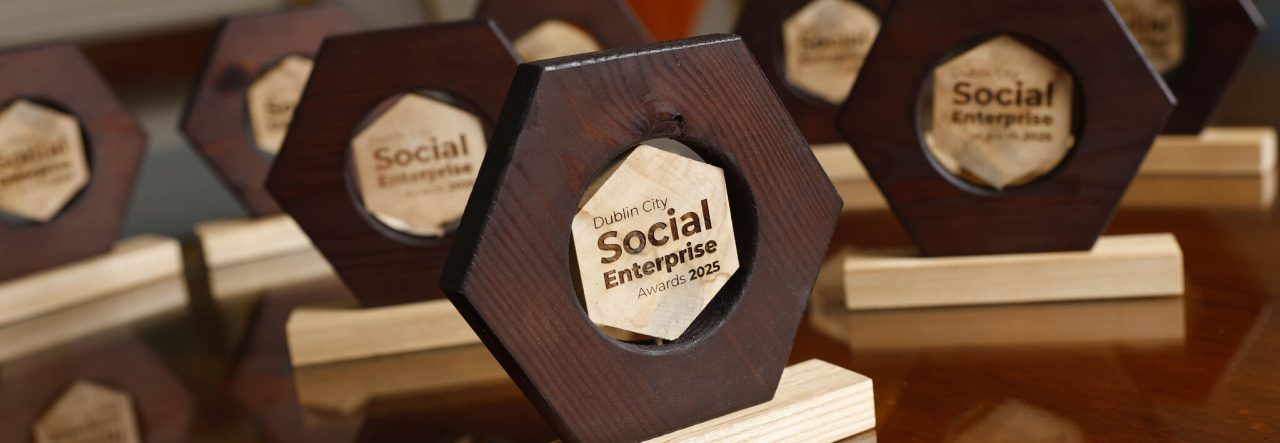
Recycle IT – Award Winner

Generating Electronic Waste!

The Statistics:

Statista reported in 2025, that every person in the world generates on average around 8 kilograms of electronic waste per year worldwide. However, there are significant regional differences, data from the latest E-Waste Monitor shows: Europe leads the way with around 17 kilograms of electronic waste per inhabitant, while each person in Africa generates only 2.5 kilograms.

At the same time, Europe has the highest recycling rate at 43 per cent. Asia and Africa have the most catching up to do, with e-waste recycling rates of 12 and 1 per cent respectively.

Only just under a fifth of the electronic waste generated worldwide is currently officially collected and recycled. The remaining quantities of electronic waste were collected unofficially, partially recycled or disposed of as residual waste and sent to landfill.

Statista E-waste Statistics shared by Recycle IT
Statista E-Waste Generated

This gap between official and unofficial collection and recycling statistics varies greatly between different regions.

Recycle Safely

If you want or need an official collection of waste IT equipment and your located in Dublin, Ireland, Recycle IT can help. Our team can accept all types of IT equipment from homes, businesses, schools, public bodies, charities and community groups, all for safe and authorised recycling.

This includes old computers, laptops, printers, monitors, phones, cables, chargers and other electronic devices. Instead of throwing these items away, Recycle IT makes sure they are handled in a responsible way that protects the environment.

Many electronic devices contain harmful materials like lead and mercury. If these are not disposed of properly, they can damage soil and water. Recycle IT helps prevent this by using approved recycling methods. Their processes follow strict rules and standards to ensure safety and environmental care.

Mixed IT and Electronic Equipment for Recycling - Recylce IT
Mixed IT and Electronic Equipment for Recycling – Recylce IT

Manage Data

Another important benefit is data protection. Old devices often store personal or business information. Recycle IT ensures that all data is securely destroyed before recycling begins. This gives people peace of mind that their information will not be misused.

Recycle IT also helps reduce waste. By recycling materials like metal, plastic, and glass, fewer raw materials need to be taken from the earth. This saves energy and reduces pollution. It also supports a more sustainable future.

The service is simple and convenient. Individuals and businesses can drop off their equipment or arrange collection. Everything is handled professionally from start to finish.

Mixed IT and Electronic Equipment for Recycling - Recylce IT
Mixed IT and Electronic Equipment for Recycling – Recylce IT

In Summary

Recycle IT provides a safe, authorised, and environmentally friendly way to dispose of IT equipment. It protects both people and the planet while making recycling easy for everyone. Click here to see lists and PDF files of what can be recycled safely.

Our community recycling activities help to provide jobs and training through safe e-waste recycling. People learn useful skills, build experiences, work in teams all while protecting the environment. Our team work supports communities across Dublin and surrounding areas, while helping colleagues to grow and develop.

About

Recycle IT is an award-winning, not-for-profit social enterprise established to create employment and promote environmental awareness through recycling and reuse. We work in partnership with WEEE Ireland and are authorized by your local authority to provide electrical, electronic and pure metal recycling collections across Dublin since 2007. Recycle IT are fully compliant for WEEE Recycling with permit details available here.

Recycle IT Logo
Recycle IT Logo

21 Recycling Facts – Do more this Year!

Every year in Ireland, we support events such as Spring Clean Month, Recycling Week, and Reuse Month. These events help people understand why it is important to recover, reuse, and recycle waste. They give you, your children, family, friends, and coworkers a chance to learn more and take action together in your community to reduce waste.

Recycling helps bring positive change. It encourages people in communities to work together and make a real difference. Recycling is good for the environment, supports community volunteering, and also creates jobs in cities, towns, and villages across Ireland. The more people reuse and recycle, the more benefits everyone gains.

When recyclable items are collected carefully, some of them can be repaired and reused. Others can be taken apart and used as materials to make new products. This process helps create jobs, supports businesses, and strengthens the local economy.

Recycling Plastic Parts Safely

Ireland is expected to miss its EU recycling targets for 2025. According to the Environmental Protection Agency (EPA), the country is currently recycling about 42% of municipal waste, which is well below the EU target of 55%.

Recycling rates for packaging are also below the required levels. In 2023, Ireland recycled 59% of packaging waste, while the EU target is 65%. Plastic packaging recycling is even lower, at 30%, compared with the 50% target set by the EU.

Key points about Ireland’s recycling performance include:

  • Municipal waste recycling: Around 42%, which is far below the 55% EU target.
  • Packaging recycling: 59%, compared with the 65% target.
  • Plastic packaging recycling: 30%, well short of the 50% target.

There has been some progress. Ireland introduced the Deposit Return Scheme in 2024, which has helped increase the collection of drink containers such as bottles and cans. Early results show return rates of around 76%, bringing Ireland close to the EU target of 77% for PET bottles.

Plastic Bottles

However, overall recycling levels have not improved significantly in recent years, while the total amount of waste being produced continues to rise.

The EPA estimates that Ireland needs to recycle about 400,000 more tonnes of waste every year to meet EU recycling targets.

Most of these figures are based on 2023 waste data published in 2025, as the full data for 2025 has not yet been finalized.

Electronic and Electrical Recycling

When you think of electronic or electrical waste equipment (WEEE) or e-waste, do you think of items like computers, radios, light bulbs, zip disks, and tapes drives, clock alarms or wall clocks, even cameras, it’s really any items with computerized parts.

These items and similar are adding to an ever-increasing e-waste mountain and the pile usually starts building in people’s homes. We know electrical or electronic items are not recycled as easily or as frequently as other recyclable materials such as paper, glass or plastics. Some of the items are very large and hard to recycle, others are small and have a personal or perceived value so people don’t want to let them go!

Recycle IT Free Drop Off
  1. Most laptop owners replace their device after about three years, while many mobile phones are replaced every two years or even sooner. This creates a lot of electronic waste that needs recycling.
  2. Around 91% of households in Ireland had a computer with internet access in 2019, showing how common digital devices are in everyday life. (Source: Statista Research Department)
  3. Today, about 90% of people in Ireland have access to a smartphone, making it one of the most widely used electronic devices. (Source: Ipsos MORI)
  4. Smartphone ownership in Ireland is near-universal, with approximately 93% – 95% of mobile phone users owning a smartphone., and many checked their phone over 50 times a day and up to 200 times.
  5. A record 62 million tonnes (Mt) of e-waste was produced in 2022, Up 82% from 2010; This is on track to rise another 32%, to 82 million tonnes, in 2030;
  6. Recycling electrical and electronic equipment allows valuable materials to be recovered and reused, helping to support new jobs and industries.
  7. Recycling one million laptops saves enough energy to power about 3,657 homes for an entire year. (Source: How to Save Your Planet One Object at a Time)
  8. Electronic waste can contain more than 1,000 different components, many of which include toxic materials such as lead, mercury, and cadmium.
  9. Devices such as computers and televisions often contain small amounts of gold, but it can also be found in mobile phones, game consoles, camcorders, and media players.
  10. According to the US Environmental Protection Agency, a single computer can contain about 3.6 kg of lead, which is a toxic metal.
  11. A global survey by Nokia found that 74% of people do not think about recycling their old mobile phones, even though 72% believe recycling helps the environment. Only about 12.7% to 15% of smartphones are actually recycled globally, despite up to 80% of a phone’s materials being recyclable.
  12. Large household appliances, such as washing machines and refrigerators, made up 48% of all waste electrical items collected in Ireland in 2019. (Source: WEEE Ireland)
  13. Devices like computers, laptops, and tablets are difficult to recycle mechanically because they contain many mixed materials and complex components that must be carefully taken apart. (Recycle IT)
  14. WEEE Ireland collected 38,215 tonnes of e-waste in 2024, achieving a 9.5kg per capita recycling rate and exceeding EU targets with a 96% material recovery rate. . (Source: WEEE Ireland)
  15. Irish households disposed of 3.2 million lamps and lightbulbs, 195,000 televisions and monitors, and 13 million small appliances including toys in one year. (Source: WEEE Ireland)
  16. Many electronic devices contain valuable metals such as copper, silver, and gold, which can be recovered through recycling.
  17. Recycling e-waste helps reduce the need for mining new raw materials, which protects natural resources.
  18. When electronic devices are thrown away instead of recycled, hazardous chemicals can leak into soil and water.
  19. Proper e-waste recycling ensures that dangerous materials are safely handled and removed.
  20. Reusing or repairing electronics can extend the life of devices and reduce waste.
  21. Recycling electronics supports the circular economy, where materials are reused instead of thrown away.
Mixed Small Electricals

There are many ways that recycling helps our environment. Why not try to remember and introduce these 5 points.

  • A reduction in landfill and industrial waste by reuse or recycling.
  • Reduced energy usage by reuse or recycling.
  • Less pollution through reuse or recycling.
  • Increased employment by reuse or recycling.
  • Sustainable usage of natural resources by reuse and recycling.

When Irish people wish to make a point, they usually do it well. This needs to be the case with reduce, reuse and recycling

By recycling, your positive actions make you part of the solution rather than part of a global problem. As local communities we must plan and first take steps to reduce the amount of waste and including e-waste that is clogging up our lives .

Making sure that recyclable items such as computers don’t end up in the wrong bin, landfills or illegally dumped is an important step toward green living and environmental conservation for future generation.

Recycle IT is an award-winning, not-for-profit social enterprise established to create employment and promote environmental awareness through recycling and reuse. We work in partnership with WEEE Ireland and are authorized by your local authority to provide electrical, electronic and pure metal recycling collections across Dublin since 2007. Recycle IT are fully compliant for WEEE Recycling with permit details available here.