New Deposit Return Recycling Scheme

On February 1st 2024, Ireland introduced a Deposit Return Scheme for plastic bottles, aluminium or steel cans. This will change the way we recycle these items and hopefully increase recycling rates.
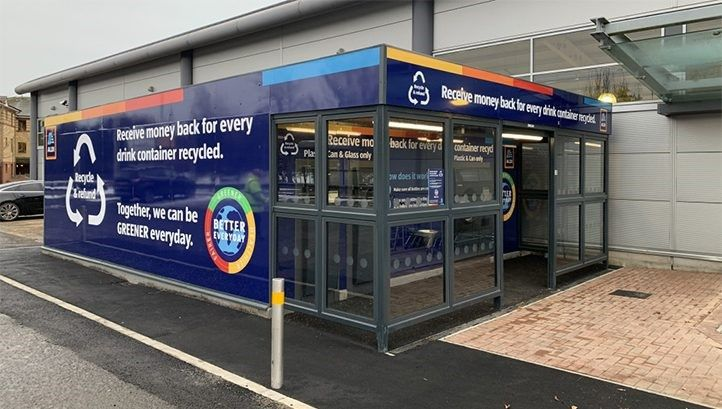
Reverse Vending Station

How it works

When you buy a drink in a plastic bottle, aluminium or steel can that features the Re-turn logo, you pay a small deposit in addition to the price of the drink. When you return your empty, undamaged container to any retail outlet, you get your deposit back in full.

Drinks purchased before 1 February 2024 are not included in the Deposit Return Scheme but should still be recycled in the usual way. Most households will place the empty drinks containers in the green bin until they see the new Re-turn logo in the container.

From 1 February 2024, when you purchase an ‘in scope’ drinks container, you will be charged a small deposit in addition to the purchase price of the drink. This deposit will be fully refunded when you return your empty, undamaged drinks container.

Re-Turn Logo

The Refund

The drinks containers included in the Scheme are PET plastic bottles and aluminium and steel cans between the sizes 150mls and 3 liters. A deposit of 15c will apply to containers from 150ml to 500ml inclusive and a deposit of 25c for containers over 500mls to 3 liters inclusive.

In order to receive the deposit purchasers may return containers to any retailer that takes them back over the counter (manual), or through the use of a Reverse Vending Machine (RVM).

If returning to a Reverse Vending Machine (RVM), you must insert all Re-turn drinks containers as directed. When complete, you will then be issued with a voucher which can be redeemed at the till. Please note that vouchers issued from an RVM must be redeemed at the same store.

It’s worth noting consumers will have the choice to receive the refund against in-store purchases, in cash or the refund can be offered to a charitable cause.
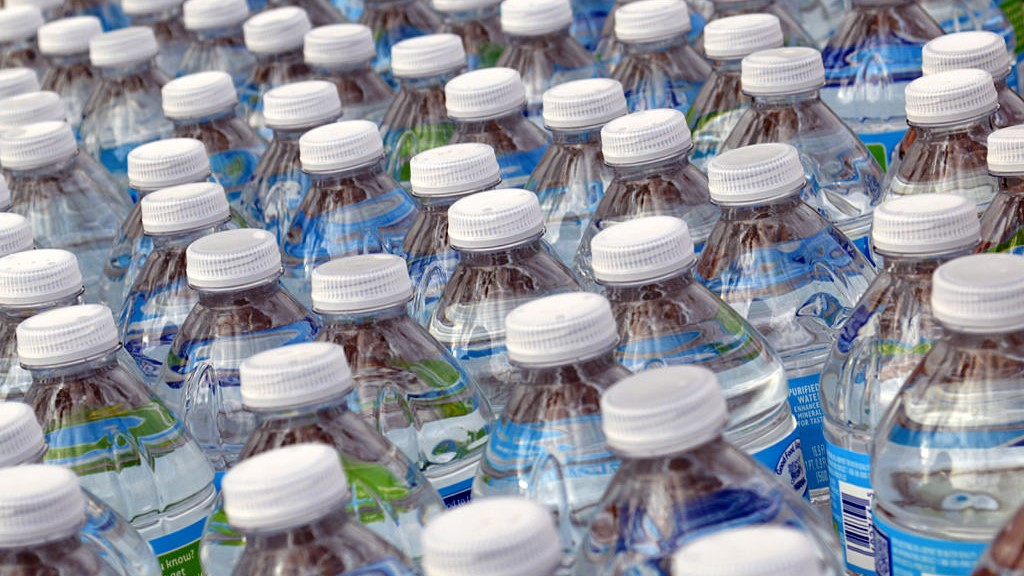
Plastic Bottles

Recycling

This new scheme brings together all parties involved in the manufacture, selling and consumption of beverages including beverage producers and retailers. This alliance fulfils obligations under the Separate Collection (Deposit Return Scheme) Regulations 2021. Similar recycling schemes operate internationally and are very successful in increasing recycling collection rates.

All the drinks containers collected will be sent for safe recycling. The Deposit Return Scheme focuses on increasing the volume and quality of material collected for recycling leading to an increase in Ireland’s recycling rates.

This new scheme intends to significantly increase recycling rates. The deposit fee will be paid back in full when the empty, undamaged drink container is returned to a reverse vending machine in a retail outlet.

Minister of State with responsibility for the Circular Economy Ossian Smyth said it will eliminate the issue of waste drink containers on roadsides and beaches by turning such items into new bottles and cans. An estimated, two billion aluminum drink cans and plastic bottles are sold in Ireland each year and just over 60% are currently returned for recycling. The remainder end up in incinerators, or turn up as waste on the street, lakeshores, riversides and country roads. This scheme will tackle this issue, aiming to increase the recycling rates for drinks can and plastic bottles up to 90%.

To learn more please visit www.re-turn.ie You can also email info@re-turn.ie or call 014618680

About Recycle IT

Recycle IT is a not-for-profit, social enterprise working to deliver environmentally friendly recycling solutions and real training and employment opportunities.

Recycle IT operates under the Community Services Programme (CSP). The programme supports community companies and co-operatives to deliver local social, economic, and environmental services that disadvantaged communities. The Community Services Programme is managed for the Department of Rural and Community Development by Pobal, a not-for-profit company tasked with managing programmes on behalf of the Irish Government and the EU. Recycle IT is one of over 400 social enterprises operating with funding support from the programme in Ireland.

Learn more @ www.recycleit.ie
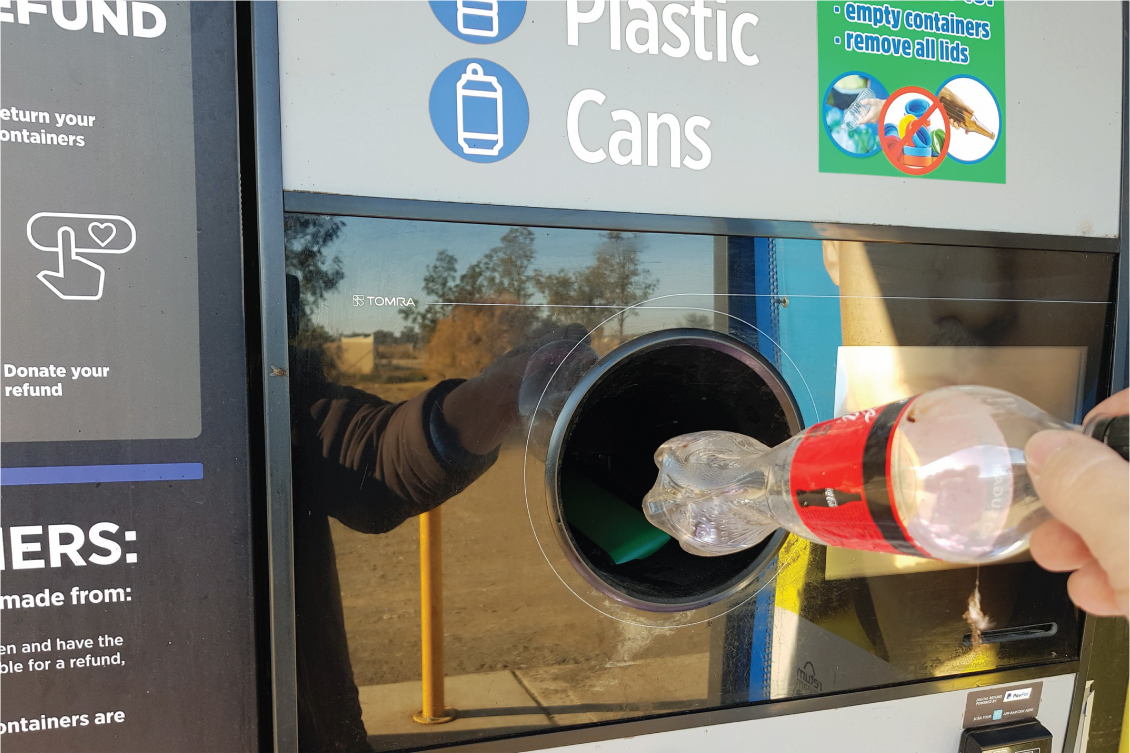
Reverse Vending Unit

Battery Recycling – Anytime is good!

How were doing? 

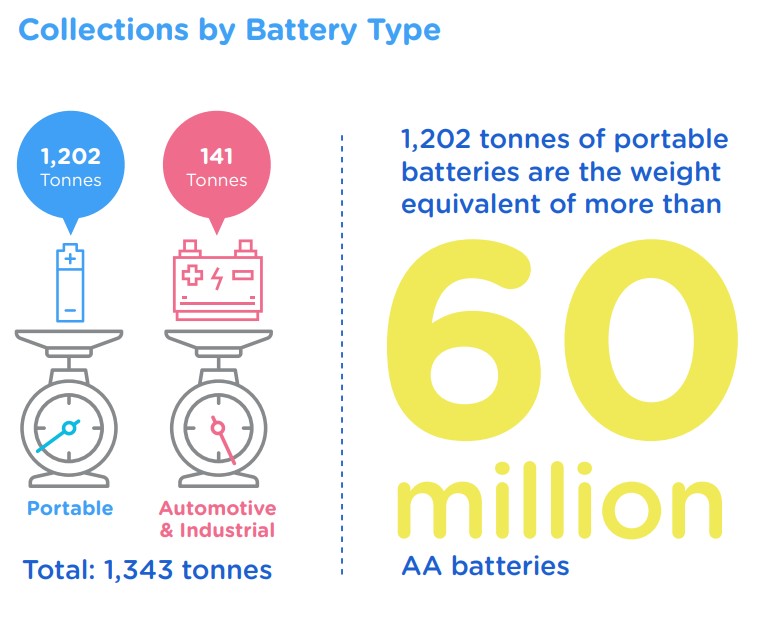
There was an estimated 60 million AA batteries recycled by householders in 2022 through retail drop-off points, civic amenity sites and at recycling center’s including Recycle IT – that is an average of 12 batteries for everyone in Ireland. (Source WEEE Ireland). This is great but we all can do more in 2023 especially with Christmas coming.

WEEE Ireland Battery Recycling Results 2022

Did you know?

Did you know some waste batteries are classified as hazardous waste and recycling is always the best option? For example

  • Batteries contain Sulfuric acid.
  • Flammable Gases: Hydrogen and oxygen are produced as a part of the operation of the battery.
  • Some batteries can cause electrical shock and burns if not handled safely
  • Don’t forget about the potential physical injury from the weight of the batteries packed together.

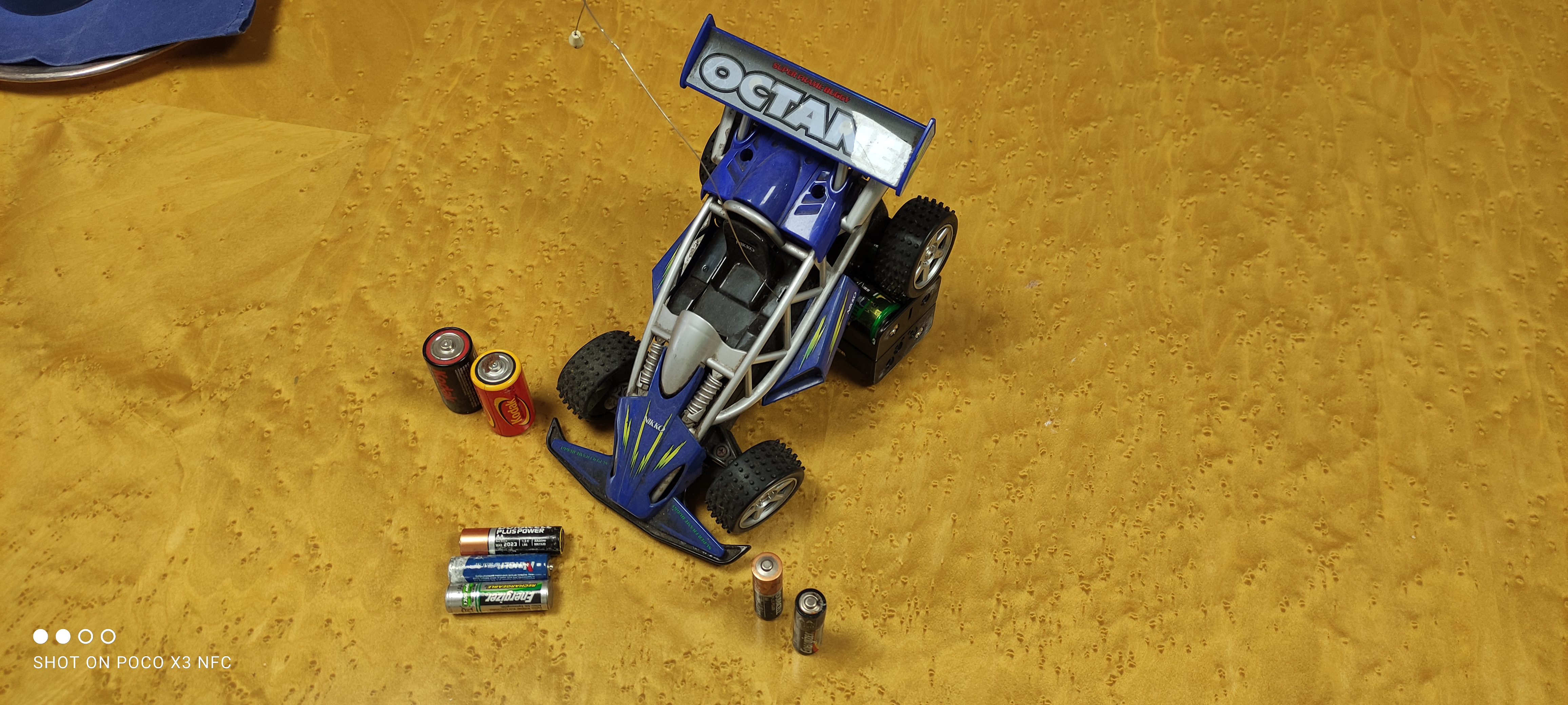
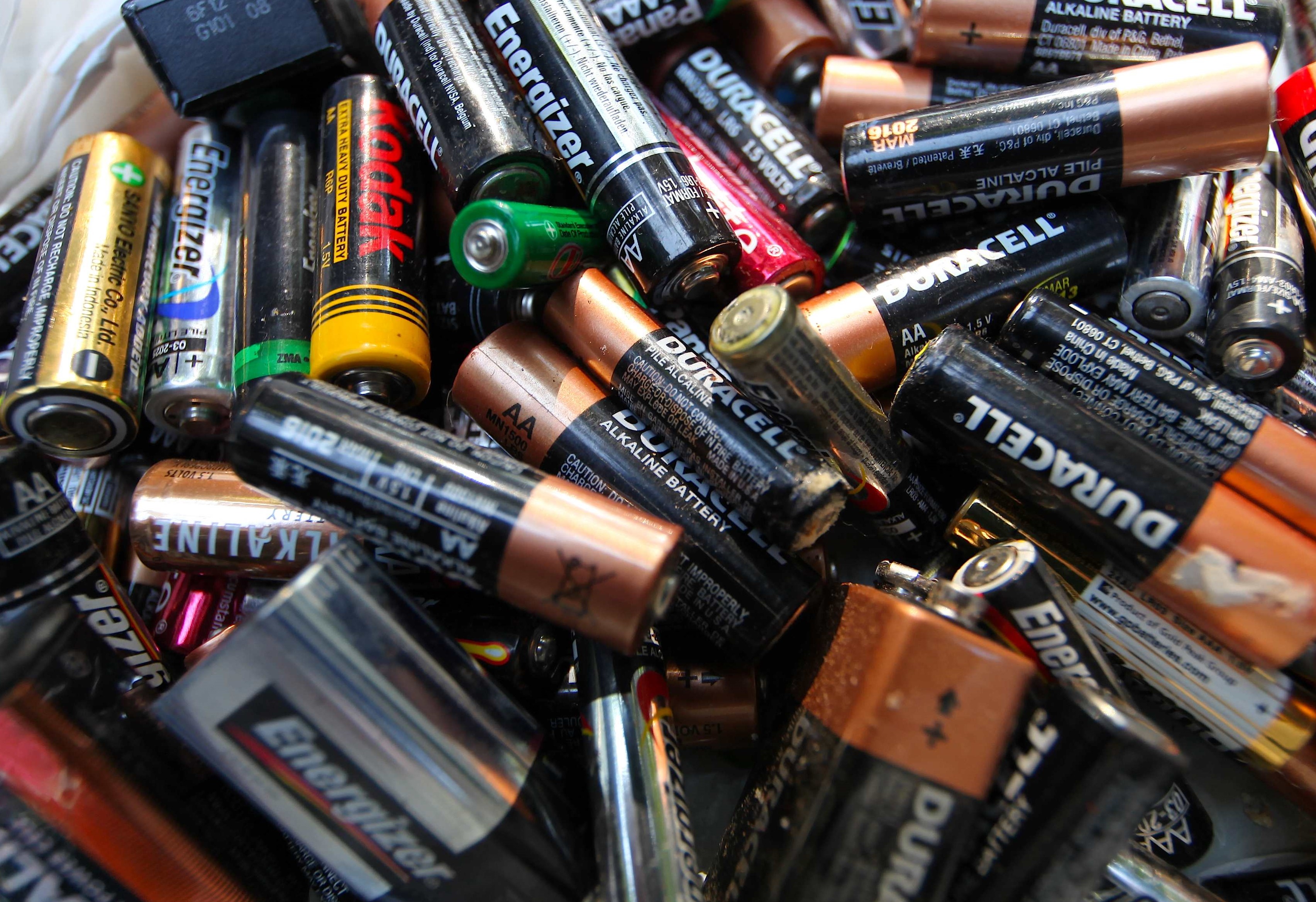
Ordinary household batteries used in a radio, remotes, kids, toys and other gadgets contain some chemicals so ideally should not be thrown in the green or black bin with your other types of waste. The same can be said for rechargeable batteries which also contain harmful materials.

The average alkaline AAA, AA, C, D, 9-volt or button-cell battery is made of steel and a mix of zinc/manganese/potassium/graphite, with the remaining balance made up of paper and plastic. Being non-toxic materials, all of these battery “ingredients” are conveniently recyclable at battery recycling points but not in your bin.

These are non-rechargeable and commonly found in household/offices items:

  1. AA (LR6) – Used in remotes, toys, flashlights, etc.
  2. AAA (LR03) – Used in smaller devices like remote controls, wireless mice.
  3. C (LR14) – Used in larger toys, lanterns, and musical instruments.
  4. D (LR20) – Used in large flashlights, radios, and some appliances.
  5. 9V (PP3 or 6LR61) – Used in smoke detectors, clocks, guitar pedals.
  6. CR2032 (coin cell) – Used in watches, car key fobs, calculators, motherboards.
  7. CR2025 / CR2016 – Used in similar applications as CR2032 (smaller capacity).

These can be reused hundreds of times:

  1. NiMH AA / AAA – Rechargeable alternatives to regular AA/AAA batteries.
  2. Li-ion 18650 – Used in flashlights, laptops, e-bikes (not typical AA-style).
  3. Li-ion 14500 – Same size as AA but 3.7V; used in high-drain devices.
  4. Li-ion 21700 – Used in newer flashlights and power tools.
  5. 9V Rechargeable – NiMH or Li-ion versions of standard 9V batteries.

Why recycle batteries?

Recycling electrical items and batteries helps reduce the number of items entering landfill and ensures any heavy metals and chemicals contained in batteries are managed in an environmentally responsible way.

batteries-photo (2)
Waste Batteries – Recycle IT

Do something new!

It takes lots of energy to manufacture batteries that are simply disposable so why not save energy and other valuable resources including your money by trying rechargeable batteries and/or electricity-operated equipment instead of batteries. Rechargeable batteries are a more environmentally friendly option as they can last for several hundred charging cycles resulting in less waste being produced.

Where to recycle?

Thanks to EU Regulations implemented in 2008 it’s very easy to recycle your old batteries! According to the regulations, all retail outlets that sell batteries are now obliged to take back old batteries of a similar type.

Here are some options for recycling end-of-life batteries.

  • Chains of retail stores and shops where batteries are sold – Aldi and Lidl Ireland are leading the way!
  • Local recycling center’s accept old and waste batteries.
  • School all over Ireland works in partnership with WEEE Ireland to recycle waste batteries.
  • WEEE Ireland waste electrical and electronic equipment recycling days.
  • Recycle IT recycle batteries from businesses, homes, schools, colleges, and charities daily through our collection and drop-off services.

WEEE Ireland

In Ireland, the WEEE Ireland battery recycling scheme operates on behalf of producers of battery and electrical appliances. It aims to encourage people at home and at work to manage their electrical and battery waste responsibly.  Waste batteries can then be deposited in WEEE Ireland blue boxes at many locations across our country. Please find a list here

Eucobat is the European Association of National Collection Scheme for batteries. They assure that all waste batteries are collected and recycled in an ecologic way, and contribute this way to a better environment. WEEE Ireland promotes European Battery Recycling Week in September each year and has since 2015. Recycle IT support this week and make a great effort to increase batteries recycled. You might like to start planning a battery recycling event in your school, college or workplace!

Battery Recycling Week
Image: Eucobat – European Battery Recycling Week 

Recycle IT

Recycle IT works in partnership with WEEE Ireland to offer collections and drop off recycling services for old electrical, electronic and battery-operated equipment including batteries. The collection service is offered throughout Dublin and the surrounding areas and our teams are delighted to accept waste batteries as part of any recycling collection or simply drop them off at no cost.

To contact us please call 01 4578321, email us here or visit our website

Van 2020
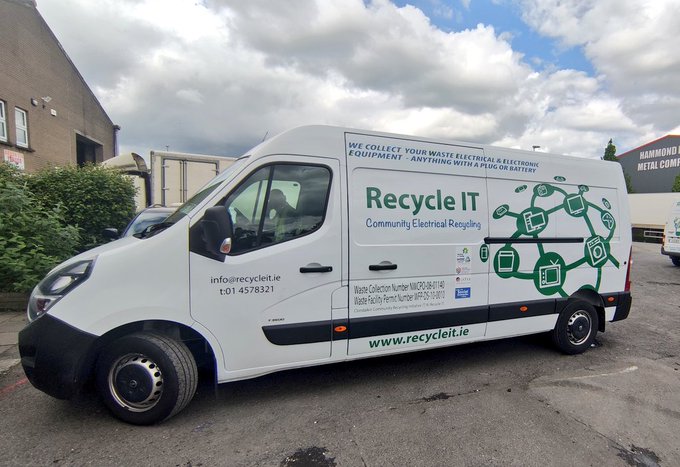
Van with Recycle IT Logo

Rowing Machine Recycling

Exercise at Home?

Rowing machines and all exercise equipment should be well looked after so it can be used to improve your health and well-being. This type of equipment is generally designed to help improve fitness levels while also saving time and money on trips to the gym.

After a lot of use over several years, exercise equipment can wear out or simply break down. Machines end up unused and the result is a large rowing machine taking up space in your home. Some people end up using home exercise equipment as clothes dryers.

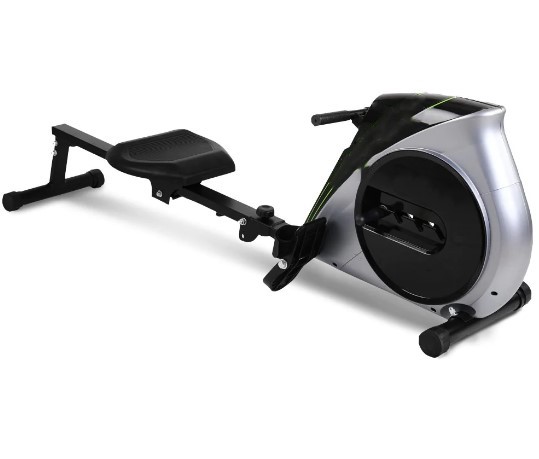
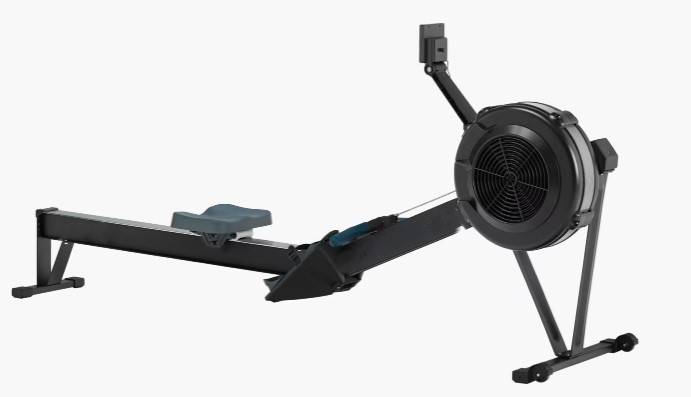
Rowing machine

If this is your situation, please don’t assume that your old rowing machine is worthless. If it’s in good condition, you may be able to sell it or donate it to a charity or community group in your area.

For some households, the removal of a rowing machine that doesn’t work anymore is the hard part. Most manufacturers don’t have a scheme that collects old or damaged equipment for recycling.

Electronic or powered exercise equipment can be described as household appliances. They are larger appliances that have valuable materials, including metal and electronics which when handled correctly can be recycled to extract the material for reuse. This is an opportunity to reduce, reuse, and recycle while supporting the environment.

Reusing Exercise Equipment

If you’ve still got an operational rowing machine, exercise bike, cross trainer, or other fitness equipment, you can try to sell or donate. If your rowing machine is under 8 – 10 years old and was not overused it may suit someone else, If the rowing machine has any mechanical or electronic damage recycling might be best.

Rowing Machine

Anyone buying a used machine should think about how to transport it, do a visual inspection, and get advice on the mechanical and electronic components. Maybe bring someone along who has knowledge of testing exercise equipment. 

Recycling Exercise Equipment

If the equipment really is no longer functional, contact the manufacturer to check the warranty or service options and ask about any take-back scheme.

In Europe, some countries have started to require manufacturers to have the plan to take back and recycle equipment at the end of its life. This type of scheme is known as extended producer responsibility It started to apply to exercise equipment in France in 2022. You will find details on Ireland’s extended producer responsibility schemes here, last updated on September 5th, 2022.

If the above options don’t work for you, you can always safely recycle your old rowing equipment and more (treadmills, cross trainers, exercise bikes, etc) with a collection from Recycle IT

Recycle IT currently accepts dozens of old treadmills and bikes each year for safe recycling, some are damaged, parts are missing, or their owners are moving country or downsizing home and can’t take a rowing machine or treadmill along.

No matter, what your reason, if you wish to dispose of old or unused exercise equipment recycling is worthwhile. The metal, plastic and electronic components will be dismantled, separated, and broken down for future reuse in new products.

Recycle IT offers cost-effective collections in Dublin and surrounding areas so send us an email including your location and we will get back to you.

You can read more about recycling treadmills here.

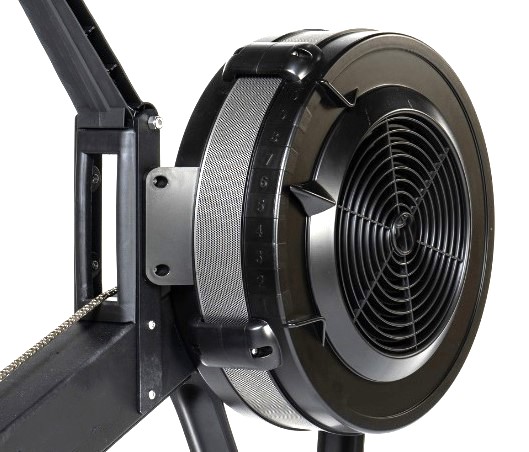
Part of a Rowing Machine

About Recycle IT

Recycle IT is an award-winning not-for-profit social enterprise providing a collection and drop-off service for all types of waste electrical, electronic and metal items.

Our electrical community collection service is provided in partnership with WEEE Ireland. Recycle IT is supported by Pobal, South Dublin County Council and authorized by the National Waste Collection Permit Office and the local authorities across Leinster.

To speak with Recycle IT please call 01 4578321 or email us here

Visit our website www.recycleit.ie

All Electrical Items can be Recycled?

Todays Electrical Equipment

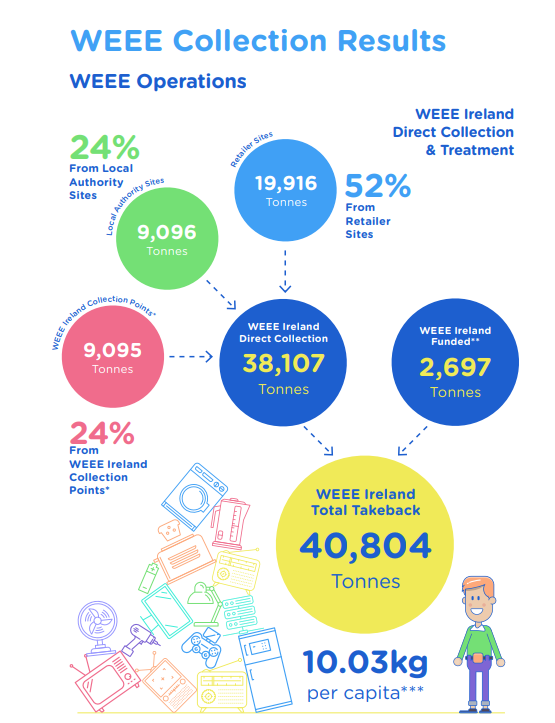
In 2021 WEEE Ireland helped support the electrical recycling needs across 75% of Ireland with 120,000 fridges and 200,000 screens and many more items safely recycled.

The results for 2022 are listed in the infographic directly below and you can view the full WEEE Ireland Annual Report for 2022 here. Recycle IT are delighted to say we happily contributed to these achievements in partnership with WEEE Ireland.

WEEE Ireland Results 2022

Using Electrical and Electronic Equipment

Today adults and children at home, in school or at work find themselves using a range of electronic consumer items which all contain a variety of electrical or electronic components.

Think about the school whiteboard, the office safe, speakers, networking equipment, radios, TVs, power tools, cameras, fire alarms, printers, scanners, earbuds, cables, and plugs.

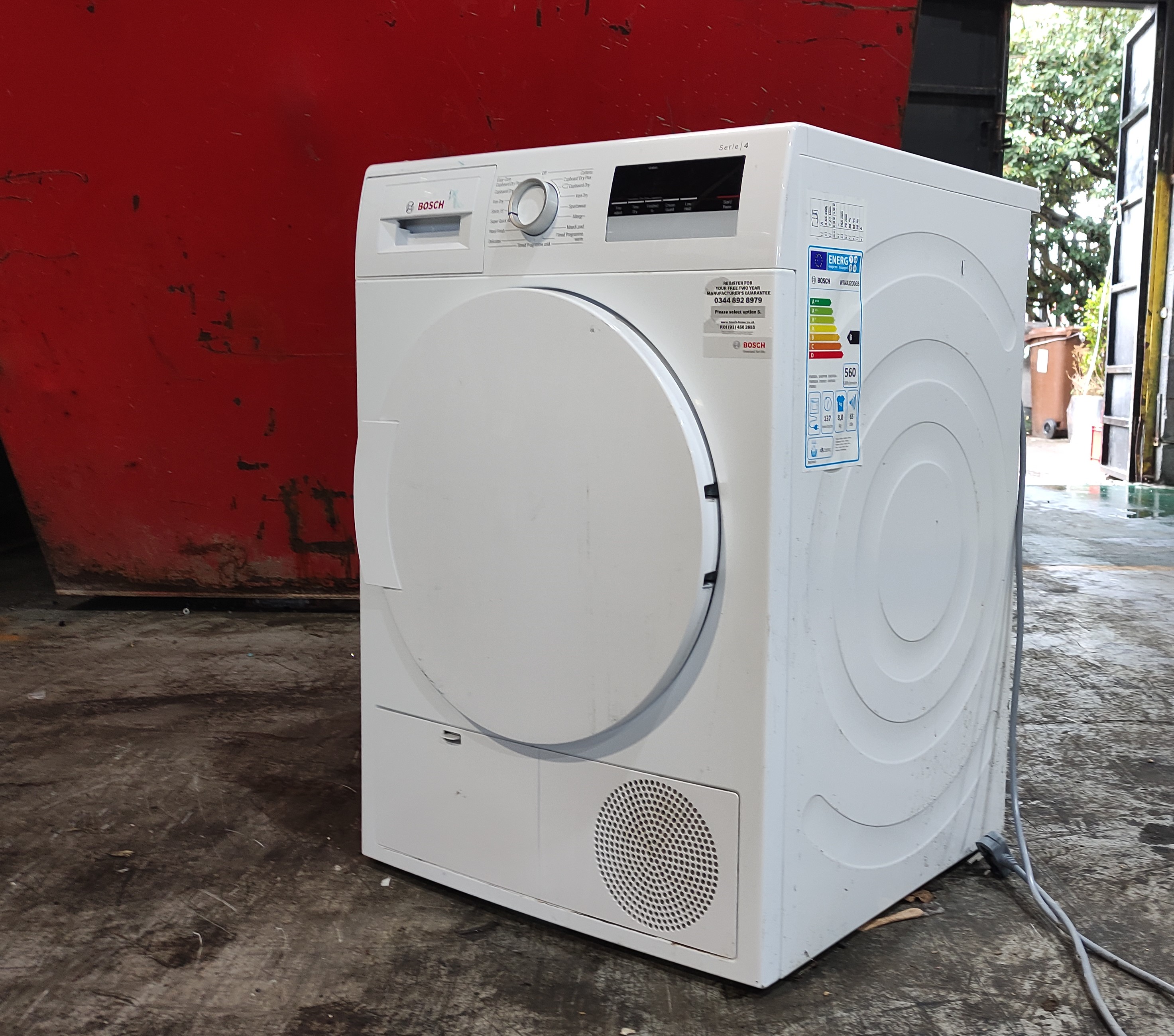
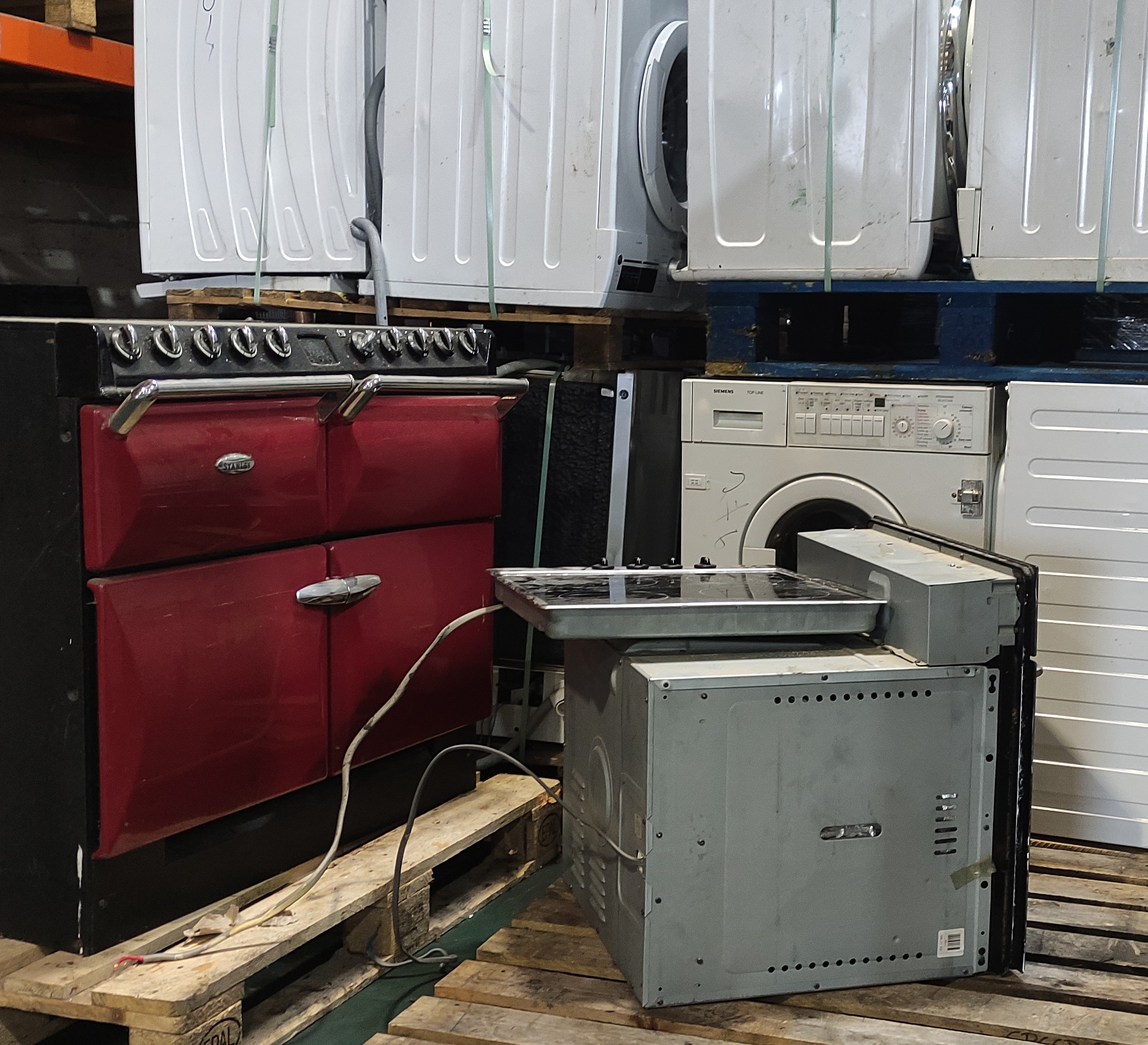
Think about home kitchens, you have cookers, toasters, kettles, coffee makers, washing machines, tumble dryers, slow cookers, fryers, smoothie makers and lots more.

These types of items are replaced and renewed regularly and the old stuff should be recycled. Last year WEEE Ireland helped us recycle 10.03 kg per head of population in Ireland.

Tumble Dryer at Recycle IT

What is WEEE?

WEEE is defined as waste electrical and electronic equipment. WEEE is really electrical items of all types which have reached the end of their useful life. Items might be damaged, outdated, unused with a charger missing. Equipment which is out of sight and out of mind.

Electrical and electronic equipment is any item with a plug or battery. It can be classed as both domestic and business with some electrical items used at home and in the workplace, for example, a kettle for making tea or coffee.  To download a list of things, click here

Recycling WEEE

Any appliance or equipment that operates on electricity or batteries has the potential to cause damage to our environment if it is not disposed of in a safe and responsible manner.

The average product life-cycle of electronic goods is becoming shorter and the amount of outdated, damaged or broken equipment that is being thrown away is increasing all the time. Dealing with the electrical and electronic waste which households and organisations create is a specialist role and one which if carried out well can improve our environment and create training and employment opportunities.

Cooker and Oven at Recycle IT

Everyday electrical and electronic waste items include:

  • Large household appliances (refrigerators/freezers, washing machines, dishwashers)
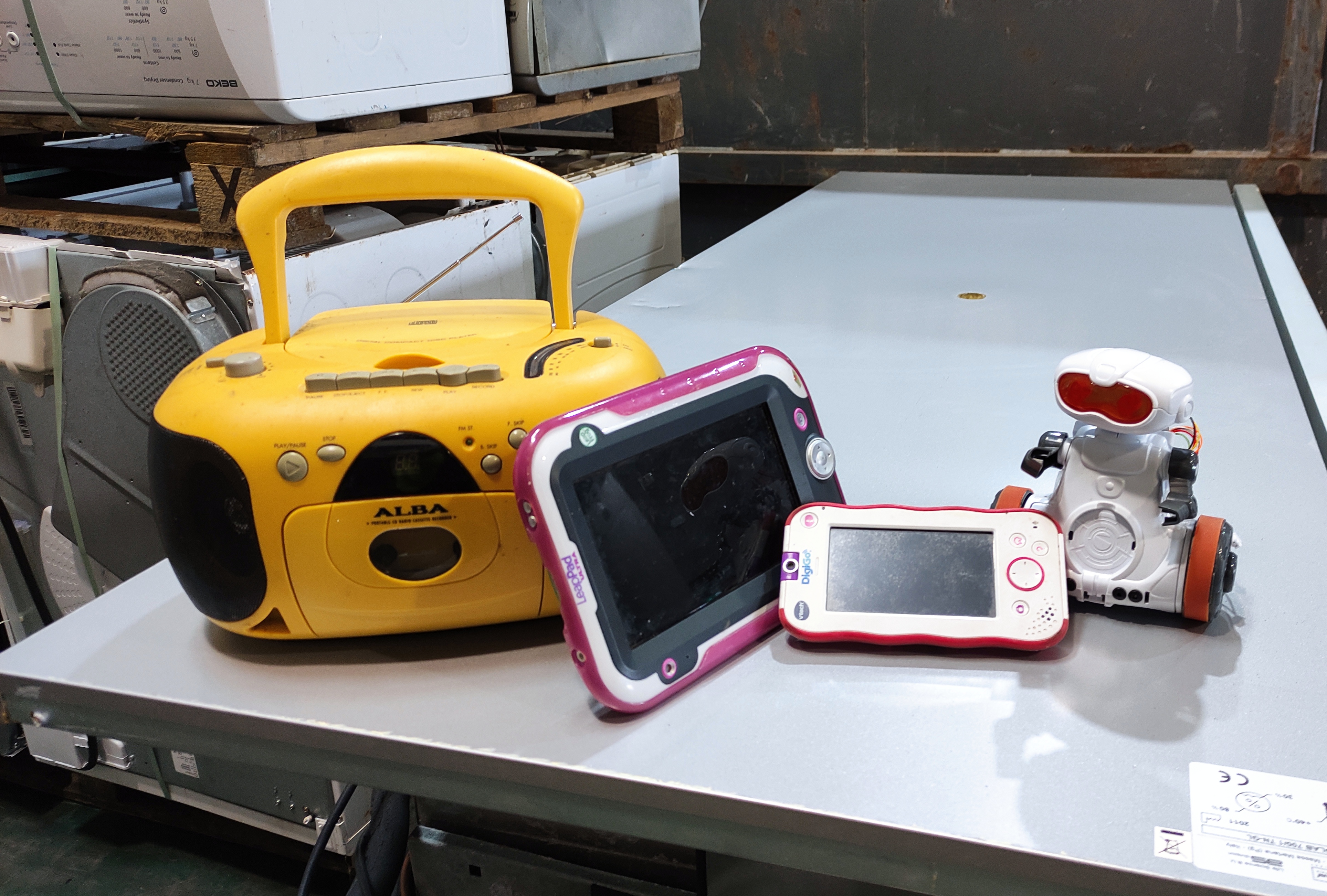
  • Small household appliances (toasters, coffee makers, irons, hair dryers)
  • Information technology (IT) and telecommunications equipment (personal computers, telephones, mobile phones, laptops, printers, scanners, photocopiers)
  • Consumer electronics (televisions, stereo equipment, electric toothbrushes, transistor radios)
  • Lighting equipment (fluorescent lamps and LED bulbs)
  • Electrical and electronic tools (handheld drills, saws, screwdrivers)
  • Toys (PlayStation, Xbox, Wii)
  • Medical equipment systems (excluding implanted and infected products)
  • Monitoring and control instruments (security and alarm equipment)
  • Automatic dispensers.
  • Cables and wire.

Recycle IT has assembled a comprehensive list of electrical equipment you can recycle. The list can be viewed or downloaded in PDF format by clicking here and scrolling to the bottom of the webpage

Small Electrical Items at Recycle IT

What to do?

Humans, as consumers of electrical equipment, have to ensure items are safely recycled at an authorised waste facility (permitted by the Local Authority or Licensed by the EPA). These include Authority Civic Amenity Facilities or a local retailer on behalf of a compliance scheme (for example WEEE Ireland)

Recycle IT have a recycling facility in Dublin where we offer a free drop-off service for home and small office electrical equipment which is beyond reuse. You may also have your WEEE collected cost-effectively in Dublin and the surrounding areas, just email or call our team.

About Recycle IT

Recycle IT is an award-winning not-for-profit social enterprise providing a collection and drop-off service for all types of waste electrical, electronic and metal items.

Our electrical community collection service is provided in partnership with WEEE Ireland. Recycle IT is supported by Pobal, South Dublin County Council and authorized by the National Waste Collection Permit Office and the local authorities across Leinster.

To speak with Recycle IT please call 01 4578321 or email us here

Visit our website www.recycleit.ie

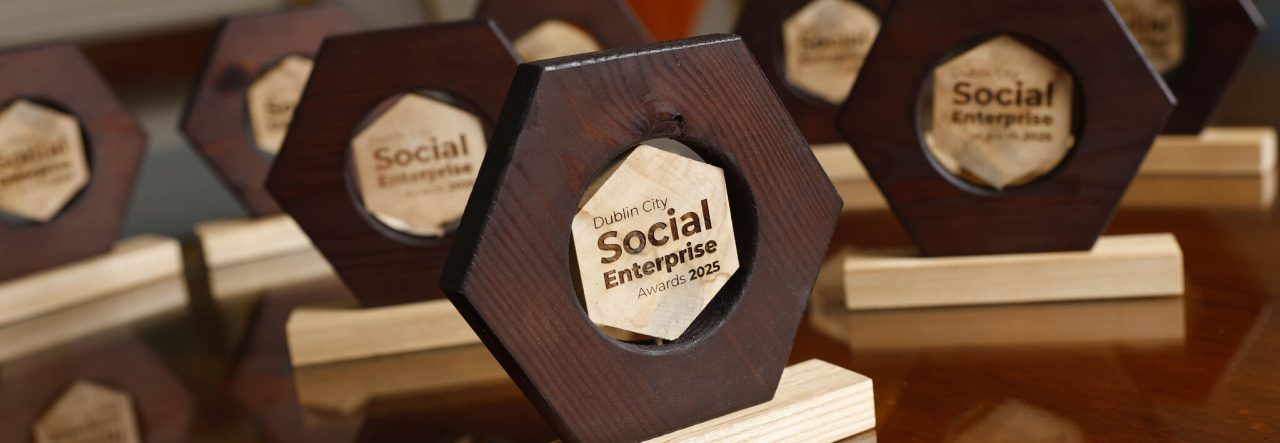
Recycle IT – Winner – Dublin City Social Enterprise Award 2022

Electronic Hoarding – Reconsider!

A study funded by the European Commission says nearly half of all discarded waste electrical and electronic equipment (WEEE) in Europe is not properly collected and recycled.

Much WEEE goes under the radar because consumers often dispose of it in household waste or it becomes mixed up in mixed-metal waste streams where it gets recycled, but not under compliant conditions for WEEE.  

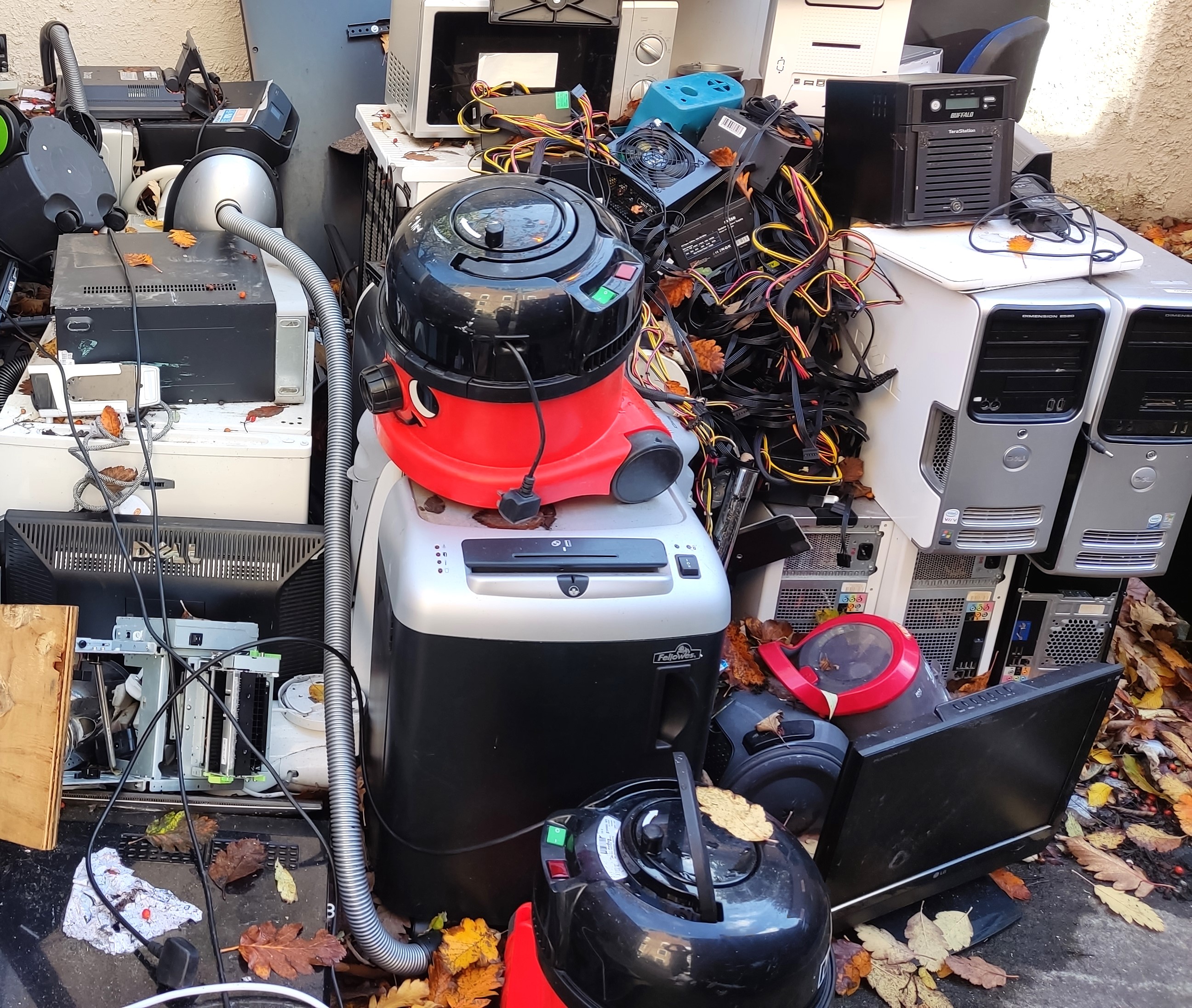
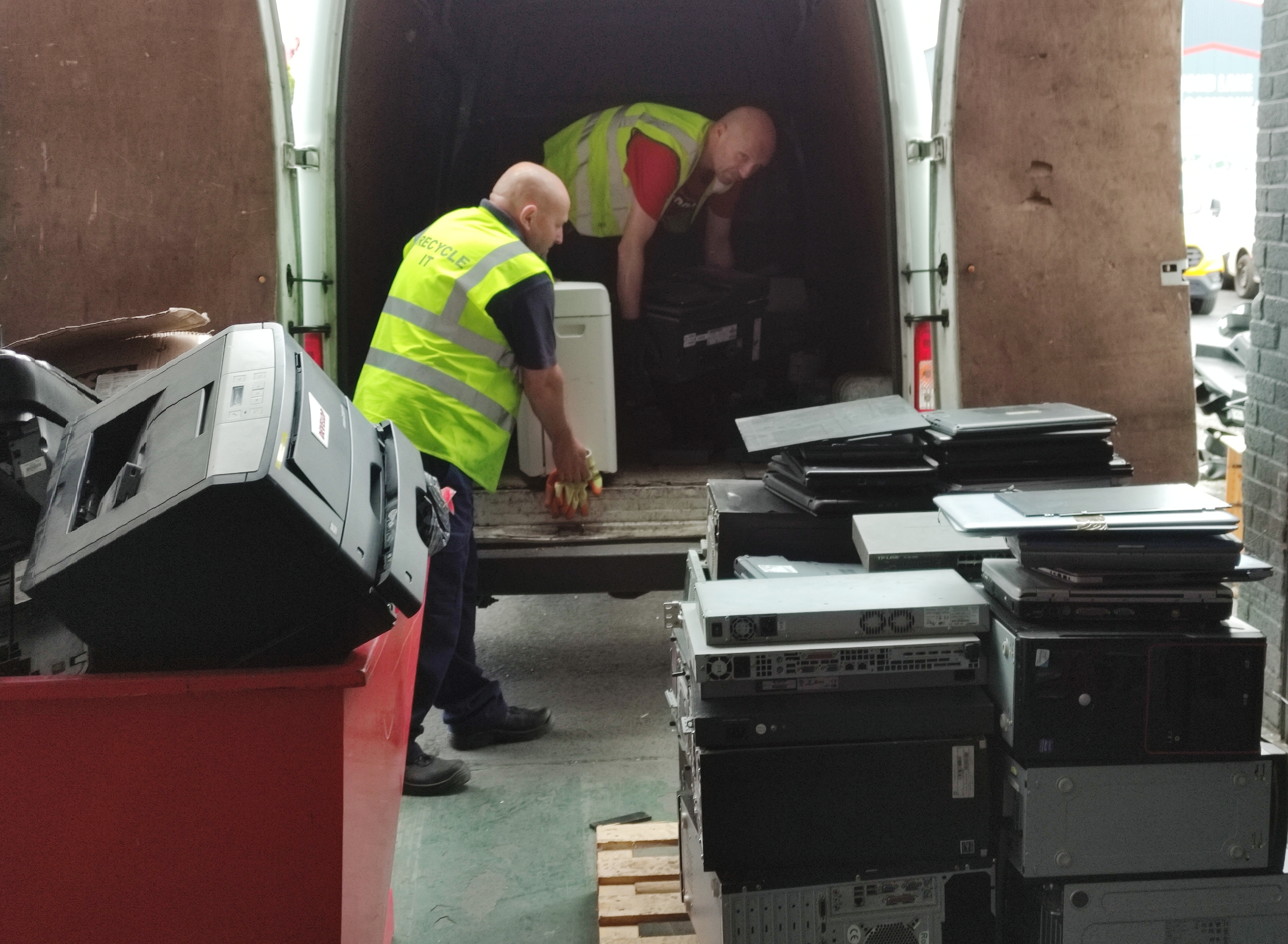
Mixed Small and Medium Size Electrical / Electronic Equipment for Recycling.

Furthermore, large amounts of WEEE are scavenged (stolen for parts), before they can be formally collected and exported abroad (legally and illegally), or simply hoarded by consumers in their homes.

Recycle IT is asking families and small businesses, across Dublin to find and recycle 7 – 10 end-of-life electrical and electronic items over the coming months to help improve Ireland’s recycling performance. This can include cables, chargers, plugs, batteries, phones, kettles, irons, headphones, and much more!

Hoarding

Did you know or even think most Irish homes contain an average of 15 to 20 damaged or unused electrical items. (Source: WEEE Ireland). Separate/y, EU data shows smartphones are the most unused and hoarded electrical items lying around homes. Experts expected about 5.3 billion mobile and or smartphones to drop out of use in 2022 alone.

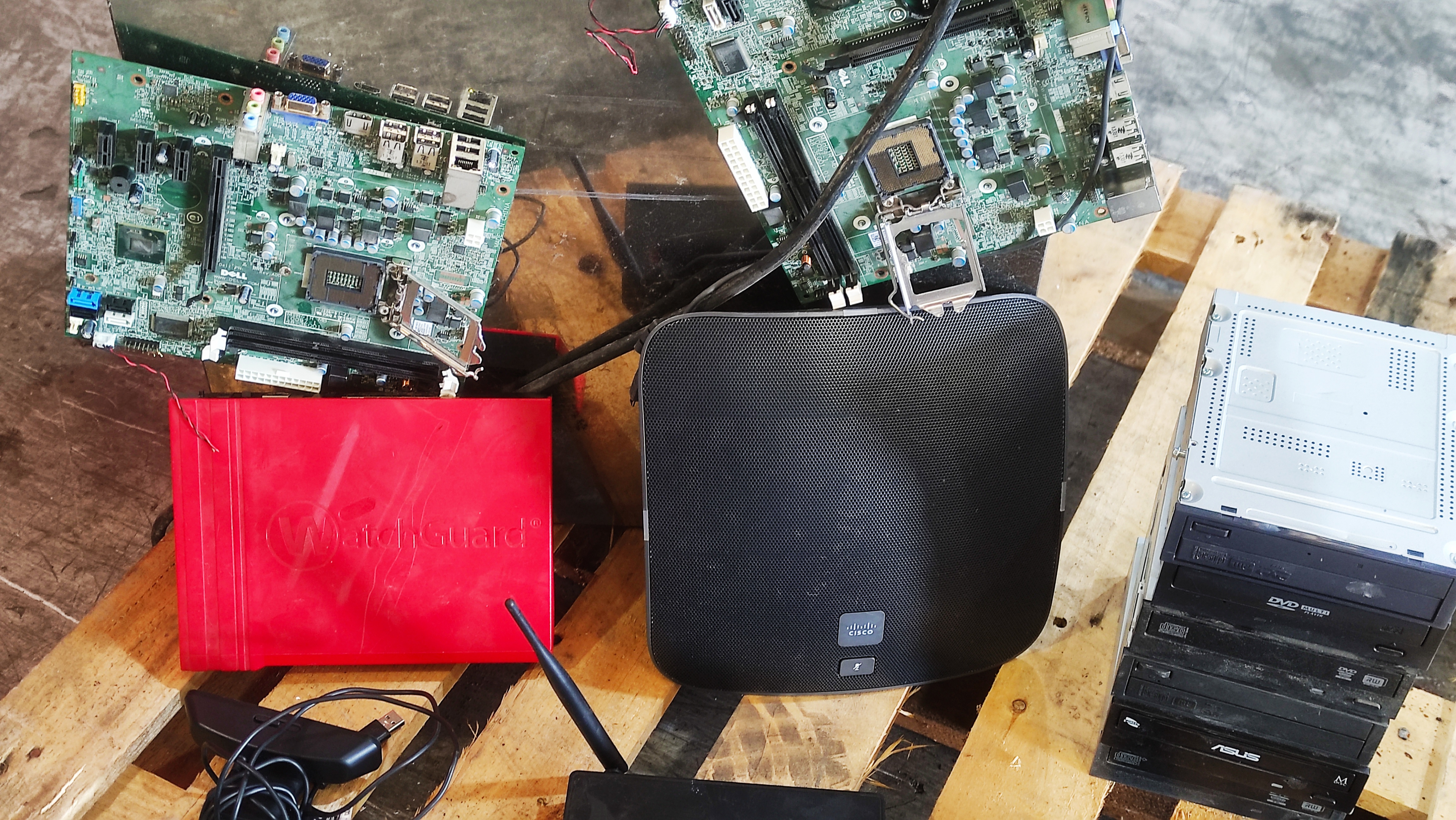
Mixed Small IT Equipment

Surveys conducted between June and September 2022 in 5 EU countries and the UK showed households had an approximate total of 74 smaller electronic items such as phones, tablets, laptops, electric tools, hair dryers, toasters and other appliances (excluding lamps). 

Of that 74 electronic items, 13 are being hoarded (9 of them unused but working, 4 are broken).

Reasons given for hoarding include

  • I might use it again in the future (46%)
  • I plan on selling it / giving it away (15%)
  • It has sentimental value (13%)
  • It might have value in the future (9%)
  • I don’t know how to dispose of it (7%)

You can read and learn more here.

Recycle IT

Business Hoarding

When you update or buy new office IT equipment, hopefully, you don’t place the older electronic devices into a store or drawer! This is not good for the environment as items are not recycled for reuse. It’s also a risk in terms of unauthorized removal of the physical devices, and accessing the data stored on mobile phones, tablets laptops, memory keys and other portable devices.

With more people engaging in hybrid and remote working, mobility devices are preferred as they support flexible working. Unused office PCs may become redundant and if this happens hard disk drives should be removed and destroyed and the remaining parts safely recycled

With more laptops, monitors, keyboards and other accessories used for efficient remote working, e-waste numbers are bound to increase.

Change

We should all consider moving to a circular economy approach, not just at home but at work too. Change is good and has to start somewhere.

The move to a circular economy offers an opportunity to create new jobs in areas such as repair, refurbishment and reuse, as well as creating higher value employment for those who currently work in collection and bulk recycling

Help Offered

With many electronics containing hazardous materials, including lead, mercury, arsenic, and cadmium, you cannot simply dispose of these electronics, in your regular black or green recycling bin.

Residents and small businesses in any part of Dublin and surrounding areas can drop off of dual- purpose home and small office equipment to Recycle IT for safe recycling. At present, this drop-off service is offered for free.

If you need a cost-effective personal or business collection please call our team on 01 4578321.

About Recycle IT

Recycle IT is an award-winning not-for-profit social enterprise providing a collection and drop-off service for all types of waste electrical, electronic and metal items.

Recycle IT offer drop-off and collection services to both homes and organizations in Dublin and surrounding areas collecting a range of WEEE which includes thousands of printers and we can help recycle yours!

If you require data destruction we can offer a cost-effective service to households and organisations. Just email us to find out more.

Our electrical community collection service is provided in partnership with WEEE Ireland. Recycle IT is supported by Pobal, South Dublin County Council and authorized by the National Waste Collection Permit Office and the local authorities across Leinster.

To speak with Recycle IT please call 01 4578321 or email us here

Visit our website www.recycleit.ie

Recycle IT Van 2023