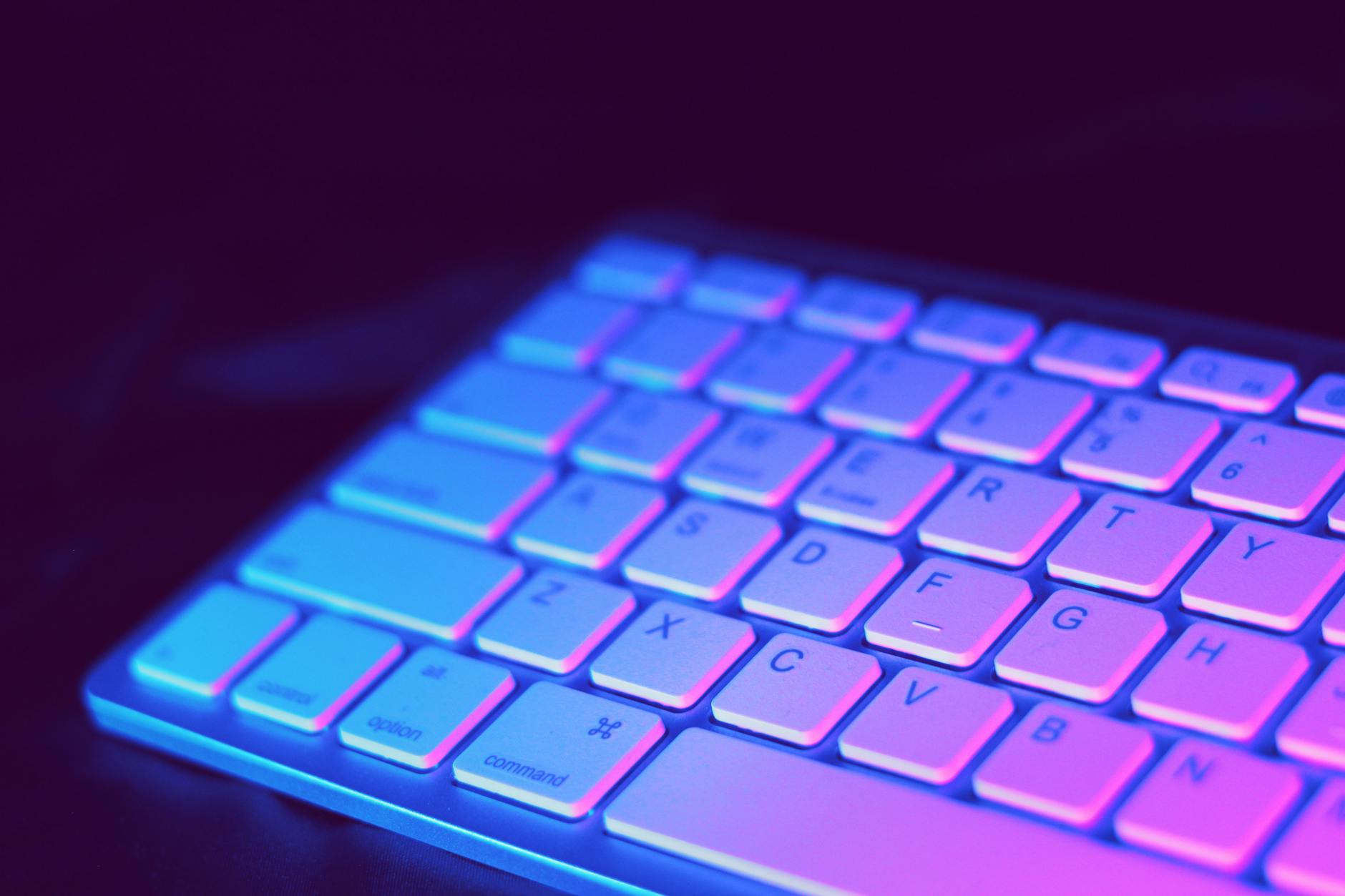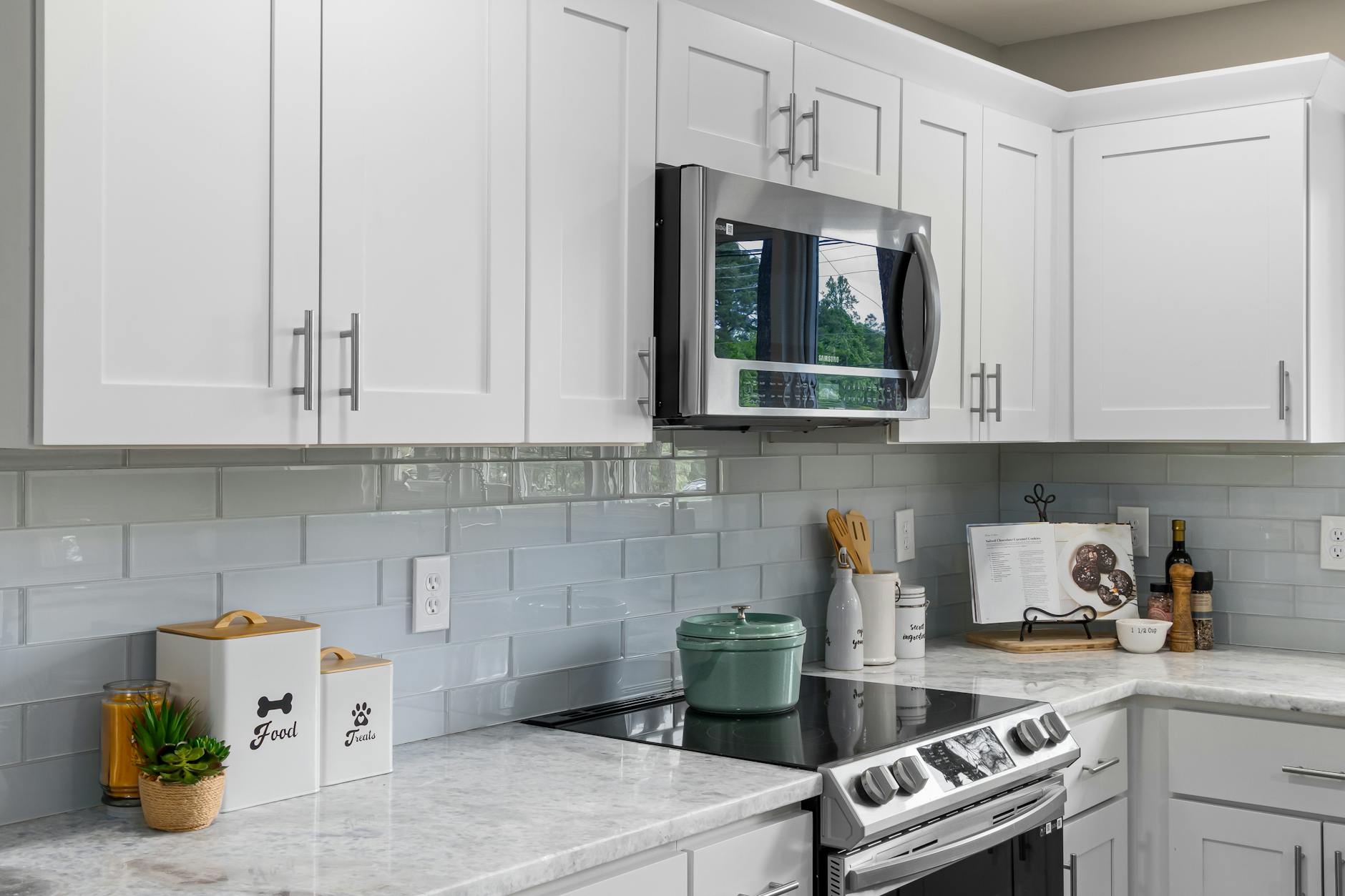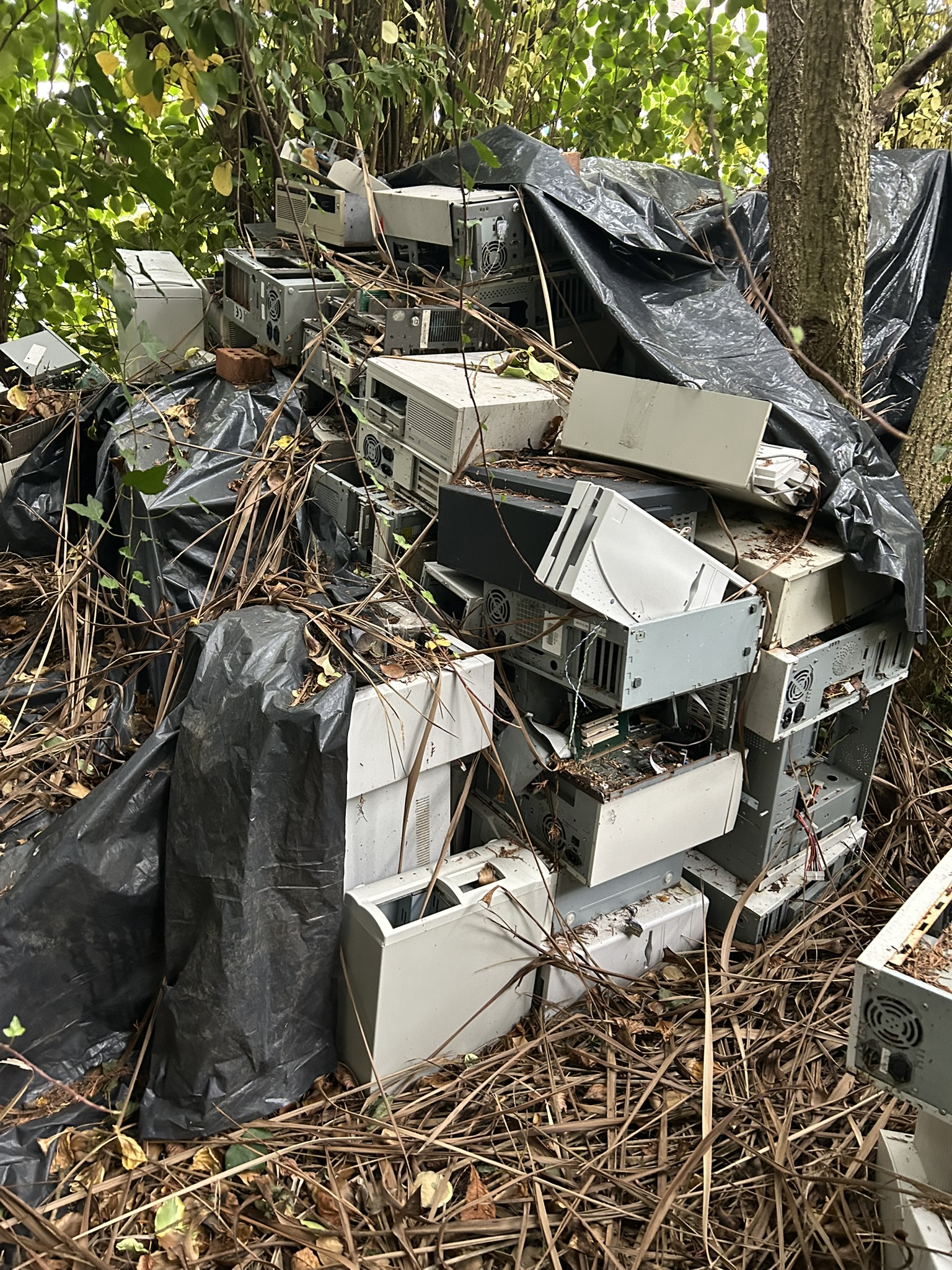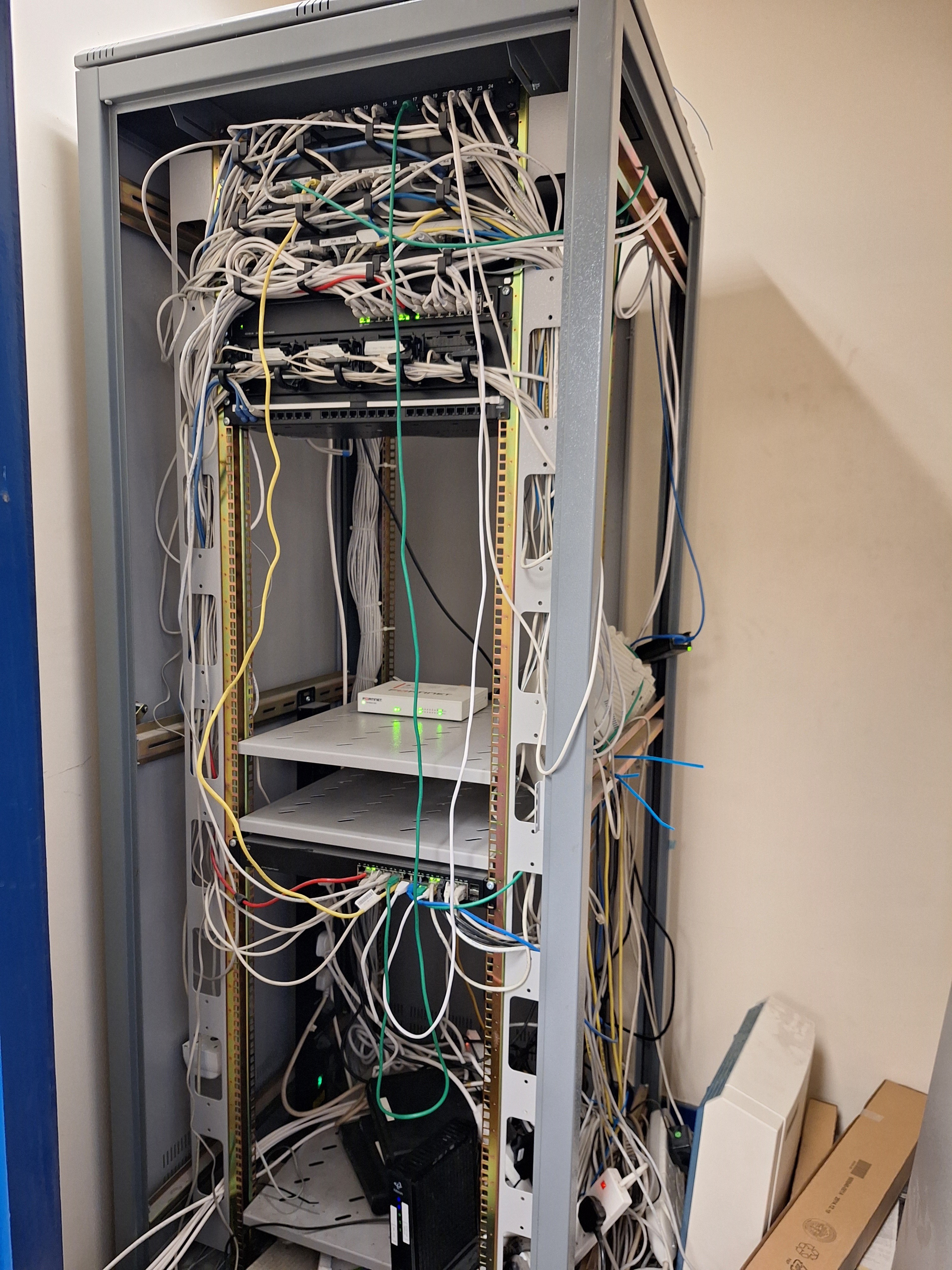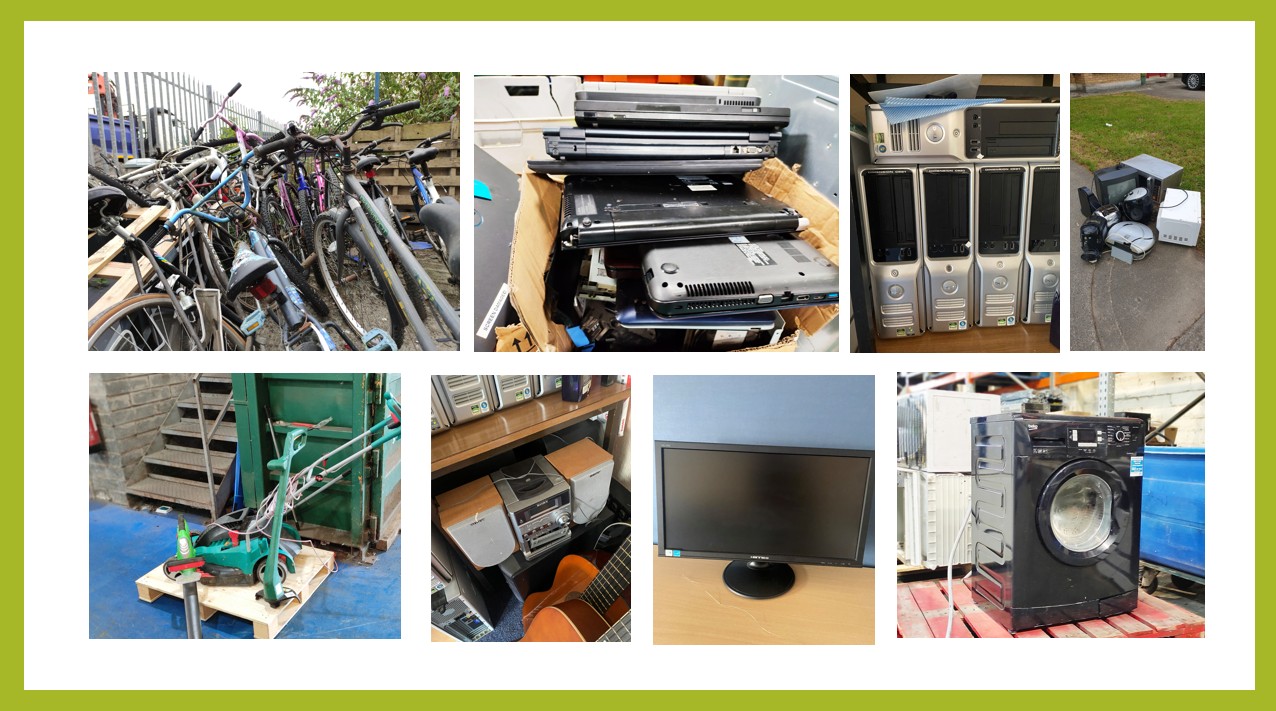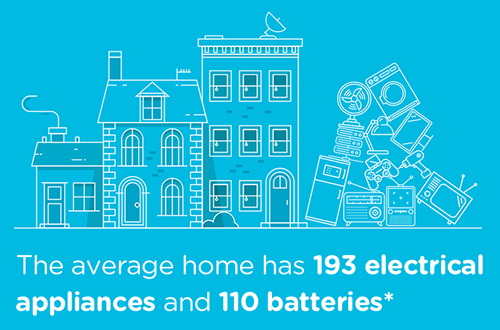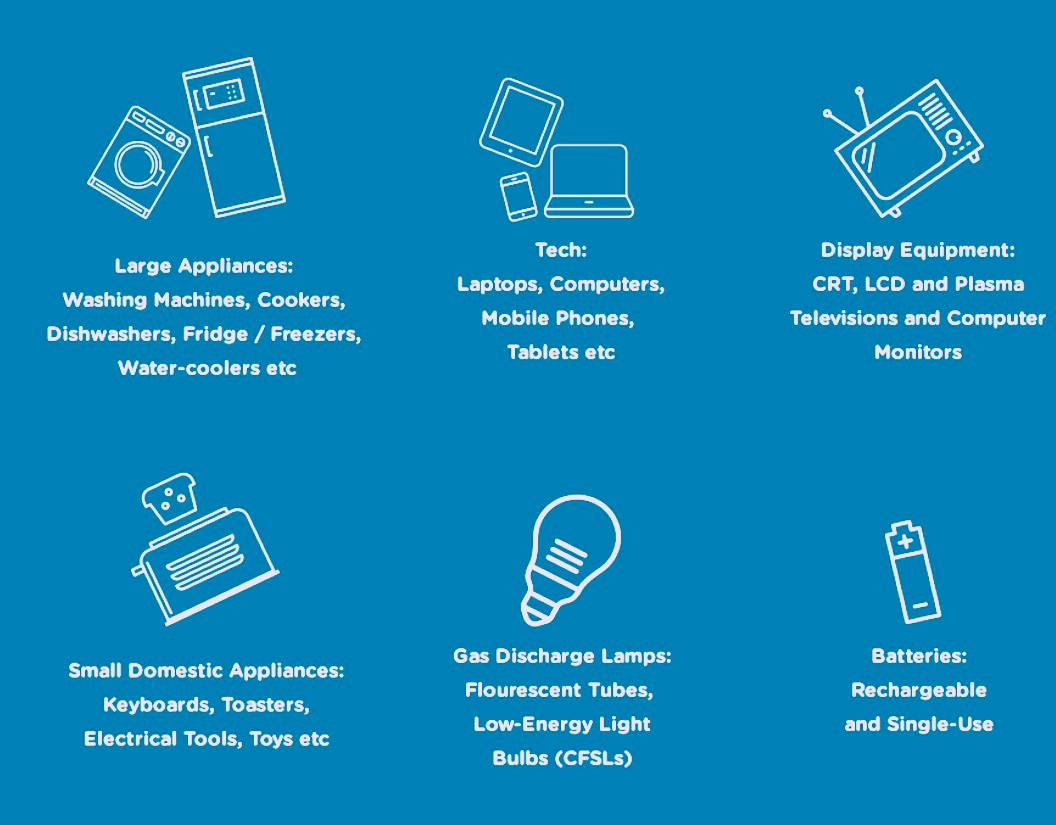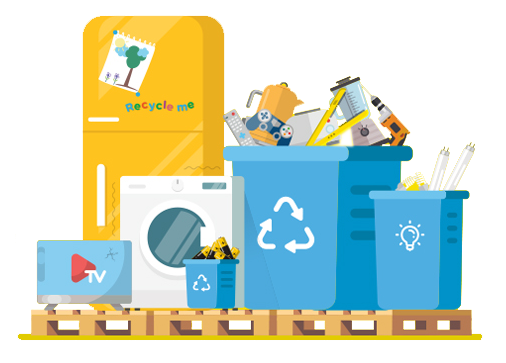
Some of the many questions facing householders and business managers include how to create additional space while safely removing and recycling surplus or redundant electrical, electronic and metals items including, heaters, kettles, coffee makers, computers, servers, cables racking and much more.
The next question is, can we find a single solution which will safely collect and recycle domestic and office equipment all at the same time, Cost-Effectively or FREE (see below) and in an environmentally friendly manner.
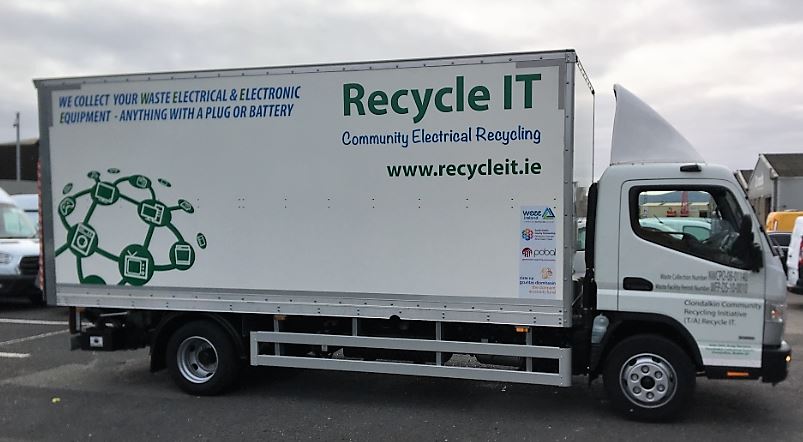
Electrical Recycling at Work – Collection by Recycle IT
Recycle IT Can Help!
Recycle IT, based in Dublin, is an award-winningelectrical and electronic recyclingsocial enterprise with over 20- years experience in offering a collection and drop off services. From our centrally located recycling center just of the M50 near Clondalkin village offers a one-stop recycling service for all types of electrical and electronic equipment. Household and commercial items can be recycled.
With collection vehicles serving Dublin and surrounding areas daily (Monday – Friday) you should never have to wait long for a safe recycling collection. Our teams can usually collect within 3 to 6 days of your decision to recycle.
Kitchen / Household Equipment for Recycling
Our experienced teams provide a friendly, professional and timely service across Dublin and the surrounding areas daily. We collect directly from homes and organizations of all sizes and ensure safe recycling of your items.
Many items collected are broken down into their component parts for processing into new raw materials. Our facility team can cost-effectively physically destroy hard disk drives upon request.
Recycle IT – Collection of Business Electronics
Free Collections
Our collection teams are happy to accept any electrical items so do call or email with questions. If your part of a residents groups, you can arrange a free collection for your estate. We collect free from schools, charities, community and care organization. Recycle IT can also support FREE WEEE to Work Days for staff and as part of this collection we can accept non commerical items from your business.
We usually required work places to gather together 50 – 75 items for a free collection. This is usually easy when the staff team and management work together to arrange.
About Recylce IT
Recycle IT, are an award-winning Dublin based social enterprise offering electrical, electronic and metal recycling. Community recycling services are provided in partnership with WEEE Ireland.
Recycle IT are supported by, WEEE Ireland, Pobal, the Dormant Accounts Fund, South Dublin County Council and authorized by the National Waste Collection Permit Office and the local authorities across Dublin, Kildare and Wicklow.
30 years ago, on September 9, 1995, the original PlayStation made its debut in North America, ringing in an era of gaming success for Sony. The chart below from Statista shows, the original PlayStation is the fourth best-selling home console of all time, beaten only by the PlayStation 4, the Nintendo Switch and its own successor, the PlayStation 2, which sold 160 million units over its lifetime. Source: Statista Research Department.
Benefits
Did you know there are benefits to playing videogames? A National Institutes of Health study of nearly 2,000 children found that those who reported playing video games for three hours per day or more performed better on cognitive skills tests involving impulse control and working memory compared to children who had never played video games. Other reported benefits include improved problem-solving skills and logic, increased hand-to-eye coordination, greater multi-tasking ability and faster and more accurate decision-making.
Generally games consoles are devices designed for the sole purpose of playing video games usually at home. A games console is really a computer used to play video or virtual games, on a TV or monitor. Some devices are very portable and are handheld with screens.
Some Facts
Ireland’s total video games revenue was €397m in 2024 and it is expected to reach €503m by 2029. Social and casual gaming (online gaming) totaled €180m in 2024 and will rise to €240m in 2029 with a 5.9% CAGR. A paradigm shift in Ireland’s video games market will come in 2029, when social/casual gaming revenue will overtake traditional gaming (physical gaming on PCs and games consoles)
There are nine console generations, with the current leading providers being Sony, Microsoft, and Nintendo with the Xbox, PlayStation and Nintendo Switch used to play games like FIFA 22, Farming Simulator 22 and Minecraft. You can also watch Netflix, Amazon Prime and Disney Plus on your games console.
Games Console, Controllers and Games – Recycle IT
Games are either downloaded directly onto the device via the internet online store or inserted into the device as a disc or card.
Many game consoles and games are aimed at children There is no official or recommended age for a child to have or use a games console. Video games are given age ratings similar to movies.
In general, using a game console with your children is fun. Adults can refamiliarise themselves with gaming, how new games work and how children are likely to use them. This can be a great way to show responsible and positive use of technology and show your child you are interested in what they do!
Reuse and Repair
After many years of fun, your game’s console may need to be updated with new software or hardware (if possible) or if damaged it can be repaired for reuse. There are several repair options available and they should be considered before saying goodbye to your console.
Saying goodbye isn’t always easy. After all, you likely spent many in-game hours together playing a starring role for your favourite sports team. Your console has likely brought you, your family and friends, many moments of joy and frustration.
However, the time will come to move on to a new console. With new console releases never far away you might consider a replacement. But before you do that, there are some important things that you need to do to stay cyber-safe (and keep your information and payment details safe).
Here are some steps to take before you sell, donate, or recycle your old console:
Games Console and Controller
Today many consoles are backwards compatible. This means that some, or most of the games from your old consoles should work with the new device To save your old games you can back your data up by:
Saving your data to an external hard drive.
Transferring your data from the old console to the new console by linking via a network.
Saving your data to a cloud service for your system.
Your gaming console can have personal information stored. Anything from email addresses to multiple credit card numbers to social media and cloud streaming accounts. If in the wrong hands, this can cause you lots of problems.
You can remove all your accounts from your console. In the setting menu, you can usually delete your credit card information, email addresses, social media links, or linked accounts. For purchased apps, you can sign out and manage your account information in your app settings.
A further option involves resetting the console back to when you first removed it from the box as new. Doing this reset will also make all of the information that was saved inaccessible through the user interface. You can usually do a reset in the settings menu.
Safe Recycling
Now that you have backed up your files and reset your console back to factory settings you may wish to dispose of the device in the waste or recycling bin. Please Don’t
Proper disposal including disposal of cables and chargers is important particularly if you didn’t try the above. Remember is also bad for the environment if you don’t recycle carefully
Games Console
Try the following
Reuse your console by gifting it to someone you know.
Donate your console to a local youth or community organisation,
Recycle your console instead of throwing it into the bin.
Recycle your console cables and related equipment at the same time!
Because electronics contain many damaging chemicals and reusable parts you should recycle safely at a dedicated e-recycling centre like Recycle IT. If you can’t or don’t wish to wipe the hard disk drive within the console before recycling, Recycle IT can help.
About Recycle IT
Recycle IT, is an award-winning social enterprise offering electrical, electronic and metal recycling services through drop-off and collection. Recycling services are provided in partnership with WEEE Ireland and South Dublin County Council.
Recycle IT is supported by Pobal and Dormant Accounts and authorised by the National Waste Collection Permit Office and the local authorities across the east midlands waste region.
Our goal is to create training and employment opportunities through the provision of waste management services. Surplus earned income is reinvested in operational, and employment-related costs.
At certain times of the year, you might receive a flyer advertising free recycling days for old, broken, or unused items. These events may offer to collect household or office items such as clothes, metal, electrical goods, or garden tools.
It sounds like a great idea — a chance to reduce waste, recycle, and clear clutter from your home or workplace. But have you ever stopped to think that some of these collectors might be unregulated or even illegal?
For example, a flyer promoting a “Free Jumble Recycling Day” might offer to take items like car batteries, laptops, TVs, or wardrobes — things that usually can’t go in a regular recycling bin and often require a licensed collection or drop-off at a recycling centre.
Real or Unreal – Household Recycling Flyer
These flyers are usually bogus, should be ignored and handing items over can lead to illegal dumping of your stuff and penalties if the material is identified as belonging to you!
Bogus Recycling – a reality
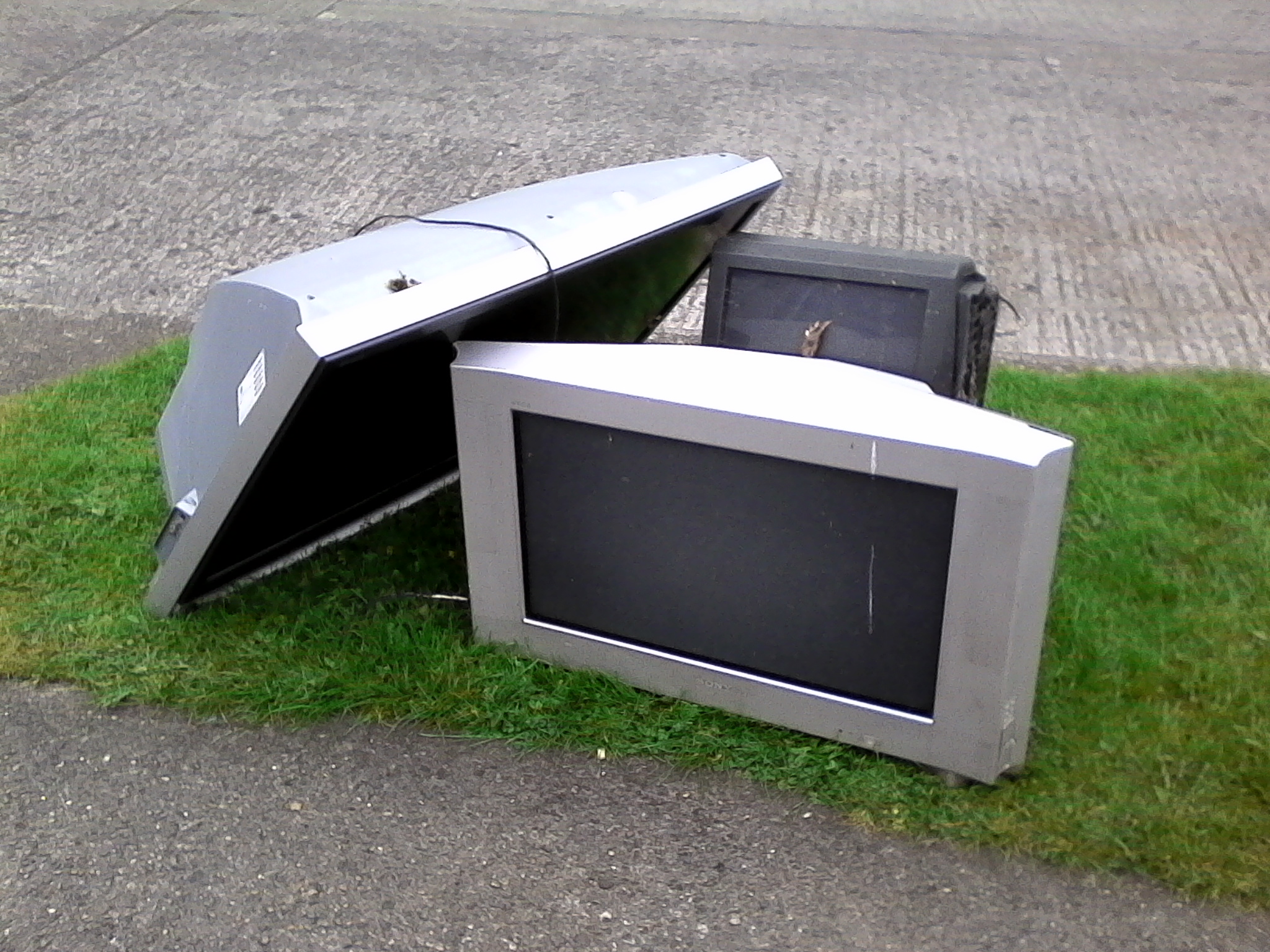
Think about it, when you take the time to carry your old TV or radio down the stairs, you might actually be handing it over to someone who simply loads it up onto a truck for delivery to a developing country or alternatively takes a few parts out and leaves the remainder on an Irish county road in the dark of night.
Is handing these items to a no-named collector in a non-authorized or unlicensed waste collection van the right choice?
Electrical Appliances for Recycling – Recycle IT
Unofficial Collectors
Depending on market prices collectors can generate an income by sending products to other countries or simply by dumping the items. This is particularly true for recycling computers, tablets, TV monitors, printers and other electronic items. Recycling electrical and electronic items officially costs more in Europe but the collector can get paid for exporting them to buyers in developing countries who will remove the metals for resale but won’t pay to protect their staff or their communities from the toxic emissions and waste.
As the price of metal increases washing machines, tumble dryers and dishwashers are becoming increasingly attractive items for unofficial recyclers. These items are stripped locally and unprofitable waste is disposed of in hedgerows and fields making our communities untidy, dismal and possibly toxic places to live.
Costs of Illegal Dumping
More than 60,000 instances of illegal dumping have cost Dublin City Council more than €5.2 million to remove since 2019, according to figures published in the Irish Times,15 Sept 2024. In South Dublin the cost was estimated at €127,000 per month for 2023. This spending on clean up and similar amounts from other county councils areas could be saved and reinvested in local communities if illegal collection and dumping could be stopped.
Electrical Waste for Collection – Recycle IT
The disposal of rubbish in any area of land in Ireland without licensed approval and permission is illegal. It is punishable by fines from €150 up to €10 million upon conviction and 10 years imprisonment. In order to know more about a bogus collection, we have compiled the list below.
14 tips on spotting a Bogus Recycling Collection?
The leaflet presenting the collections service is of low quality.
The collector does not provide a waste facility address on leaflets
The waste facility license number is not visible on the leaflet.
There is no landline telephone listed on printed materials.
The phone is never answered when called.
An email address is omitted from the flyer or poster.
The collector has no website or social media presence.
Collection vehicles don’t have a waste collection permit number on display. (required by law)
Collections are made outside of traditional business hours.
Collection representatives don’t have any formal identification.
Only certain waste items are collected i.e. the most valuable.
A bogus charity may be named on the collection flyers or posters.
No help or support is offered to move or lift heavy electrical items from homes or businesses.
No personal service or advice is offered on recycling different products.
It’s complicated!
It’s not easy to determine whether a recycler is exporting or illegally dumping your once loved stuff including electrical or electronic waste like hairdryers or phones. You can’t just go by what they say! Some will use environmental or charitable causes that sound good, but they are still unofficial. If you have a gut feeling it’s not right, follow that feeling and don’t leave the items out for collection.
Ask yourself the question – Who’s Paying?
One way to determine an official collector versus an unofficial collector is to figure out who is paying the recycling cost. If it’s free for you to recycle, then who is paying? A manufacturer? The State? Local Authority? If you are not paying, and there is no clear sponsor paying the costs for collection and recycling, please question the validity of the collector. For example, Recycle IT is a social enterprise that received some funds and also generates an income from responsible recycling.
Official Electrical Recycling Collection – Recycle IT
County Councils across Dublin at different times have warned residents to ignore these types of collections promoted by paper recycling flyers that have been put through letterboxes. They generally have no waste permit or collection permit numbers noted.
It’s worth noting, that it is an offence for any person to hand over their waste for disposal to an unauthorised waste collector. Fines of up to €5,000 may be imposed on individuals upon conviction in the District Court.
You must always ensure that any company or person you engage to collect your waste possesses a valid Waste Collection Permit. Any reputable waste collector is obliged to display the waste collection permit number on all vehicles, flyers and receipts.
You can check if the waste collector is authorised on the National Waste Collection Permit Office website; http://www.nwcpo.ie/permitsearch.aspx and enter details in an advanced search.
About Recycle IT
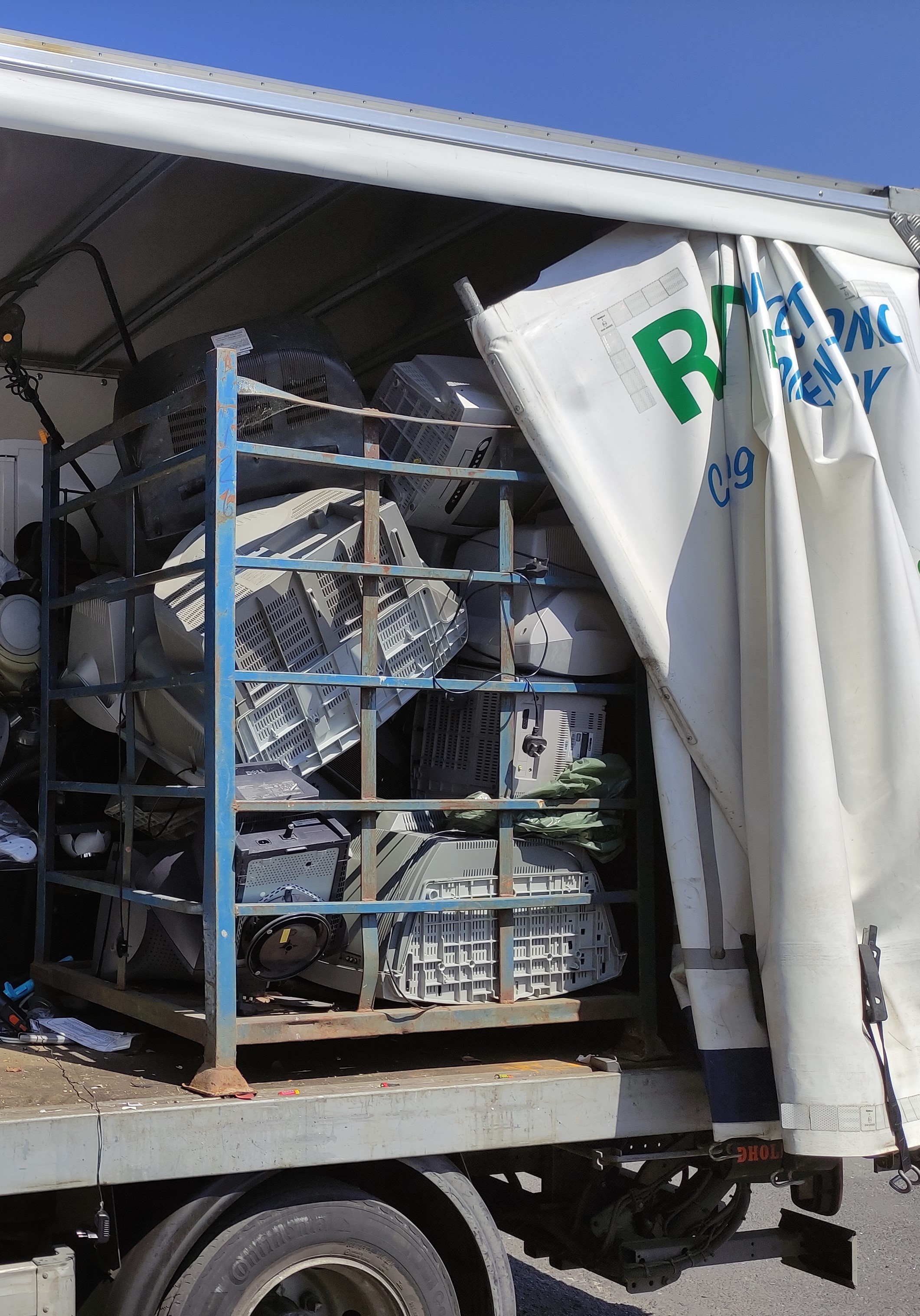
Recycle IT is the only Community Electronic Recycling Social Enterprise in Dublin providing a neighbourhood collection service for all types of waste electrical and electronic equipment (WEEE). In 2021 Recycle IT offered collection services to thousands of homes, community groups and businesses across Dublin and surrounding areas collecting a range of WEEE including monitors, computers, cookers, and TV equipment.
Recycle IT services are provided in partnership with WEEE Ireland. Recycle IT is supported by the Department of Rural and Community Development. Pobal, South Dublin County Council and authorised by the National Waste Collection Permit Office and the local authorities across Dublin, Kildare and Wicklow.
Visit our website for further details or call 01 4578321.
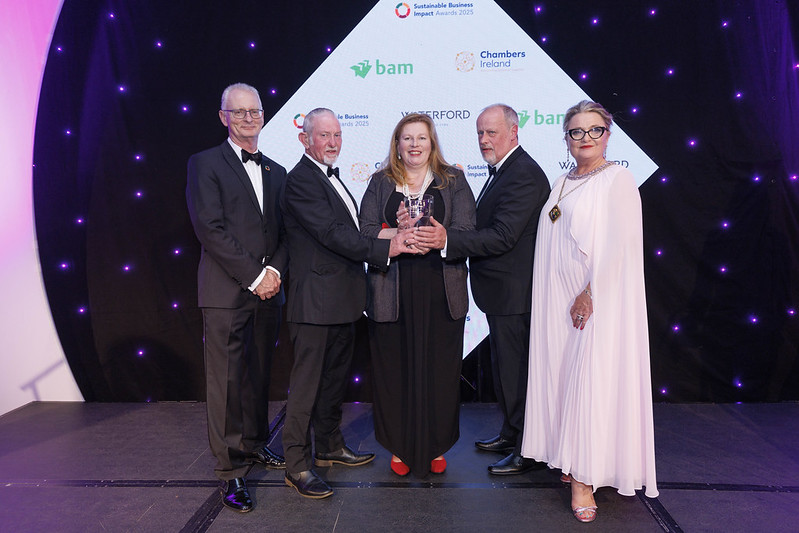
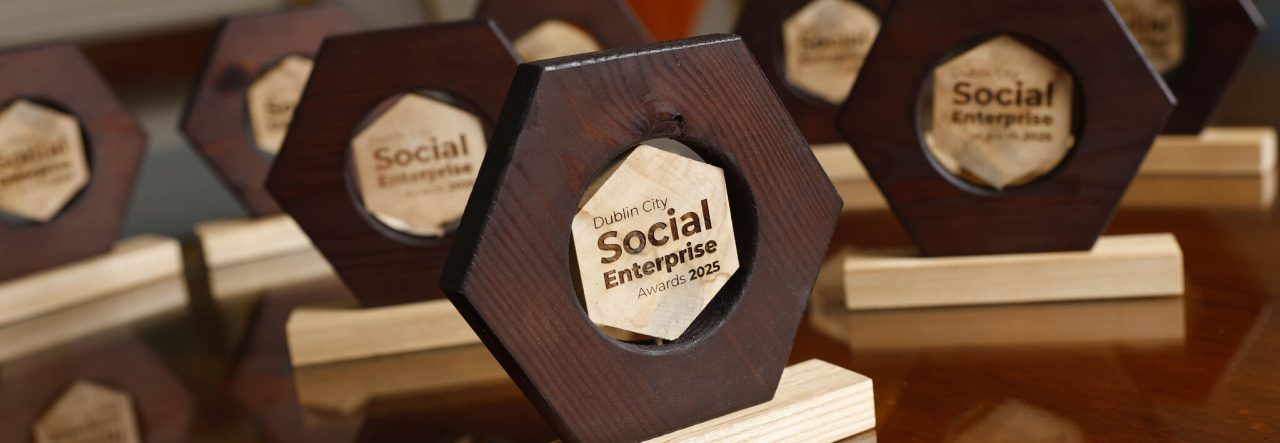
Recycle IT are Awardee’s: Dublin City Social Enterprise Award 2025 and the Nancy Ward Circular Economy Award 2025
Metal is just one of many materials we use daily in our lives and it is really worth recycling when it has served its purpose.
Here are 5 simple facts about metal recycling for reuse:
Metal can be recycled endlessly without losing quality, making it highly sustainable.
Recycling metal saves up to 95% of the energy used to produce new metal from raw materials.
Aluminium and steel are among the most commonly recycled metals worldwide.
Reused metals are vital for making new products like electronics, cars, and building materials.
Recycling reduces mining, conserves natural resources, and cuts greenhouse gas emissions.
Household Metal for Recycling
The type of objects that can be recycled includes aluminium and steel cans, electrical appliances, silverware, legs from office desks and chairs, old household pots and pans, cooking and baking equipment, school, office or sports lockers, gates, step ladders or zippers, the list is endless.
We recently learned that recycling one aluminium food/drinks cansavees enough energy to run a TV for 3 hours and if that’s not enough, the amount of aluminium thrown away annually in the U.S. would rebuild their commercial air fleet four times per year.
There are interesting facts below which we hope will encourage you to think about metal as a scarce resource and not just scrap. Without metal to manufacture, our daily trips to school by car or bus or our annual holidays by train, ferry or plane might not be as easy or affordable.
Interesting metal recycling facts
Metal recycling is good for the national economy and the environment, e.g., increased local employment and reduced emissions.
Recycling one tonne of steel saves 1,136 kg of iron ore, 454 kg of coal and 18 kg of limestone
You can test which metal is in your bin by using a magnet. Aluminium metal is non-magnetic whereas steel is magnetic. (Great learning for kids)
Drinks cans are made from aluminium while food cans are usually made from steel.
Metal recycling helps create new products once the original items have reached the end of their useful life.
Recycling scrap metals including iron and aluminium can benefit local construction projects such as roads and bridges.
Scrap metals are refashioned for use in creating bikes, cars, aircraft and other modes of transportation.
The United States of America annually recycles enough ferrous scrap, by weight, to build more than 900 of San Francisco’s Golden Gate Bridges.
Scrap metals aid in the storage and transportation of goods across the world with many shipping containers created from recycled metal.
Reusing scrap metal has supported many industries to reduce their environmental impact e.g. reduced mining of natural and scarce resources.
Recycled aluminium can be melted at a much lower temperature than new aluminium, therefore, saving on energy.
Scrap metal recycling helps reduce Co2 emissions created through mining, transport, and smelting.
Recycled, reused or re-purposed metals can be used to make beautiful and durable home furnishing and decorations. Think about the festive season!
Recycling scrap metal reduces the need for landfill sites and leads to a positive effect on water supply, soil, and land usage.
A computer contains around 1.5 kg of copper, a typical home about 100 kg and a wind turbine 5 tons.
In 2014, 2.1 million tons of copper were reused in Europe, coming from end-of-life products and directly recycled factory waste.
China is the world’s second-largest user of steel scrap after the EU.
Steel products can be recycled repeatedly without loss of strength.
One scrapped car produces more than four steel street light posts.
Metal Pots and Pans
Did you know?
Aluminium is made from a mined ore called Bauxite, which is converted into alumina, a fine white powder. This powder is then smelted at over 700°C, to become aluminium. The process is expensive and uses lots of resources including energy and fuel.
Many aluminium items used daily are recycled but those used in packaging like ready-to-cook foil trays are difficult to collect since it is very light and usually encrusted with food after baking. These types of items are discarded in many homes, schools, offices, pubs and restaurants without much thought for the environment or metal recycling. Maybe it’s time to try a reusable alternative to foil cooking trays and foil food wrap!
Metal Stands
Finally
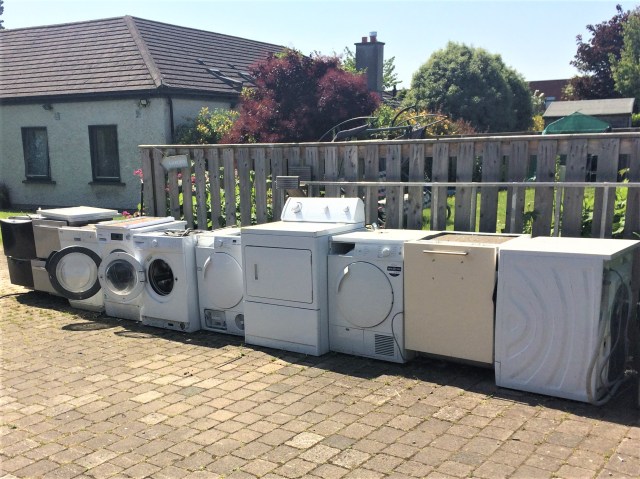
Did you know manufacturing recycled metal items requires an estimated 17 times less energy than manufacturing the same items from newly mined metal? Keep this in mind when replacing washing machines, cookers, ovens or hobs. They all contain metal that can be recycled. Recycle IT breakdown and recycle large household appliances daily. These include washing machines, dishwashers, and tumble dryers. Click here to view our list.
Metal Table Legs
About Recycle IT
Recycle IT, is a social enterprise offering electrical, electronic and metal recycling services through drop-off and collection. Services are provided in partnership with WEEE Ireland and South Dublin County Council. Recycle IT is supported by Pobal and Dormant Accounts and authorized by the National Waste Collection Permit Office and the local authorities across Leinster.
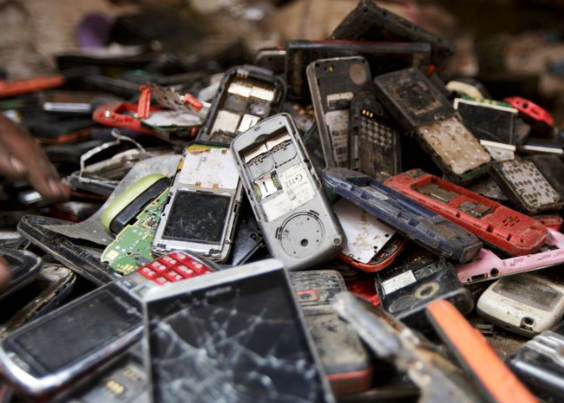
The world is creating electronic waste—such as old phones, laptops, and TVs—much faster than it is being recycled. In 2022, we produced 62 million tonnes of e-waste, which is 82% more than in 2010. Only 22% of that waste was properly collected and recycled, while the rest was lost or dumped, wasting $62 billion worth of valuable materials.
E-waste contains toxic substances like mercury that can harm both the environment and human health. If nothing changes, global e-waste is expected to grow to 82 million tonnes by 2030, while recycling rates may drop to just 20%. This growing problem is driven by people buying and replacing electronics more often, products becoming harder to repair, shorter product lifespans, and poor waste management systems.
The UN reports that if countries could raise recycling rates to 60% by 2030, the world would gain huge economic and health benefits, saving more than $38 billion.
The world also remains highly dependent on a few countries for rare earth materials—metals essential for green technologies like electric cars and solar panels—yet only about 1% of these valuable elements are recovered from e-waste.
18 Actions That Can Help
Governments & Policymakers
Create or strengthen e-waste laws to require proper recycling.
Offer further support to achieve national recycling targets.
Continue to track progress.
Invest in recycling facilities and safe waste collection systems.
Encourage eco-design – make products easier to repair, reuse, and recycle.
Ban illegal e-waste exports to developing countries.
Manufacturers & Companies
Design for durability and repairability (longer product life).
Offer take-back or recycling programs for old devices.
Use recycled materials in new products.
Provide spare parts and repair manuals to consumers.
Individuals & Consumers
Repair before replacing electronic devices.
Donate or resell working electronics instead of throwing them away.
Recycle properly at certified e-waste collection centers.
Buy refurbished or energy-efficient electronics.
Reduce gadget upgrades — use what you have longer.
Global & Community Efforts
Increase awareness about e-waste dangers and recycling options.
Support circular economy initiatives – reuse, repair, recycle.
Encourage global cooperation to share recycling technology and expertise.
Recycle IT, is an award-winning social enterprise offering electrical, electronic and metal recycling services through drop off and collection. Recycling services are provided in partnership with WEEE Ireland and South Dublin County Council. Recycle It offer services to homes, communities and organisations in Dublin and surrounding areas.
Recycle IT is supported by Pobal and Dormant Accounts and authorised by the National Waste Collection Permit Office and the local authorities across the east midlands waste region.
Our goal is to create training and employment opportunities through the provision of waste management services. Surplus earned income is reinvested in operational, and employment-related costs.
For more information on Recycle IT please call 01 4578321, email info@recycleit.ie or visit our website www.recycleit.ie